
By SkyDNews Editorial Desk
There is a question that the Nigerian Church must confront with honesty, courage and spiritual maturity:
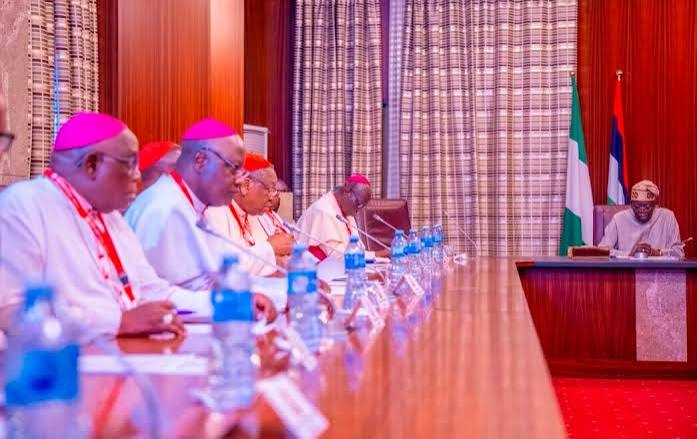
What happens to the voice of the Church when the Church becomes too close to the political establishment it is supposed to hold accountable?
This is not a question against Christians participating in democracy.
It is not a question against Pastors exercising their constitutional rights as Nigerian citizens.
It is not a call for Christians to abandon government, public service or national development.
Rather, it is a question about boundaries.
It is a question about whether the pulpit can remain a prophetic voice when the person standing behind it has become politically dependent on the people he may someday need to challenge.
It is a question about whether a Church that receives political patronage can still boldly condemn political corruption.
It is a question about whether a congregation can hear an honest message about injustice when the same political authority accused of injustice is funding the Church's programme.
And, perhaps most importantly, it is a question about whether the Church is gradually exchanging its prophetic responsibility for political relevance, access and material advantage.
Nigeria needs the Church.
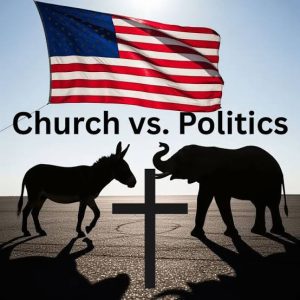
But Nigeria does not need a Church that becomes an extension of any political party.
Nigeria needs a Church that can pray for government, advise government, challenge government, encourage government when it does right and condemn government when it does wrong.
That distinction matters.
The Church Is Not a Political Party
The Church exists for a purpose higher than electoral victory.
Political parties seek power through elections.
The Church seeks transformation through the Gospel.
Political parties campaign for votes.
The Church calls people to repentance, righteousness and responsible living.
Political parties produce manifestos.
The Church proclaims the Word of God.
Political parties defend political interests.
The Church is supposed to defend truth, justice, mercy and righteousness.
The problem begins when these boundaries become blurred.
A Pastor can be a citizen.
A bishop can vote.
An apostle can have political opinions.
A Christian can contest an election.
A Church member can belong to a political party.
None of these realities automatically contradict Christianity.
Indeed, Christians are citizens of the countries in which they live, and they have legitimate responsibilities toward society.
The real danger comes when the institution of the Church itself becomes captured by partisan interests.
When the pulpit becomes a campaign platform.
When congregations become voting blocs.
When political personalities are treated as though they possess divine endorsement merely because they donated to a Church programme.
When political meetings are disguised as religious gatherings.
When Pastors begin to issue political prophecies that conveniently favour political patrons.
When government officials receive public spiritual endorsements that appear to have been purchased with money, access or patronage.
That is where the alarm bells should ring.
When Did the Pulpit Become an Electoral Platform?
There was a time when a politician entering a Church was primarily a citizen entering a place of worship.
Today, the relationship can become far more complicated.
A political office holder may arrive with security details, cameras, donations and public recognition.
The congregation applauds.
The Church leadership welcomes the visitor.
The politician is given an opportunity to speak.
Prayers are offered.
Photographs are taken.
Announcements are made.
And somewhere between the prayer, the microphone and the applause, the boundary between spiritual fellowship and political endorsement can disappear.
The question is not whether politicians should be allowed inside Churches.
Of course they should.
They are human beings and citizens like everyone else.
The question is: Why are they there? Are they attending as worshippers? Are they seeking prayer? Are they supporting a legitimate humanitarian programme? Are they responding to an invitation extended to public officials because the Church has a responsibility to engage government? Or are they purchasing influence?
And on the other side: Is the Church welcoming them because it wants to minister to them? Or because it expects financial benefits?
The answers matter.
The Church Must Not Sell Its Voice
One of the greatest dangers facing religious institutions is not persecution. Sometimes it is patronage. Persecution may make the Church stronger. Patronage can make the Church comfortable. And comfort can become dangerous.
A Church that depends heavily on political money may eventually become afraid to criticize the politician who provides that money. This is the classic conflict of interest.
If a government official finances a Church building, funds a programme, provides vehicles, sponsors a convention or becomes a major donor, what happens when that same official is accused of corruption? Will the Pastor speak? Will the Bishop condemn the action? Will the Church demand accountability? Or will everyone suddenly become silent? That is the test.
The prophetic voice is most valuable when it is independent.
If the Church cannot speak truth to its benefactor, then its independence has already been compromised.
“Whoever Pays the Piper Dictates the Tune”
The old expression says:
“He who pays the piper dictates the tune.”
Whether literally or metaphorically, the principle illustrates a serious institutional danger. A Church that becomes financially dependent on political authorities can gradually develop an unwritten obligation to protect those authorities. It may begin innocently. A politician makes a donation. The Church expresses appreciation. Another donation follows. The politician receives a special seat. Then a speech. Then a public prayer. Then an endorsement. Then a political gathering.
Eventually, the Church discovers that it has become part of the politician's political ecosystem. And when wrongdoing occurs, the Church struggles to speak.
Why?
Because money has created a relationship of dependence. That is precisely why Churches need strong governance, transparent financial systems and clear boundaries around political relationships.
The Corporate Affairs Commission recognizes Incorporated Trustees as a legal structure for religious, charitable and other lawful purposes, and CAMA provides for their constitutions, governing bodies, accounts and other governance requirements. That legal framework should not be confused with an absolute constitutional prohibition on Christians participating in politics.
It is better understood as a reminder that an incorporated religious institution should operate according to its declared objects, constitution and governance responsibilities.
The Church must therefore ask: Does political patronage strengthen our mission or compromise it?
Christianity Does Not Require Political Silence
There is another extreme that must also be rejected. Some people argue that because the Church should remain politically neutral, Christians should not speak about politics. That is equally dangerous.
The Bible does not teach Christians to become blind to injustice. The prophets spoke to kings. John the Baptist confronted Herod. Jesus challenged religious hypocrisy and political-religious manipulation.
The early Christians lived under political systems and still proclaimed moral truth.
The issue, therefore, is not whether the Church should speak about public affairs.
It should.
The issue is how it should speak. The Church should speak about:
- corruption;
- injustice;
- poverty;
- insecurity;
- unemployment;
- abuse of power;
- electoral violence;
- oppression;
- discrimination;
- bad governance;
- accountability;
- human dignity;
- the rule of law;
- protection of children;
- care for the poor;
- responsible citizenship.
But it should not become the propaganda department of a political party. There is a difference between prophetic engagement and partisan capture.
Pray for Those in Authority - But Do Not Worship Them
Christian teaching calls believers to pray for those in authority. Prayer, however, is not worship. Prayer for a political leader does not mean endorsement of everything that leader does.
Respect for an office holder does not mean surrendering one's conscience.
A Christian can pray for a president and still condemn bad policies.
A Pastor can pray for a governor and still question corruption.
A Bishop can meet a senator and still demand accountability.
A Church can welcome a political leader and still refuse to campaign for him from the altar.
This distinction is essential.
The Church should never confuse access to power with approval of power.
When Political Money Enters the Sanctuary
Money is not evil. The Bible does not teach that wealth itself is evil. But the love of money is dangerous. And political money can be particularly complicated because political resources often come with expectations.
A politician who gives millions to a Church may not explicitly say: “Support me.” The expectation may remain unspoken. But everyone may understand it.
The politician receives public praise. The Church receives financial assistance. The congregation hears favourable words. The politician receives legitimacy. Everyone appears to benefit. But the cost may be invisible. The cost is the Church's independence. And once the Church loses its independence, it may lose something more valuable than money: its moral authority.
Can a Pastor Be a Politician?
This is where the debate becomes more difficult. A Christian has the right to participate in politics. A Pastor is also a citizen.
Therefore, the question cannot simply be:
“Can a Pastor ever enter politics?”
The deeper question should be:
Can someone simultaneously occupy a partisan political leadership position and exercise the full institutional authority of an independent Church without creating conflicts of interest?
That deserves serious consideration.
In many professions, separation of roles exists because competing responsibilities can compromise judgment.
The civil service offers an instructive principle.
A public servant seeking elective political office may be subject to laws and regulations requiring resignation or other forms of separation before contesting, depending on the person's position and the applicable electoral and public service rules.
The underlying principle is important:
Separate roles where competing interests could compromise institutional neutrality.
The same principle can reasonably be debated within the Church.
If a senior Church leader decides to become an active partisan politician, should he or she voluntarily step away from institutional Church leadership while pursuing that political career?
That is not necessarily a question of denying the person's Christian identity. It is a question of protecting the institution.
A Pastor can remain a Christian after entering politics. But should the political actor continue to use the institutional pulpit to advance partisan interests?
That is the difficult question.
“I Am Going There to Change the System”
One of the most common arguments is: «“I am entering politics to change the system.”»
It sounds noble. Sometimes it is sincere.
There are certainly Christians who enter politics with genuine intentions to serve society. But good intentions do not automatically defeat institutional pressure. They came out looking even worse than those "unbelievers" he was trying to correct. The reason is because the system has incentives. The system has structures. The system has party hierarchies. The system has financial networks. The system has expectations. The system has alliances. And eventually, the reformer may discover that he is not operating in a vacuum.
Suppose a Christian contests an election under a political party. That party provides the platform. It provides the structure. It provides supporters. It provides campaign machinery. It provides a political identity. Then the candidate wins.
The question becomes: How independent is the new office holder from the political structure that brought him to power? This does not mean every political party controls every elected official in every matter. But political reality makes one thing clear: No elected politician operates outside political relationships. And this is where the “I will enter the system and change it” argument requires humility. Sometimes the system changes the reformer.
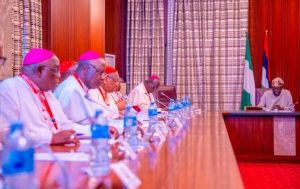
Many Have Entered Politics With Convictions - and Lost Their Voices
There is a painful reality that Christians must acknowledge. People who strongly criticized government from outside government can become remarkably quiet once they enter government.
Before obtaining political office, every government policy appears terrible. After obtaining office, the same policy suddenly becomes “strategic.” Before entering government, corruption is condemned. After entering government, questionable transactions become “political realities.” Before receiving government appointments, leaders demand transparency. After receiving appointments, they become uncomfortable with criticism. This is not exclusively a Christian problem. It is a human problem.
Power tests character.
Money tests conviction.
Access tests integrity.
Privilege tests humility.
And politics tests all of them simultaneously.
The Football Analogy
Consider football. A spectator sitting in the stands can see things that a player cannot. He sees the unmarked striker. He sees the defender making a mistake. He sees the goalkeeper out of position. He sees the passing lane. He shouts: “Pass the ball!” “Shoot!” “Defend!” “Why did you do that?” Everything looks obvious from the outside. But put that same spectator on the field. Suddenly the picture changes.
There are opponents pressing.
There is physical exhaustion.
There is noise.
There is limited time.
There are tactical instructions.
There is pressure.
There are teammates making mistakes.
There are unexpected developments.
The person who thought everything was easy discovers that the game is far more complicated. Politics can be the same. From outside government, governance can look like ABC. From inside government, competing interests become visible.
This is why Christians who enter politics must be careful not to assume that their spiritual convictions alone will automatically make them immune to political pressures. Character must be deliberately protected.
The Danger of Political Prophecies From the Pulpit
Perhaps one of the most troubling developments is the use of prophetic language around politics. A political prediction can easily become a spiritual endorsement.
A Pastor declares: “God has revealed who will win.” A political candidate is named. The congregation applauds. The prophecy becomes a campaign tool. Supporters circulate the statement. The candidate invokes the Pastor's declaration. Opponents are portrayed as enemies of God's will. And suddenly political competition becomes spiritual warfare. This is extremely dangerous.
Christians must distinguish between genuine spiritual conviction and political speculation dressed in religious language. The name of God should never be used casually to settle political contests.
If a political prediction is wrong, what happens?
Does the Church acknowledge the error?
Does the prophet repent?
Or does the prophecy get reinterpreted?
The danger is enormous because political prophecy can manipulate people who sincerely trust their spiritual leaders. The pulpit should build consciences, not manufacture political loyalty.
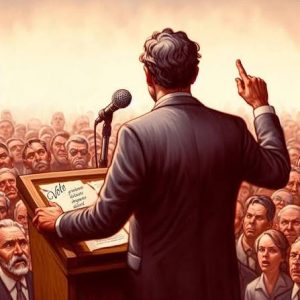
God Is Not the Author of Confusion
Christianity teaches that God is not the author of confusion. Therefore, the Church must be extremely careful when political loyalties begin to divide believers. Imagine a congregation where: one member supports Party A, another supports Party B, another supports Party C, and the Pastor publicly identifies the Church with Party A. What happens?
The Church ceases to be a spiritual home for all and becomes an extension of one political camp. That should concern every Christian. The Church should be able to accommodate the poor, the rich, the opposition supporter, the ruling-party supporter, the politically indifferent and the undecided. The moment the Church tells people: “To belong here, you must support our political candidate,” the spiritual institution has crossed a dangerous boundary.
Light Must Remain Light
The Christian metaphor of light is powerful. Light does not need darkness to prove that it is light. It does not merge with darkness in order to illuminate it. It shines.
The Church should therefore not become so entangled with political darkness that its light becomes indistinguishable from the environment around it. The Church can enter public debate without becoming a political party. The Church can advise government without becoming government. The Church can criticize government without becoming opposition. The Church can cooperate with government without becoming government propaganda. The Church can receive legitimate public support for lawful community programmes without surrendering its independence. The Church can pray for politicians without worshipping politicians. That is the balance Nigeria desperately needs.
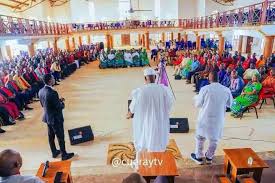
“But Christians Must Take Over Government”
There is another popular argument: “Christians must take over government.” This language should be approached carefully. Christians should certainly participate in society. They should vote. They should contest elections. They should serve honestly. They should promote justice. They should contribute to national development. But the Christian mission cannot be reduced to capturing political power. Jesus did not establish a political party. The Great Commission was not an electoral manifesto. The Kingdom of God is not synonymous with the Nigerian state. The Church must never assume that obtaining political control automatically produces righteousness.
History has repeatedly shown that people can use religious language to pursue political power while behaving contrary to the moral principles they preach. The answer is not Christian domination. The answer is Christian integrity.
The Early Church and the Temptation of Power
Church history also provides a warning. The relationship between Christianity and political power became profoundly complicated as Christianity moved from a persecuted faith toward imperial recognition and influence. The relationship between Church and state subsequently generated debates about authority, doctrine, political power and institutional independence that continued for centuries. The lesson is not that Christians must permanently withdraw from public life. The lesson is that political power can transform religious institutions just as religious convictions can influence political systems.
When the Church gains political privilege, it can be tempted to protect the privilege. When political leaders discover that religious institutions can mobilize millions of people, they may seek religious legitimacy. That mutual attraction can create a powerful alliance. And once that alliance becomes entrenched, separating spiritual responsibility from political interest becomes difficult. Nigeria should learn from history rather than repeat its mistakes.
The Church Must Recover the Courage to Say “No”
There are moments when the Church must say:
“No.”
No to political manipulation.
No to buying spiritual influence.
No to using the altar as a campaign platform.
No to exploiting poor congregants for political mobilization.
No to political propaganda disguised as prophecy.
No to financial dependence that compromises moral independence.
No to politicians attempting to purchase legitimacy through religious institutions.
No to Pastors becoming political praise singers.
No to treating government officials as though they are above accountability.
No to turning congregations into political machines.
And perhaps most importantly:
No to the idea that money can buy spiritual endorsement.
But the Church Must Also Say “Yes”
The Church must say yes to:
truth.
justice.
peace.
accountability.
good governance.
human dignity.
compassion. service.
responsible citizenship.
credible elections.
peaceful political participation.
protection of the vulnerable.
honest leadership.
transparent government.
And above all, the Gospel.
The Church should be among the loudest voices demanding that Nigeria works. But its voice must belong to God, not to a political godfather.
Every Christian Has a Political Responsibility
Keeping the Church institutionally neutral does not mean keeping Christians politically ignorant. Every Christian citizen has responsibilities. Christians should study candidates. They should examine manifestos. They should investigate records. They should reject vote buying. They should reject ethnic hatred. They should reject religious manipulation. They should reject political violence. They should hold elected representatives accountable. They should vote according to conscience. They should participate peacefully. They should demand transparency. They should ask difficult questions. And when their preferred candidate fails, they should have the courage to admit it.
Christianity should produce citizens whose loyalty to truth is greater than their loyalty to political parties.
The Church Should Be Bigger Than Political Parties
Imagine a Church where members of different political parties can worship together without hostility. Imagine a Pastor who can tell his congregation: “Vote according to your conscience.”
Imagine a Church that invites every major political candidate to present their policies, then refuses to endorse any of them. Imagine a Church that publishes a governance scorecard and evaluates whoever is in government. Imagine a Bishop who can congratulate a governor when he succeeds and publicly challenge him when he fails. Imagine a congregation that receives a political donation but transparently declares it and refuses political conditions attached to it. Imagine a Pastor who can say: “We appreciate your support, but the pulpit is not for sale.” That Church would have enormous moral power.
What Happens When the Church Becomes Financially Dependent on Government?
This is perhaps the most practical question. Suppose a government becomes a major financier of Church programmes. What happens when the government fails? Will the Church speak? Suppose the government violates citizens' rights. Will the Church speak? Suppose public funds are allegedly misappropriated. Will the Church speak? Suppose insecurity destroys communities. Will the Church speak? Suppose citizens cannot access basic services. Will the Church speak? Suppose unemployment rises. Will the Church speak? Suppose electoral violence occurs. Will the Church speak? If the answer is “no” because the Church depends upon the government, then the Church has lost part of its prophetic function. That is the danger.
Independence Is Not Opposition
A politically independent Church is not necessarily an anti-government Church. This distinction must be understood. Independence means the Church is free to say: “Yes” when government does something right. And: “No” when government does something wrong. Opposition says: “No” because the government belongs to the other side. Prophetic independence says: “No” because the action is wrong. That is the difference. The Church should not be controlled by the ruling party. Neither should it become controlled by the opposition. The Church belongs to God.
Should Church Leaders Who Enter Politics Resign?
This proposal deserves serious national Christian debate. Where a Church leader decides to become an active partisan politician, particularly where he or she seeks elective office, should that leader resign from institutional Church leadership for the duration of political service?
There are strong arguments for such separation. First, it protects the Church from partisan identification. Second, it protects the politician from accusations that the pulpit is being used for political purposes. Third, it protects the congregation from political coercion. Fourth, it protects the Church's charitable and religious activities from unnecessary political controversy. Fifth, it makes accountability easier. The individual remains a Christian. The individual can still worship. The individual can still pray. The individual can still evangelize privately. But the institutional pulpit remains independent. This is not necessarily a theological command. It is an institutional governance principle worth considering.
A Christian Does Not Need the Pulpit to Enter Politics
If someone genuinely believes that God has called him into politics, then let him go. If a Pastor believes he can serve Nigeria in public office, let him serve. If a Bishop believes he has a contribution to make to governance, let him contribute. But there should be enough courage to separate the political assignment from the institutional Church assignment. You do not need to carry the Church's institutional authority into partisan politics to prove that you are a Christian. Your character should speak. Your integrity should speak. Your record should speak. Your service should speak. Your honesty should speak. Your treatment of the poor should speak. Your accountability should speak. Your leadership should speak.
- Service to God Is a Choice
- Christian service cannot be forced. God does not need political power to remain God. God does not need government funding to remain God. God does not need a governor's endorsement. God does not need a senator's donation. God does not need a president's approval. The Church must remember this. Service to God is a voluntary commitment. The moment someone begins serving God primarily because of economic benefits, political access, social status or personal enrichment, the motivation deserves examination. The Church should produce servants, not spiritual entrepreneurs whose primary objective is personal advancement. There is nothing wrong with a Pastor earning a legitimate livelihood. There is nothing wrong with a Church building modern facilities. There is nothing wrong with financial prosperity. But the moment material gain becomes the reason for ministry, something fundamental has gone wrong.
When the Stomach Becomes the Master
The Apostle Paul warned about people whose minds are focused on earthly things. That warning remains relevant. A Church can become so obsessed with money that every spiritual decision is measured in financial terms. Who donated? How much? Who is coming? What will we receive? Who can give us access? Which politician will attend? Who can sponsor the programme? Who can provide the vehicle? Who can finance the convention? When these questions become more important than: “What does God require?” the Church has entered dangerous territory. Jesus warned about serving two masters. The issue is not that Christians cannot possess money. The issue is whether money possesses Christians.
The Church Must Examine Itself
Before Christians condemn politicians, they should examine themselves. Before Pastors condemn corruption in government, they should examine financial transparency within their own Churches. Before Church leaders condemn political patronage, they should examine whether they themselves seek political patronage. Before Christians criticize vote buying, they should ask whether their Churches accept questionable donations. Before we demand integrity from public officials, we should ask whether our own institutions publish credible financial reports. The reform must begin at home.
You Cannot Reform What You Are Afraid to Confront
There is a popular belief that one must join a corrupt system before being able to reform it. Sometimes that works. Sometimes it does not. The danger is that the system may reform you before you reform it. A person who enters a corrupt environment must possess extraordinary discipline to resist its incentives. Otherwise, the language changes. The friendships change. The priorities change. The lifestyle changes. The expectations change. The compromises begin small. One compromise leads to another. Eventually, the person who entered the system to reform it becomes one of its defenders. That possibility cannot be ignored.
Create a Better Standard
Perhaps the answer is not simply to withdraw from politics. Perhaps the answer is to build stronger institutions. Churches should develop policies governing political engagement. They should clearly define:
- whether political candidates may campaign during Church programmes;
- whether political donations are accepted;
- how political donations are disclosed;
- whether Church property may be used for political purposes;
- whether Pastors may endorse candidates from the pulpit;
- whether political office holders can receive preferential treatment;
- how the Church responds to government sponsorship;
- how conflicts of interest are declared;
- how political neutrality is maintained;
- how Church leaders entering politics temporarily relinquish institutional responsibilities.
Such policies would not prevent Christians from participating in democracy. They would protect the Church from becoming a political instrument.
What Should Nigerian Churches Do?
A healthier model could involve five principles.
- 1. Pray for Government - The Church should continue praying for presidents, governors, legislators, judges and public servants.
- 2. Speak Truth to Government - Prayer must never become an excuse for silence.
- Engage Government Constructively - The Church should participate in policy dialogue, humanitarian partnerships and community development.
- Maintain Institutional Independence - Government cooperation must never mean surrendering the Church's moral voice.
- Protect the Pulpit - The altar should never become a commercial marketplace for political influence.
What Should Christian Politicians Do?
Christian politicians also have responsibilities. They should not manipulate the Church. They should not demand endorsements. They should not purchase spiritual legitimacy. They should not use Pastors to mobilize congregations for partisan purposes. They should not turn religious gatherings into campaign events. They should understand that receiving prayer from a Church does not mean owning the Church. And if they fail in office, they should accept criticism from Christians without retaliation.
What Should Pastors Do?
Pastors should remember that political power is temporary. The politician may leave office. The Pastor remains responsible for the congregation. The government may change. The Church must continue. Political parties will rise and fall. The Gospel remains. Therefore, Pastors must think beyond today's political access. They must ask: “What will happen to my Church after this politician leaves office?” “What happens when the other party wins?” “Can I still speak?” “Can I still criticize?” “Can my members trust me?” “Have I represented God or a political interest?” These questions are uncomfortable. But uncomfortable questions often produce healthy institutions.
The Church Must Recover Its Prophetic Voice
Nigeria does not need a Church that merely blesses political leaders. Nigeria needs a Church that challenges political leaders to become better leaders. Nigeria does not need Pastors who compete for access to government houses. Nigeria needs Pastors who can walk into government houses and speak truth without fear. Nigeria does not need religious leaders who praise every political decision. Nigeria needs religious leaders who can say: “This policy is hurting our people.” “This money must be accounted for.” “These citizens deserve justice.” “This election must be credible.” “These children need protection.” “These communities need security.” “This corruption must stop.” “This government must listen.” That is prophetic Christianity.
The Church Must Not Become a Political Refuge for the Ambitious
There is also a warning for Church leaders themselves.
Ministry must not become a stepping stone to political power.
The pulpit should not be used to build a political network.
The congregation should not become a personal electoral structure.
Church programmes should not become political networking events.
Spiritual titles should not be used to intimidate political opponents.
Prophetic declarations should not become campaign slogans.
And the Church should never become a place where political ambition is baptized and presented as divine destiny.
Not every political ambition is a divine calling.
Sometimes ambition is simply ambition.
"Every Christian Should Mind Himself"
There is wisdom in the admonition that every Christian should examine himself.
Before asking: Why is government corrupt?”
Ask: “Am I corrupt?”
Before asking: “Why are politicians buying votes?”
Ask: *“Would I sell my vote?”
Before asking: “Why are leaders selfish?”
Ask: “Am I selfish?”
Before asking: “Why does Nigeria lack accountability?”
Ask: “Am I accountable?”
Before demanding righteous leaders:
“Am I living righteously?”
National transformation is not achieved by changing political parties alone. It begins with changing people.
The Ultimate Question
At the end of all political arguments, one question remains: Who owns the Church? If the answer is God, then political parties cannot own it. If the answer is God, then politicians cannot buy it. If the answer is God, then money cannot control it. If the answer is God, then Pastors cannot turn it into personal political machinery. If the answer is God, then the Church must retain the courage to speak when everyone else is silent.
The Church can participate in society without becoming partisan. The Church can influence government without becoming government. The Church can engage politicians without becoming politically captured. The Church can accept legitimate partnerships without selling its conscience. The Church can pray for leaders without endorsing every decision they make. The Church can produce politicians without becoming a political party. That is the balance Nigeria needs.
A Final Word to the Nigerian Church
The time has come for serious self-examination. Not every man behind a pulpit is necessarily called. Not every political prophecy is from God. Not every political donation is innocent. Not every Church-government partnership is automatically wrong. Not every Christian politician is corrupt. Not every political engagement is compromise. But neither should every political relationship be spiritualized.
The Church must learn to distinguish between influence and control, partnership and patronage, citizenship and partisanship, prophetic engagement and political endorsement. The Church must not become afraid of government. But it must also not become dependent upon government.
It must not hate politicians. But neither should it worship politicians. It must not abandon public life. But neither should it surrender the pulpit to partisan politics. And when a Church leader sincerely believes that his next assignment is political office, there should be enough institutional wisdom to ask whether he should step aside from Church leadership and allow others to guard the pulpit while he pursues the political assignment.
There is nothing shameful about entering politics. There is nothing sinful about serving the public. There is nothing wrong with Christians contesting elections. But there is something deeply dangerous when the altar becomes an electoral platform and the Gospel becomes a political campaign instrument.
Nigeria needs Christians in politics.
Nigeria needs Christians in government.
Nigeria needs Christian professionals, judges, legislators, civil servants, entrepreneurs, journalists, academics and activists. But Nigeria also needs something else:
A Church that remains free.
Free to praise.
Free to pray.
Free to advise.
Free to challenge.
Free to condemn injustice.
Free to defend the poor.
Free to confront corruption.
Free to tell the truth.
Free to say “No” to political manipulation.
And free to say: “We will pray for those in authority, but we will not surrender our conscience to those in authority.”
The Church must remember that political power is temporary. Governments change. Parties change. Presidents change. Governors change. Ministers change. Senators change. Political alliances collapse. But the credibility of the Church, once destroyed, is much harder to rebuild. Therefore, let the Church guard its independence.
Let Christian politicians serve honourably.
Let Pastors preach courageously.
Let congregations vote freely.
Let government govern responsibly.
And let the pulpit remain a place where truth is higher than political patronage.
For when the Church loses the courage to speak truth to power, the greatest casualty may not be politics. It may be the Church itself.
- SkyDNews Editorial
Editorial Disclaimer
This article is an opinion/editorial analysis intended to stimulate public and Christian debate. It does not suggest that Christians are prohibited from participating in Nigerian politics, nor does it claim that every Church-government engagement is unlawful. Nigeria's constitutional framework protects citizens' rights to association and political participation, while incorporated religious bodies are governed by their legal status, constitutions and applicable laws. The central argument is for institutional independence, transparency, avoidance of conflicts of interest and protection of the Church's prophetic voice.