skydnews70@gmail.com
C35 Kobi Street, P. O. Box 1867, Bauchi 740001, Bauchi State - NIGERIA.
SkyDNews Logo

SkyDNews Network

WHY ARE WORLD POWERS PREPARING THEIR CITIZENS FOR EMERGENCIES? WHAT DO THEY KNOW THAT OTHERS MAY BE IGNORING?

Global emergency preparedness as the UK, US, Germany, Japan and other countries urge citizens to stockpile food, drinking water and essential supplies amid rising geopolitical tensions and disaster risks.

Global Emergency Preparedness | SkyDNews Investigative Desk


From Britain to Germany, Japan, Sweden and the United States, governments are strengthening household emergency preparedness. Is this simply disaster management, a response to rising geopolitical tensions, or a warning about the vulnerability of modern societies? And why is Africa not having a more visible conversation about it?

A quiet but significant change is taking place in the way several governments are asking their citizens to think about personal safety, national security and the possibility of prolonged disruptions to everyday life. Across Europe and parts of Asia, households are being encouraged to maintain emergency supplies of drinking water, non-perishable food, essential medicines, batteries, flashlights, portable chargers, radios and cash. The recommended period varies. Britain is promoting three days of household preparedness. Germany recommends planning for up to ten days. Norway has extended its recommendation to one week. Sweden has distributed a civil-defence guide addressing both crises and war. Japan continues to promote emergency stockpiling, while the Netherlands has launched a nationwide preparedness campaign. These developments deserve serious attention. But the question is not simply why governments are asking people to store food and water. The more important question is: Why are governments increasingly emphasising the possibility that essential public services may become unavailable for several days, and why are citizens being asked to prepare for situations in which official assistance may not arrive immediately? This is not evidence that a global war is about to begin. However, it is evidence that governments are taking a broader range of threats to national resilience more seriously.

  Global emergency preparedness    

BRITAIN: A NEW PUBLIC PREPAREDNESS CAMPAIGN


On 22 October 2026, the British government announced updated household emergency-preparedness advice under its Be Ready campaign. The initiative is the first stage of a three-year public campaign encouraging households to prepare for temporary disruptions to essential services, including electricity, water, telephone networks and internet connectivity.

The government recommends maintaining three days of drinking water, at approximately three litres per person daily, alongside non-perishable food, essential medicines, a first-aid kit, a torch, spare batteries, a power bank, a radio, cash and important documents. Importantly, the campaign encourages households to build their emergency supplies gradually rather than engage in panic buying. Britain's advice is particularly interesting because the government is no longer treating emergency preparedness as something exclusively reserved for emergency services and security agencies. It is making household readiness part of a wider national resilience programme. The official announcement identifies severe weather and disruptions to everyday services as reasons for preparation. It does not declare that war is imminent (Source: UK Cabinet Office, 22 October 2026).

GERMANY: TEN DAYS OF SELF-SUFFICIENCY
Germany's Federal Office of Civil Protection and Disaster Assistance (BBK) recommends that households should ideally be able to provide for themselves for approximately ten days during a crisis. The authority also makes an important qualification: even having supplies for three days is considerably better than having nothing. Its preparedness guide addresses situations involving electricity failures, extreme weather, interruptions to supply chains, cyber-related disruption, disinformation and other emergencies. The recommendations are voluntary, not an order to stockpile in anticipation of an announced war. Nevertheless, the ten-day recommendation reflects an important principle of modern emergency management: public authorities cannot guarantee that every household will receive immediate assistance when a major emergency affects large parts of a country. Germany is therefore encouraging citizens to reduce their immediate dependence on uninterrupted public services.

  Global emergency preparedness    

SWEDEN: WHEN A GOVERNMENT EXPLICITLY MENTIONS WAR
 

Sweden's approach deserves particular attention. In November 2024, the Swedish authorities distributed approximately 5.2 million copies of an updated civil-defence brochure titled In Case of Crisis or War. The publication explains how households should respond to serious accidents, extreme weather, cyberattacks, information attacks and military conflict. It addresses what happens when electricity, communications, water supplies and access to ordinary commercial services are disrupted. Unlike some other national preparedness campaigns, Sweden's publication openly discusses the possibility of military conflict. This does not mean Swedish authorities announced that war was imminent. Rather, the government considers preparation for armed conflict a legitimate component of civilian defence. That distinction is important. Sweden is demonstrating that civil defence is not solely about military personnel, weapons and territorial protection. It also involves ordinary citizens knowing how to survive, communicate, cooperate and respond when normal public services are disrupted.

  Global emergency preparedness    

NORWAY: FROM THREE DAYS TO ONE WEEK


Norway's Directorate for Civil Protection (DSB) launched its public self-preparedness campaign in 2018. Initially, citizens were encouraged to prepare to manage independently for at least three days if critical infrastructure such as electricity, water and mobile networks became unavailable. In May 2024, the recommendation was increased to one week. The authorities subsequently distributed an updated preparedness brochure to households across the country. The Norwegian government has also monitored public attitudes towards household preparedness. According to DSB, the proportion of Norwegians reporting that they stored drinking water increased from 21 per cent in 2017 to 47 per cent in 2024. The agency explains that household preparedness helps authorities prioritise assistance for people who cannot manage without immediate support. This is a particularly important lesson: self-preparedness is not an alternative to government responsibility. It gives emergency services more time and capacity to assist the most vulnerable.


THE NETHERLANDS: THE FIRST 72 HOURS ARE EVERYONE'S RESPONSIBILITY


The Netherlands launched its nationwide Denk Vooruit, translated as Think Ahead, campaign in November 2025. The campaign encourages citizens to prepare for at least 72 hours without electricity, water or internet access. Its three central recommendations are straightforward:

  1. Assemble an emergency kit.

  2. Prepare a household emergency plan.

  3. Communicate with neighbours, family members and other members of the community.
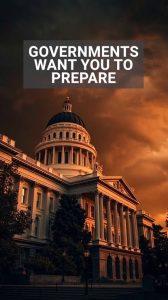
In October 2026, the Dutch government renewed its campaign, citing concerns about interruptions to vital services, extreme weather and sabotage-related incidents. The Dutch authorities reported that more than four in ten people had taken steps towards preparing for 72 hours without electricity, water and internet access. The campaign is particularly revealing because it treats emergency preparedness as a shared social responsibility rather than merely an individual shopping exercise.

    Global emergency preparedness    

BELGIUM: PREPARE FOR 72 HOURS WITHOUT ESSENTIAL SERVICES


Belgium's National Crisis Centre also advises households to prepare emergency kits. Its guidance recognises that people may need to remain at home or evacuate quickly when electricity, water, gas or internet services become unavailable. The recommended preparations include drinking water, non-perishable food, essential medicines, first-aid materials, hygiene products, mobile-phone chargers, external batteries and some cash. Belgium's guidance also stresses that emergency kits should reflect the needs of individual households, including children, older people, people with disabilities and those dependent on regular medication. The recommendation is consistent with the broader European Union preparedness approach.


FINLAND: WHY THE 72-HOUR PERIOD MATTERS
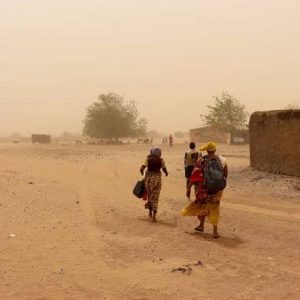
 

Finland's established 72 Hours preparedness programme encourages households to maintain food, water, medicines and other essential supplies. The rationale is practical: when a major emergency affects many people simultaneously, emergency services cannot necessarily attend to everyone immediately. The three-day period gives public authorities time to stabilise the situation and prioritise vulnerable populations. Finland also warns against excessive purchasing and panic-driven hoarding. The objective is to build a sustainable culture of preparedness, not to empty supermarket shelves.

    Global emergency preparedness    

JAPAN: PREPAREDNESS IS PART OF NATIONAL CULTURE


Japan's emergency-preparedness system has a different historical foundation. The country regularly faces earthquakes, tsunamis, typhoons and other natural hazards. Consequently, household emergency stockpiling has been an established feature of its disaster-management approach for years. Japan's Prime Minister's Office guidance, updated in October 2026, recommends maintaining at least three days of food and drinking water, alongside emergency supplies and arrangements for family communication. Authorities encourage households to practise rolling stock: buying and storing extra supplies of food they regularly consume, using older supplies first and replacing them during ordinary shopping. This system reduces waste and makes preparedness more affordable. Japan's recommendations should therefore not be presented as a newly issued warning of impending war. Their principal foundation is the country's long-standing exposure to natural disasters. Nevertheless, the same preparations can also help households cope with other forms of infrastructure disruption.


THE UNITED STATES: EMERGENCY SUPPLIES ARE NOT A NEW CONCEPT


The United States has long promoted household emergency preparedness through FEMA, Ready.gov and other public safety institutions. American guidance encourages households to maintain emergency food and water supplies, with a three-day supply of commercially bottled water per person forming a recognised baseline in federal food-safety guidance. The US Department of Agriculture's Food Safety and Inspection Service recommends keeping at least three gallons of bottled water per person, equivalent to approximately 11.4 litres, for three days. Households are also advised to maintain non-perishable food, medicines, first-aid materials and supplies for infants and pets. The American example is important because it demonstrates that emergency stockpiling is not necessarily a new response to current geopolitical tensions. It is an established component of disaster readiness.
    Global emergency preparedness    

THE BIGGER PICTURE: EUROPE IS BUILDING A PREPAREDNESS UNION


Perhaps the most significant development is not any single country's household checklist. It is the European Union's Preparedness Union Strategy, launched on 26 March 2025. The strategy identifies growing geopolitical tensions, armed conflicts, hybrid threats, cyberattacks, foreign information manipulation, climate change and natural disasters as interconnected challenges. It proposes 30 key actions, including strengthening essential services, improving strategic stockpiles, developing crisis-response coordination, conducting preparedness exercises and encouraging citizens to maintain at least 72 hours of essential supplies. The European Commission is therefore not merely encouraging citizens to buy bottled water. It is pursuing a wider programme to strengthen the ability of governments, institutions, businesses and communities to function when serious disruptions occur. There is an important security dimension to this approach.

NATO's September 2026 updated resilience requirements also place emphasis on civilian preparedness, continuity of government, resilient energy supplies, food and water security, communications, transport and the ability to support military operations during crises and conflict. NATO explicitly identifies cyberattacks, sabotage, attacks on critical infrastructure, supply-chain vulnerabilities and extreme weather as threats that can undermine national resilience. This is a substantial development. It demonstrates that, within the Euro-Atlantic security framework, civilian resilience is increasingly regarded as an integral part of national and collective defence.
    Global emergency preparedness    

SO, IS SOMETHING COMING THAT GOVERNMENTS ARE NOT TELLING US?


This is where speculation must give way to evidence. There are at least five developments that explain why governments are placing greater emphasis on preparedness.

  1. The possibility of geopolitical escalation - The war in Ukraine and wider tensions between major powers have forced European governments to reconsider the vulnerability of their territories, infrastructure and supply chains. Civilian preparedness is consequently being incorporated into national security planning. However, preparedness for a possible conflict does not establish that a particular conflict has been scheduled or is inevitable.

  1. Cyberattacks and sabotage - Modern societies depend heavily on interconnected digital and physical infrastructure. Electricity distribution, banking, telecommunications, water treatment, transport and healthcare systems depend on networks that can be disrupted by technical failures or malicious attacks. A major cyber incident or coordinated sabotage operation could create consequences extending far beyond the original target. A country does not necessarily need to experience a conventional military invasion before its population faces a serious national emergency.

  1. The vulnerability of global supply chains - Food, fuel, medicines, industrial materials and other essential products move through complex international supply networks. Conflict, trade restrictions, shipping disruptions, energy shortages or major transport failures can affect availability and prices far beyond the location where the original crisis occurs. Governments increasingly recognise that national resilience depends partly on the ability to withstand interruptions to international supply chains.

  1. Climate-related disasters and infrastructure failures - Floods, storms, wildfires, droughts and extreme temperatures can overwhelm emergency-response systems and interrupt essential services. The same emergency supplies that help a family survive a prolonged electricity failure can also prove useful during a natural disaster. This explains why many governments adopt an all-hazards approach rather than limiting preparedness to military conflict.

  1. The limits of emergency response - One of the most revealing principles in these campaigns is that governments cannot promise immediate assistance to everybody during a major crisis. When an emergency affects millions of people, authorities must prioritise hospitals, critical infrastructure, evacuation operations and those whose lives are in immediate danger.

Household preparedness reduces the pressure on emergency services during the first hours and days of a crisis. That is the logic behind the 72-hour recommendation.
  Global emergency preparedness    

AND AFRICA? ARE OUR GOVERNMENTS PAYING ATTENTION?


The suggestion that no African country is doing anything about emergency preparedness would be inaccurate. Nigeria, Ghana and South Africa, among others, have established disaster-management structures and public preparedness programmes. However, there is a legitimate question about the scale, consistency and visibility of public-facing household preparedness campaigns across the continent.

In Nigeria, the National Emergency Management Agency (NEMA) has a statutory mandate covering disaster prevention, preparedness, mitigation and response. Its activities include contingency stockpiling of relief materials, emergency coordination, disaster-risk awareness and collaboration with state and local emergency-management structures. In June 2025, NEMA launched a national disaster preparedness and response campaign in Lagos, focusing on grassroots resilience and flood-risk reduction. In June 2026, the agency commenced a review of the National Disaster Management Framework and National Disaster Response Plan, citing emerging risks including severe flooding, climate-related hazards, conflict-induced displacement, disease outbreaks and urban emergencies. NEMA also intensified flood-preparedness campaigns and public warnings during 2026. These are important interventions. But they are not the same as a sustained, nationwide household campaign asking every Nigerian family to prepare for 72 hours or longer without electricity, water, communications and normal access to essential goods.

Ghana's National Disaster Management Organisation (NADMO) also provides household and community safety guidance, including emergency kits containing water, food, medicines and important documents. South Africa provides another useful example. The City of Cape Town's official disaster guidelines recommend that households maintain enough supplies to survive at least three days, including five litres of water per person daily, non-perishable food, medication, a radio, batteries and first-aid materials. Therefore, Africa is not entirely silent. The more serious problem is that emergency preparedness across much of the continent is often communicated through separate hazard-specific interventions rather than a highly visible, consistent national household-resilience programme.

Nigeria, in particular, needs to move beyond seasonal flood warnings and emergency relief after disasters have already occurred. A comprehensive preparedness culture should address power failures, telecommunications disruptions, cyber incidents, fuel shortages, epidemics, flooding, insecurity, supply-chain disruptions and other emergencies. It should also extend beyond Abuja and state capitals into rural communities, informal settlements and vulnerable households.

  Global emergency preparedness    

WHAT SHOULD NIGERIA DO NOW?

Nigeria does not need to wait for a major international crisis before strengthening its household and national preparedness systems. The Federal Government, through NEMA and relevant ministries, should consider introducing a national household emergency-preparedness campaign with the following priorities:

  • A national 72-hour preparedness guideline: Provide simple, affordable advice on drinking water, food, medicines, sanitation, lighting, communication and first aid.

  • State and local preparedness plans: Require State Emergency Management Agencies and Local Emergency Management Committees to develop practical community-level emergency plans.

  • Public information and early-warning systems: Improve the delivery of timely, accessible and credible warnings through radio, television, mobile networks, community leaders and digital platforms.

  • Critical infrastructure protection: Strengthen contingency arrangements for electricity, telecommunications, water supply, transport, hospitals and financial services.

  • Community emergency networks: Train volunteers, community organisations, faith institutions and civil society groups in basic preparedness, first aid, evacuation and emergency communication.

  • Protection of vulnerable populations: Ensure that emergency plans account for older people, children, persons with disabilities, displaced populations and people dependent on essential medicines.

  • Regular simulations: Conduct practical emergency exercises so that citizens and institutions understand what to do when ordinary services become unavailable.

The campaign should be realistic about household poverty. Citizens should not be pressured to purchase expensive emergency kits or accumulate supplies they cannot afford. They should be encouraged to build modest reserves gradually, according to their circumstances.


OUR POSITION: PREPAREDNESS IS NOT PANIC


There is no verified evidence in the announcements examined for this report that Britain, Germany, Japan, Sweden, Norway, Belgium or the United States have collectively issued household stockpiling instructions because a global war is about to begin. Some of these programmes predate the current geopolitical tensions. Others have been expanded or relaunched in response to a wider assessment of emerging risks. Nevertheless, it would be equally irresponsible to dismiss the developments as meaningless.


The European Union's Preparedness Union Strategy, Sweden's explicit civil-defence guidance on war, Norway's extension of household preparedness to one week and NATO's strengthened civilian resilience requirements all point to a more serious approach to the possibility of prolonged national disruption. The message is clear: governments are recognising that modern societies can become vulnerable when essential systems fail, whether the cause is war, cyberattack, sabotage, natural disaster or a combination of threats. Perhaps the most important lesson for Africa is not that we should become frightened by what other governments are doing. It is that we should stop assuming that government assistance will always arrive immediately when a crisis occurs. A nation is not adequately prepared simply because it has an emergency agency, military personnel or relief warehouses. It is prepared when its institutions, infrastructure, communities and ordinary households know what to do when normal life is suddenly interrupted.

Nigeria and other African countries should take this conversation seriously, not because war is certain, but because preparedness is cheaper, wiser and more humane than waiting for a disaster before acting. The question African governments should answer is no longer whether an emergency can happen. It is whether their citizens will know what to do when it does.


SKY DNEWS - Unveiling the Truth, Empowering Change.

Leave a Reply

Your email address will not be published. Required fields are marked *

Verified by ExactMetrics