BAUCHI - September 2026: SkyDNews News Desk
The
Favoured Farmers Agro Geo-Cooperative Society Limited (FAGCO) has come under an institutional assessment by the
Development Exchange Centre (DEC) Small Scale Project Fund (SSPF), in an engagement designed not merely to review a proposed project, but also to examine the cooperative's governance structures, financial management, documentation, institutional relationships and readiness for sustainable growth.
The assessment visit brought to the fore the importance of strengthening community-based organisations and grassroots institutions that are increasingly becoming important actors in local development, particularly in areas such as women's economic empowerment,
agriculture, livelihoods and community resilience.
The DEC-SSPF assessment team comprised
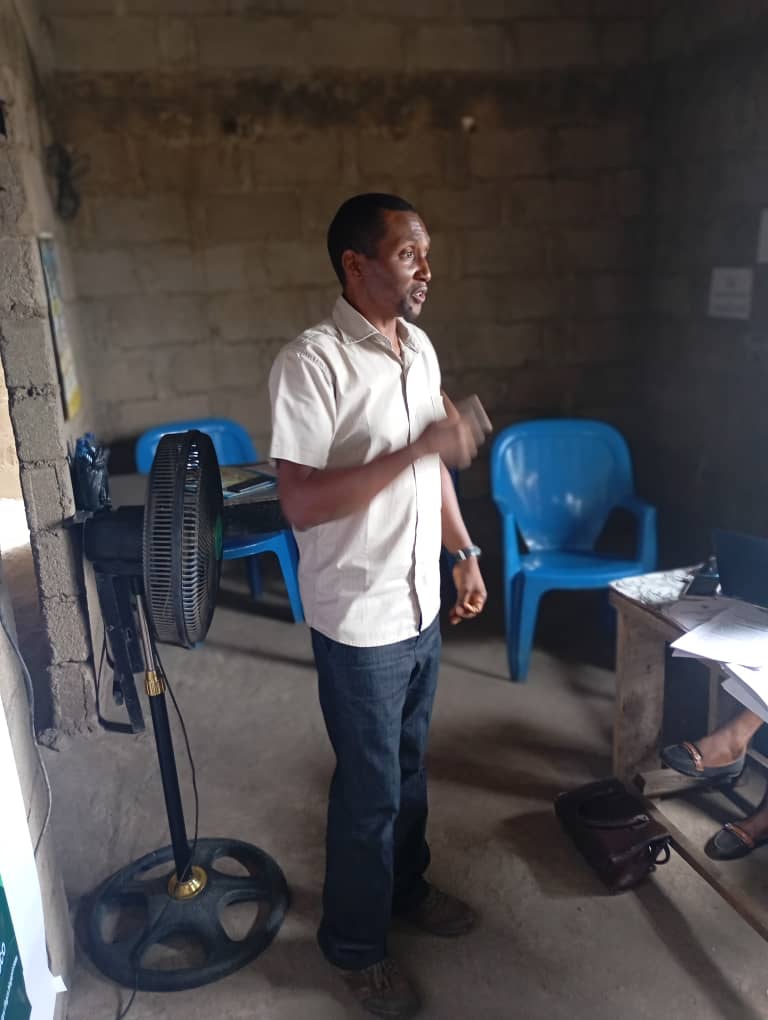
Mr. Mandam A. Dala and Mrs. Paulina Nathaniel, who engaged FAGCO's leadership and members during the assessment.

Who Is FAGCO?
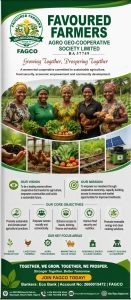
Favoured Farmers Agro Geo-Cooperative Society Limited (FAGCO) is a Bauchi-based, women-led agricultural cooperative society established to promote collective action, agricultural livelihoods and economic opportunities for its members.
The cooperative brings together women who participate in agricultural and livelihood activities and provides a platform through which members can pursue common economic interests, strengthen their productive capacity and improve their livelihoods.
FAGCO operates from
Watchman Catholic Charismatic Renewal Movement (WCCRM) District Office, along
Muda Lawal Market Road, Tudun Wada Dan'Iya (Bayangari), Bauchi, and has developed an organisational structure with elected leadership and management responsibilities.
Its work reflects a broader development reality in Nigeria: community-based organisations and cooperatives can serve as important vehicles for taking development interventions closer to households and communities.
For organisations such as FAGCO, however, access to opportunities and development funding must be accompanied by appropriate governance, documentation, financial controls and institutional capacity.
That is where the DEC-SSPF intervention comes in.
Why Did DEC-SSPF Visit FAGCO?
The assessment was part of DEC's wider
Small Scale Project Fund for Community Based Organizations (SSPF) programme, supported by
Bread for the World - Protestant Development Service, Germany (Brot für die Welt).
According to DEC's published project information, the SSPF programme is designed to strengthen existing formal and informal community-based organisations by improving their systems and structures for organisational development, growth and sustainability. The programme also provides technical and material support to CBOs working with women, persons with disabilities, adolescent girls and other vulnerable groups. The current Phase II programme covers
Bauchi, Gombe and Plateau States.
The programme is therefore not simply about providing financial resources to grassroots organisations. Its stated purpose includes strengthening the organisations themselves so that they can become more structured, accountable and capable of sustaining development initiatives.
DEC has worked for decades on community development, women's empowerment, livelihood and resilience, sustainable environment, good governance and related interventions. The organisation describes itself as a women-focused, non-governmental and not-for-profit organisation working to improve the wellbeing of women and communities through socio-economic interventions for sustainable development.
DEC's project history also records earlier Small Scale Project Fund support for CBOs, including a 2019 phase supported by Bread for the World and a 2022 Phase II covering Bauchi, Gombe and Plateau.
It was within this broader capacity-building and institutional-strengthening framework that FAGCO underwent the assessment.
From Application to Assessment
The assessment was initially scheduled for
Monday, August 31, 2026, at 10:00 a.m.
In its communication to FAGCO, DEC-SSPF requested the participation of the cooperative's relevant stakeholders, including members of its Board or governing structure, management officers, officials, leaders, staff, members and volunteers.
FAGCO was also requested to have its organisational documents and records available, including
financial records, minutes of meetings and policy documents.
The exercise was subsequently rescheduled to
Friday, September 4, 2026, at 10:00 a.m., while the other requirements remained unchanged.
The engagement was therefore structured as an organisational assessment rather than a routine courtesy visit.
DEC-SSPF Examines FAGCO's Institutional Systems
During the engagement, the visiting team identified several areas requiring attention.
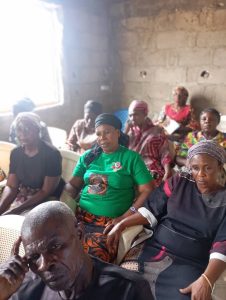
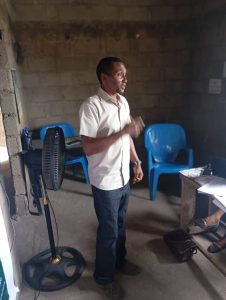
The meeting began with introductions by the DEC-SSPF representatives, followed by introductions of FAGCO members present.
The discussion subsequently moved into areas covering governance, financial management, documentation, institutional relationships, gender representation and organisational communication.
Rather than focusing exclusively on the proposed project, the assessment considered the wider institutional environment in which FAGCO operates.
Stronger Links With Government Institutions
One of the recommendations was for FAGCO to establish stronger relationships with relevant government institutions, particularly the
Bauchi State Ministry of Women Affairs and the
Ministry of Environment.
The organisation was advised to visit the relevant ministries, establish institutional relationships and seek appropriate support and guidance.
For FAGCO, such relationships could provide opportunities for technical engagement, institutional networking and alignment with relevant government programmes in areas connected to women, agriculture, livelihoods and the environment.
The recommendation also fits within DEC's broader development approach, which includes livelihood and resilience, sustainable environment, women's empowerment and good governance.
Women's Representation on the Board
The question of
women's representation on FAGCO's Board was another issue raised during the assessment.
The DEC-SSPF representatives advised the organisation to give greater consideration to women when selecting or appointing members of its governing Board.
The recommendation is particularly notable because FAGCO itself has a strong history of women's participation.
For a women-led cooperative, the composition of the governing structure becomes an important part of ensuring that the voices and experiences of women remain adequately reflected at the level where major organisational decisions are made.
Board Meetings and Documentation
The DEC-SSPF team also emphasised the importance of regular Board meetings and proper documentation.
FAGCO was advised to ensure that its Board meets regularly and that
minutes and records of meetings are properly prepared, documented and preserved.
This requirement may appear administrative, but organisational records are fundamental to institutional memory.
Minutes provide evidence of decisions taken, responsibilities assigned and issues considered by an organisation's governing body. They also help an organisation demonstrate accountability to members, partners and other stakeholders.
For a cooperative moving into development partnerships, maintaining accurate institutional records can become increasingly important.
Official Email Access
The assessment also examined FAGCO's management of its official email account.
The visiting team advised that the organisation's official email should be accessible to
at least three authorised persons.
The recommendation is aimed at ensuring institutional continuity and preventing critical organisational communication from being dependent on a single individual.
As organisations develop relationships with government institutions, development partners, banks and other stakeholders, access to official communication channels becomes an institutional responsibility rather than a personal one.
Separate Project Accounts
Financial management was another significant area of discussion.
FAGCO was advised to open
separate sub-accounts for individual projects.
The objective is to make it easier to distinguish funds allocated to particular projects from other organisational resources.
Project-specific accounts can also facilitate clearer financial tracking, reconciliation, reporting and monitoring, particularly where an organisation is implementing more than one activity or working with different partners.
Monthly Financial Reporting
The DEC-SSPF representatives further recommended that
monthly financial reporting should be made mandatory within FAGCO.
Regular financial reports would provide the organisation's management and governing structures with a consistent picture of its financial activities.
Such reports can help management track expenditure, identify outstanding obligations, monitor project resources and maintain better internal financial oversight.
The recommendation also reinforces the broader objective of developing community organisations that possess the systems required to manage development resources responsibly.
Correction to FAGCO's Vision Statement
The assessment was not restricted to finances and governance.
The visiting team also reviewed FAGCO's vision statement and recommended a grammatical adjustment to its wording.
The team advised the organisation to change the opening from:
“To be a leading women…”
to:
“To become a leading women…”
Although the adjustment concerns only the wording of the vision, it forms part of the broader process of ensuring that an organisation's governing and strategic documents are properly developed, reviewed and maintained.
A Development Programme Beyond Funding
The FAGCO assessment illustrates an important dimension of the DEC-SSPF model.
Community organisations often need more than financial resources to deliver sustainable development interventions. They also need functional governance systems, financial controls, documentation, institutional relationships, capable leadership and mechanisms for accountability.
This is central to the rationale behind the SSPF programme.
DEC's published description of the current SSPF Phase II says its overall goal is to
enhance local organisations' capacities for sustainable development, including strengthening their systems and structures for organisational development, growth and sustainability.
The programme is supported by
Bread for the World (Brot für die Welt), Germany, and operates across
Bauchi, Gombe and Plateau States.
In practical terms, the relationship creates a pathway in which an organisation at community level can receive not only project-related support but also exposure to institutional standards, organisational development processes and accountability requirements.
For FAGCO, the assessment therefore represents another stage in its development as a structured cooperative capable of engaging wider development opportunities.
The Road Ahead for FAGCO
The issues identified during the assessment provide FAGCO with a clear set of areas requiring attention.
These include:
- stronger relationships with relevant government ministries;
- greater consideration for women in Board representation;
- regular Board meetings;
- proper documentation of Board proceedings;
- wider authorised access to the official organisational email;
- separate financial sub-accounts for projects;
- mandatory monthly financial reporting; and
- correction and strengthening of institutional documents, including the vision statement.
The meeting ended at approximately
2:00 p.m., with the closing prayer led by
Sister Chinyere Iwumune.
The minutes of the meeting were signed by
Nneka David, Secretary, on behalf of FAGCO.
From Grassroots Cooperative to Stronger Development Institution
The significance of the DEC-SSPF engagement therefore goes beyond one assessment visit.
FAGCO's experience reflects a wider effort to strengthen the capacity of grassroots organisations to become more structured participants in community development.
DEC itself traces its history to
1987 and says its work has included functional adult education, vocational skills development, livelihood and resilience, sexual and reproductive health education, water and sanitation, sustainable environment, democracy and good governance, and microfinance.
Through the SSPF model, that institutional-development philosophy is being extended to community-based organisations in Bauchi, Gombe and Plateau.
For FAGCO, the next phase is therefore not simply about receiving recommendations, but about translating those recommendations into working systems.
Good governance must be reflected in functioning Boards. Accountability must be visible in financial records. Institutional continuity must extend beyond individual office holders. And partnerships with government and development actors must be built on a credible organisational foundation.
As FAGCO continues its work in agricultural and livelihood development, the DEC-SSPF assessment provides an opportunity to strengthen the cooperative from within, building the structures that can support its members, projects and partnerships over the longer term.