Nigeria 2027 Elections | SkyDNews Editorial Desk
INEC's admission of AI-generated photographs, questionable voter records and registration irregularities raises serious questions about electoral credibility. Nigerians deserve answers before the next general election.
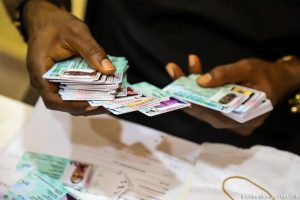
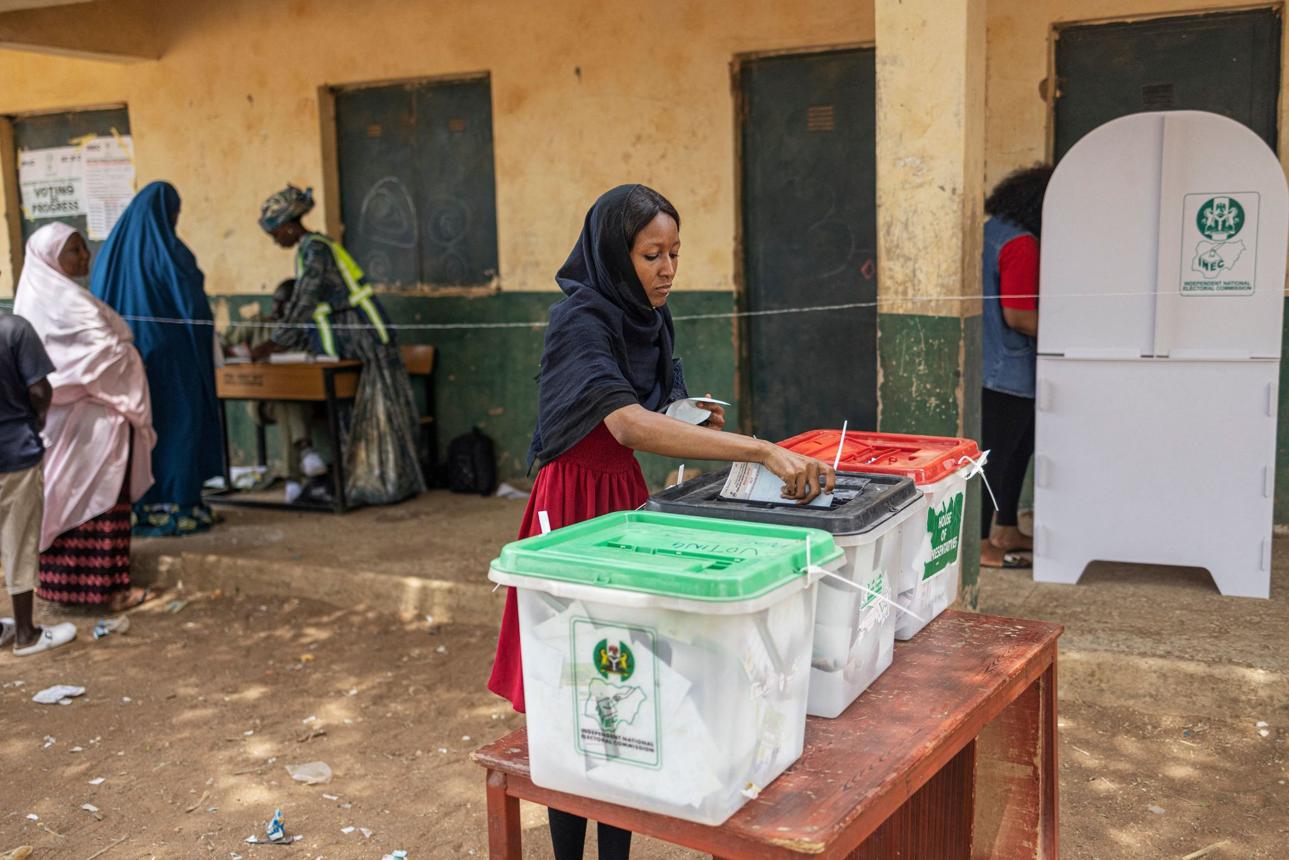
Nigeria 2027 elections are approaching amid growing concerns about the credibility, transparency and integrity of the country's electoral process. Recent revelations surrounding INEC's preliminary voters' register, including questionable records and suspected AI-generated photographs, have raised serious questions about the commission's preparedness to protect the people's mandate. Is Nigeria heading towards an avoidable electoral credibility crisis?
The concern is not merely about who will win the 2027 general elections. It is whether Nigerians can trust the process through which their votes will be registered, accredited, counted and declared.
An election can be competitive, attract millions of voters and produce a declared winner, yet still suffer a crisis of public confidence if the process lacks transparency, accountability and verifiable integrity.
Recent developments surrounding Nigeria's voters' register have brought this concern into sharp focus.
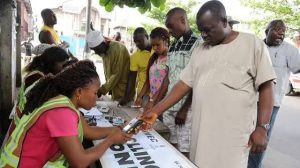
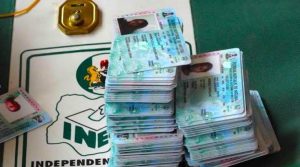
On October 26, 2026, the Independent National Electoral Commission (INEC) published its preliminary voters' register online, triggering public concerns over suspected AI-generated photographs, duplicate records and entries bearing the names of deceased Nigerians.
On October 30, INEC's Director of Information and Communication Technology, Dr Lawrence Bayode, reportedly acknowledged that some registration officers had used their official access credentials to introduce questionable records, including AI-generated photographs, into the database. The commission said its Automated Biometric Identification System (ABIS) helped uncover the irregularities.
This admission changes the nature of the conversation.
The issue is no longer simply whether citizens have identified suspicious entries online. It is also about how those entries entered an official electoral database, who was responsible, what internal safeguards failed and whether the commission can establish the full extent of the problem.
TheCable reported the commission's explanation on October 30, 2026.
THE QUESTION OF NON-CITIZEN VOTING: WHAT DOES THE LAW SAY?
Nigeria's electoral law is unambiguous about citizenship.
Section 77(2) of the 1999 Constitution provides that every Nigerian citizen who has attained 18 years and meets the constitutional requirements is entitled to be registered as a voter.
Furthermore, Section 12(1)(a) of the Electoral Act 2026 expressly requires a person seeking voter registration to be a Nigerian citizen.
This means that non-Nigerian citizens are not legally entitled to register and vote in Nigeria's elections.
Interestingly, INEC's Chairman, Professor Joash Ojo Amupitan, had already identified registration by non-citizens, duplicate registrations, deceased persons and incomplete or inaccurate records among the persistent concerns affecting the national voters' register.
The commission consequently announced plans for a nationwide voter revalidation exercise ahead of the 2027 elections.
This is an important acknowledgement.
However, there is a fundamental distinction that Nigerians must understand: the discovery of questionable voter records does not automatically establish that non-citizens have successfully voted, nor does an AI-generated photograph prove that a fictitious person was accredited or cast a ballot.
These are different allegations requiring different forms of evidence.
If non-citizens have been registered, how many? In which states and local government areas? Were they subsequently removed? Did any obtain PVCs? Did any successfully pass accreditation and vote?
INEC must answer these questions with verifiable data, not general assurances.
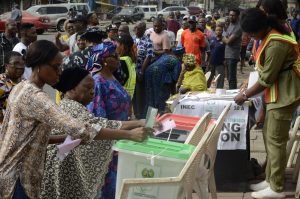
THE NUMBERS MUST BE EXAMINED, NOT JUST ANNOUNCED
Nigeria had 93,469,008 registered voters for the 2023 general elections.
The preliminary register published in October 2026 has been reported to contain more than 103 million entries.
That is a substantial increase, and it deserves proper examination.
However, an increase in registration figures is not evidence of electoral fraud in itself. Nigeria's population grows, new citizens attain voting age, and eligible citizens register.
The relevant question is the quality and authenticity of the entries.
How many are genuine eligible voters? How many are duplicate records? How many belong to deceased persons? How many contain inaccurate biometric information? How many may have been improperly introduced by registration officers?
Most importantly, what independent verification has been conducted?
INEC should publish a detailed breakdown of the findings from its verification exercise, subject to appropriate privacy safeguards.
The commission must also preserve the underlying database, biometric records, access logs, photographs, registration histories and other relevant digital evidence.
Where officials are implicated, administrative action and criminal investigation should follow due process.
Nigeria cannot afford a situation in which serious allegations are acknowledged but nobody is held accountable.
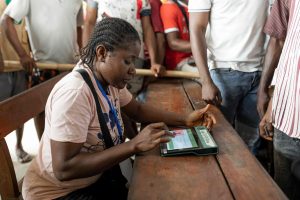
WE HAVE BEEN HERE BEFORE: NIGERIA 2027 ELECTIONS, WHY THE VOTERS' REGISTER MATTERS AND THE LESSONS OF 2023
The credibility concerns surrounding the 2027 elections cannot be separated from the experience of the 2023 general elections.
The European Union Election Observation Mission's final report identified significant weaknesses in electoral administration, transparency and public confidence.
Among its concerns were the delayed uploading of presidential election results to INEC's Results Viewing Portal (IReV), operational problems involving the Bimodal Voter Accreditation System (BVAS), shortcomings in the publication of results and the absence of sufficient transparency in some stages of the process.
The EU observers also recommended an independent audit of the voters' register to improve its accuracy and reliability.
These were not merely political complaints from defeated candidates. They were findings from an international observation mission that monitored the electoral process.
The National Democratic Institute and International Republican Institute also identified logistical and technological failures, political violence, vote manipulation and other weaknesses in their assessment of the 2023 elections.
Nigeria should have treated these findings as an opportunity for comprehensive reform.
Instead, the current controversies suggest that some fundamental questions about electoral transparency remain unresolved.
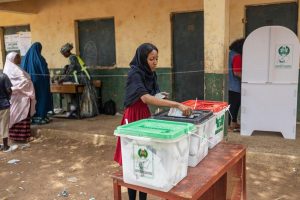
NIGERIA 2027 ELECTIONS: THE DANGERS GO BEYOND THE BALLOT BOX
An election crisis does not necessarily begin with violence at a polling station.
Sometimes, it begins much earlier, when citizens lose confidence in the institutions responsible for protecting their democratic rights.
When voters believe that electoral outcomes can be manipulated, when political parties suspect the register is compromised, and when the electoral commission fails to provide convincing explanations, the consequences can extend beyond election day.
Public distrust can encourage voter apathy, deepen political divisions, increase tensions and create an environment in which misinformation and inflammatory narratives flourish.
This is why electoral integrity should be treated as a national security and democratic stability priority.
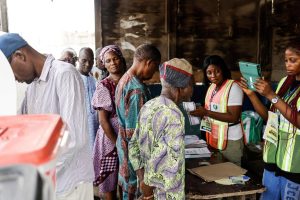
NIGERIA 2027 ELECTIONS: WHAT MUST INEC DO NOW?
The time for public relations assurances is over. Nigerians need measurable action.
We propose the following urgent measures:
-
Conduct an independent forensic audit of the voters' register - Qualified independent experts should examine the integrity of the database, biometric records, suspected AI-generated photographs, duplicate entries and questionable registration histories.
-
Identify and investigate responsible officials - INEC should establish who introduced the irregular records, how they gained access, whether the conduct was deliberate and what disciplinary or criminal proceedings are warranted.
-
Publish a transparent account of the findings - Nigerians deserve state-by-state and local government-level information about verified irregularities, corrections and outstanding cases, without compromising citizens' personal data.
-
Establish a credible public complaints and verification mechanism - Political parties, civil society organisations, accredited observers and individual citizens should have accessible channels to report suspicious entries and receive responses.
-
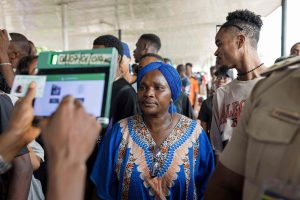
Strengthen BVAS and voter accreditation safeguards - A clean register must be matched by reliable voter accreditation. Every vote must be traceable to a legally eligible, properly accredited voter.
-
Protect whistleblowers and preserve digital evidence - Those who expose wrongdoing must be protected, while all relevant database records, access histories and audit trails must be preserved for independent investigation.
-
Enforce accountability without political discrimination - No official, political party, candidate or individual should be protected from investigation because of political affiliation or position.
THE POLITICAL CLASS MUST ALSO BE HELD RESPONSIBLE
Though, the credibility of the Nigeria 2027 elections will depend significantly on the accuracy and integrity of the national voters' register, yet it should be noted that INEC cannot carry the entire burden of electoral integrity alone.
Political parties must stop treating elections as a war that must be won at all costs.
Candidates must reject vote buying, intimidation, identity manipulation, disinformation and the mobilisation of ethnic or religious hostility.
Security agencies must protect voters without becoming instruments of political intimidation.
The judiciary must provide timely and impartial remedies where electoral rights are violated.
Civil society organisations and the media must intensify independent monitoring, voter education and evidence-based reporting.
Democracy cannot survive where political victory becomes more important than the integrity of the process.
16 JANUARY 2027: THE CLOCK IS TICKING
INEC's published election calendar fixes January 16, 2027, for the presidential and National Assembly elections, followed by February 6, 2027, for governorship and State House of Assembly elections.
That leaves limited time to resolve the questions surrounding the voters' register and strengthen public confidence.
The commission must understand that credibility cannot be demanded. It must be earned through transparency, competence, consistency and accountability.
The preliminary register is precisely the stage at which questionable entries should be identified and corrected. That opportunity must not be wasted.
However, the public must also understand that scrutiny of a preliminary register is not evidence that the entire electoral system has collapsed. The appropriate response is rigorous verification, not panic.
SKYDNEWS POSITION: NIGERIA MUST NOT WAIT FOR AN ELECTORAL DISASTER
We are not declaring that Nigeria's 2027 elections have already been compromised. Neither are we suggesting, without evidence, that millions of fictitious voters or non-citizens are preparing to determine the country's political future.
But we are saying that the warning signs are serious enough to demand urgent, independent and transparent action.
A credible election is not simply one in which voting takes place. It is one in which eligible citizens can vote freely, every vote is properly accounted for, results can be independently verified, and those responsible for electoral misconduct face the consequences.
The right to vote belongs to Nigerian citizens. It must not be compromised by administrative negligence, deliberate manipulation, political interference or institutional indifference.
INEC must clean up the register, expose wrongdoing and demonstrate that its safeguards are capable of protecting the people's mandate.
The National Assembly must provide effective oversight. Political parties must demand transparency without manufacturing allegations. Civil society must remain vigilant. The media must investigate without sensationalising.
Above all, the Nigerian people must insist that their votes count.