When a Political Party Becomes the Government - and Government Becomes a Test of Its Promises
There is a lesson Nigeria must learn from the years of the All Progressives Congress (APC): no political party possesses a magic wand capable of fixing a country as complex as Nigeria.
Political parties are vehicles. They can formulate policies, win elections, appoint governments and control institutions, but they do not manufacture wisdom.
The fundamental question, therefore, is not simply whether APC has made mistakes.
Every government makes mistakes.
The more important question is whether the mistakes were avoidable, whether warnings were ignored, whether institutions were sufficiently consulted, whether corrective mechanisms worked, and whether government learned quickly enough when policies produced consequences different from those anticipated.
The APC story is particularly important because the party has now governed Nigeria continuously since 2015.
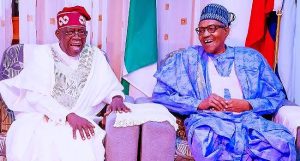
Muhammadu Buhari assumed office on 29 May 2015 after APC defeated the incumbent People's Democratic Party. Bola Ahmed Tinubu succeeded Buhari on 29 May 2023.
The party's tenure therefore provides Nigerians with something unusually valuable: more than a decade of evidence with which to examine what happens when a political organisation moves from opposition rhetoric to prolonged control of the federal government.
And that examination should not be conducted as a campaign advertisement for another party.
It should be conducted as a national audit of political promises, decisions, consequences and lessons.

FROM "CHANGE" TO GOVERNMENT
The APC emerged as a major opposition coalition promising change after years of PDP rule.
Its political appeal was built substantially around three broad expectations: • improved security; • stronger anti-corruption efforts; • better economic management.
The promise was politically powerful because Nigeria entered the 2015 election under serious pressure.
The Boko Haram insurgency had devastated communities in the North-East. Oil prices had fallen sharply. Public finances were under strain. Corruption was a major public concern.
Infrastructure deficits were enormous. Youth unemployment and underemployment were widespread.
The APC therefore did not merely inherit a functioning machine.
It inherited a country with deep structural problems.
But this is precisely where the distinction between inheritance and responsibility becomes important.
A government can legitimately explain the problems it inherited.
It cannot indefinitely use the inherited condition of the country as an explanation for every problem that occurs during its own tenure.
After enough years in office, the party becomes responsible not only for what it inherited but also for what it subsequently created, changed, neglected or failed to correct.
That is one of the most important lessons of the APC experience.
THE BUHARI YEARS: CHANGE MEETS THE REALITIES OF GOVERNMENT
Muhammadu Buhari's government came to power with enormous expectations.
Its anti-corruption reputation was central to its political identity.
Its security credentials were equally important.
But governing Nigeria proved considerably more complicated than campaigning against the previous administration.
The Buhari administration did record important interventions, including major infrastructure projects, reforms in parts of public finance, agricultural interventions, the creation of the Treasury Single Account framework, and significant investment in roads and rail infrastructure.
The government also eventually implemented the long-discussed removal of petrol subsidies - although the decisive announcement came after Buhari had left office.
But the overall economic record became increasingly difficult.
The IMF's 2022 Article IV assessment found that important recommended reforms had progressed only partially or had been delayed. It specifically noted unresolved issues around fuel subsidies, exchange-rate distortions, monetary policy, electricity tariffs and fiscal transparency.
This is important because many of the economic problems later confronted by Tinubu did not suddenly appear in May 2023.
They had been accumulating for years.
THE FUEL-SUBSIDY PARADOX
Few issues demonstrate the complexity of Nigeria's political economy better than petrol subsidy.
For years, successive Nigerian governments maintained the subsidy system despite repeated warnings about its fiscal cost and weaknesses.
Under Buhari, the government continued to spend enormous resources supporting petrol prices.
The IMF noted that higher oil prices during the Buhari period created an opportunity to build fiscal buffers, but instead increased petrol subsidy costs absorbed substantial resources.
By July 2022, Reuters reported that Nigeria's Excess Crude Account had fallen to approximately $376,655, compared with about $2.1 billion when Buhari took office in 2015. The report connected the depletion to factors including limited crude exports, oil theft, fuel subsidies, debt pressures and the broader weakness of public finances.
This should not be interpreted as meaning that every naira lost from the account was simply "spent by APC."
Nigeria's fiscal position is affected by oil production, international prices, exchange rates, production disruptions, debt obligations and several other variables.
But the evidence demonstrates something more fundamental: Nigeria's governments repeatedly postponed difficult decisions until the cost of postponement became larger.
That is a lesson that applies to every political party.
OIL THEFT AND THE CONTRADICTION OF AN OIL-RICH COUNTRY
Nigeria possesses enormous petroleum resources.
Yet during the Buhari years, oil production repeatedly suffered from theft, vandalism, technical problems and underinvestment.
This created a remarkable national contradiction.
Nigeria could experience high international oil prices while simultaneously struggling to generate sufficient revenue from its own crude.
The problem was not simply the price of oil.
It was the ability of the Nigerian state to secure production, monitor the petroleum industry, collect revenues and manage the resources transparently.
The same contradiction would eventually confront the Tinubu administration.
And that demonstrates why changing presidents is not enough.
Institutional capacity matters more than political slogans.
INSECURITY: THE PROMISE THAT COULD NOT BE REDUCED TO A SLOGAN
Security was one of APC's strongest political selling points.
Yet insecurity did not disappear under Buhari.
Boko Haram remained a serious threat in the North-East.
Banditry and mass kidnapping expanded dramatically in parts of the North-West.
Communal violence, farmer-herder conflicts, separatist tensions and criminality affected other parts of the country.
By the end of Buhari's administration, Nigerians were still asking why a government elected partly on a promise to restore security had not been able to establish durable security across the country.
This does not mean the armed forces achieved nothing.
They conducted military operations, recovered territory, eliminated numerous insurgents and disrupted terrorist networks.
But military operations alone could not solve the underlying problem.
Security requires intelligence, policing, judicial capacity, border management, local governance, employment opportunities, education and community cooperation.
The World Bank continues to identify banditry, kidnapping, insurgency and separatist agitation among Nigeria's persistent challenges.
That means the problem survived the transition from Buhari to Tinubu.
And it remains a national problem rather than an APC problem alone.
THE ECONOMY: WHEN MACROECONOMIC NUMBERS AND HUMAN EXPERIENCE COLLIDE
One of the most important mistakes in political argument is to treat either economic statistics or people's experiences as the entire truth.
Both matter.
A government may produce better fiscal numbers while citizens are still struggling.
A country can record GDP growth while household purchasing power declines.
Foreign reserves can rise while food remains unaffordable.
Inflation can fall from a previous peak while prices remain much higher than they were before.
This is precisely why the APC economic record requires a more careful examination.
The World Bank reported that Nigeria's extreme poverty increased substantially between 2018-19 and 2022-23. Its 2026 analysis estimated extreme poverty at 41.8% in 2022-23 under the $3-per-day international poverty line.
That period substantially overlaps the Buhari administration.
So the claim that APC inherited poverty cannot by itself explain the subsequent trajectory.
But neither should the figures be interpreted as proof that every increase was caused exclusively by APC policy.
COVID-19, global food prices, Russia's invasion of Ukraine, climate shocks, oil-market conditions and other external factors also affected Nigeria.
The correct conclusion is therefore more measured: APC governed during a period in which poverty, insecurity and economic vulnerability remained severe, and its policies must be assessed according to whether they reduced or aggravated those structural problems.
THE NAIRA REDESIGN: A POLICY THAT BECAME A NATIONAL TRAUMA
The Buhari administration's naira redesign remains one of the clearest examples of how a potentially defensible policy can become damaging through implementation.
The Central Bank of Nigeria redesigned major denominations and imposed a deadline for exchanging old notes.
The stated objectives included reducing cash outside the banking system, strengthening the formal financial sector, combating illicit cash holdings and improving monetary management.
But the implementation generated severe cash shortages. Millions of Nigerians, particularly people operating in an overwhelmingly cash-dependent informal economy, struggled to access money.
The World Bank subsequently observed that the previous mix of fiscal, monetary and exchange-rate policies, including the naira redesign, did not deliver the desired improvements in growth, inflation and economic resilience.
That is a major governance lesson.
A policy objective can be legitimate while its implementation can still be wrong.
Governments must therefore measure policies not only by their intentions but by their consequences.
TWITTER AND THE QUESTION OF STATE POWER
In June 2021, the Buhari government suspended Twitter in Nigeria.
The government said the platform was being used for activities capable of undermining Nigeria's corporate existence.
The suspension came shortly after Twitter removed a post by President Buhari that violated the platform's rules.
Whatever one's position on the underlying dispute, the episode raised a fundamental democratic question:
How much power should government exercise over citizens' access to communication platforms?
The issue was not simply Twitter.
For a country seeking to build a modern digital economy, restrictions on communication platforms carry economic and democratic consequences.
The lesson extends beyond APC: A democratic government must be able to protect national security without unnecessarily shrinking the civic space required for citizens to question government.
THE APC AND THE 2023 ELECTION
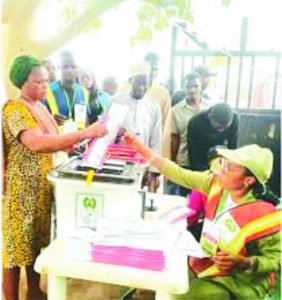
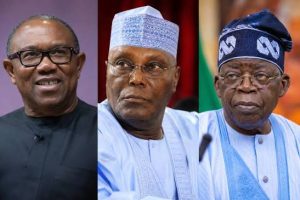
Bola Tinubu was declared winner of the presidential election with 8,794,726? No, the official figure was 8,894,726 votes, representing 36.61% of the votes cast, according to the EU Election Observation Mission's account of INEC's declaration.
But winning an election and conducting a trusted election are not identical questions.
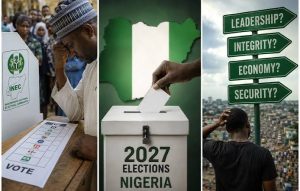
The European Union Election Observation Mission identified shortcomings in electoral law and administration and said these damaged trust in INEC. It recommended reforms involving electoral transparency, INEC appointments, publication of results, media protection, women's political participation and electoral-offence accountability.
The Nigerian government rejected the EU assessment, arguing that the report was flawed and that the election was credible.
Both facts belong in the historical record.
The courts ultimately upheld Tinubu's victory.
But the larger institutional lesson survives the legal outcome: Nigeria cannot afford elections in which large sections of the population lose confidence in the process.
That is not an APC-only lesson.
It is a Nigerian democratic lesson.
THEN CAME TINUBU
Bola Ahmed Tinubu inherited a country with enormous structural problems.
He also inherited a government whose economic contradictions had become increasingly difficult to sustain.
Within hours of taking office in May 2023, Tinubu announced the end of the petrol subsidy.
He subsequently pursued foreign-exchange liberalisation and other major economic reforms.
The IMF and World Bank both acknowledged that the reforms addressed longstanding distortions.
The World Bank described the removal of petrol subsidy and FX reforms as important steps toward restoring fiscal space and macroeconomic stability.
The IMF similarly described the reforms as significant measures aimed at restoring macroeconomic stability.
But neither should the pain be dismissed because the reforms were economically defensible.
Both realities can exist simultaneously.
THE COST OF REFORM
The removal of the petrol subsidy produced an immediate and enormous shock.
The World Bank reported that between May and the second half of 2023, retail petrol prices increased by an average of 163%, while the naira depreciated significantly following the move toward a unified foreign-exchange market.
Inflation subsequently reached exceptionally high levels.
By June 2024, Nigeria's headline inflation had reached 34.19%, according to Reuters, while food inflation reached 40.87%.
The government argued that the reforms were necessary to prevent a deeper fiscal crisis.
That argument has received support from international financial institutions.
The IMF's assessment noted that compensatory measures for poor households were not scaled up in a timely manner and were subsequently paused amid corruption concerns.
This is one of the most important criticisms that can legitimately be made of the reform process:
THE DIFFERENCE BETWEEN STABILISING AN ECONOMY AND IMPROVING LIVES
By 2025-26, the picture became more complicated.
The World Bank reported that inflation had fallen from 33.2% in 2024 to 23.0% in 2025, while the economy grew by about 4%.
Foreign reserves improved and fiscal revenues increased.
These are significant macroeconomic developments.
But the same World Bank assessment estimated that about 63% of Nigerians were living below the national poverty line in 2025 and that an additional seven million people had fallen into poverty during that year. It also said food inflation disproportionately affected poor households.
This apparent contradiction should be central to any serious assessment of Tinubu's economic programme.
Macroeconomic stabilisation is not the same thing as household prosperity.
A government can successfully repair some macroeconomic distortions and still fail to make ordinary people feel economically secure.
The ultimate test of reform must therefore include both: Are the economic foundations becoming stronger? and Are Nigerians becoming more capable of living decent lives?
TAX REFORM: THE NEXT TEST OF POLITICAL SENSITIVITY
Tinubu's government also embarked on major tax reforms.
The objective was to simplify Nigeria's fragmented tax system, improve revenue mobilisation and strengthen the state's fiscal capacity.
There is an obvious economic argument for improving domestic revenue.
But the process again demonstrated the political danger of reform without sufficient consensus.
Implementation was subsequently set for January 2026 despite controversy surrounding the final legislative texts.
This provides another lesson: A technically sound reform can still generate legitimate democratic objections if stakeholders believe they were inadequately consulted or if legislative processes are unclear.
THE "FAKE AGENCY" EPISODE: A WARNING FROM INSIDE GOVERNMENT
The most recent development cited in the material supplied for this investigation deserves special attention.
National Brands Development and Made-in-Nigeria Special Project Office.
According to ICPC, the entity had been allocated office space within the Office of the Secretary to the Government of the Federation.
The commission said the organisation was being promoted by George Buchi Nwabueze and alleged collaboration by public officials.
President Tinubu subsequently ordered Nwabueze's arrest and the suspension of three permanent secretaries pending investigation.
This is not a trivial administrative matter.
If the allegations are established, the implications would extend far beyond one individual.
The ICPC itself described the matter as involving suspected collaboration with senior public servants.
However, due process matters.
The allegation must not be converted into a conviction before investigation and trial establish the facts.
There is also an important competing account.
Nwabueze reportedly maintained that the initiative was not a federal agency and claimed that the project had existed since 2010. He also reportedly claimed that it predated the Tinubu administration. Checks cited by The PUNCH found that the organisation was not listed as a separate federal agency or budgetary agency in the 2026 Appropriation Act.
Other reporting found that the organisation presented itself as a Federal Government project and operated a nationwide structure.
There are also reports that it claimed an approval dating to 2017 during the Buhari administration.
That last point is particularly important.
If the investigation establishes that the organisation existed or obtained official accommodation during the Buhari years, then responsibility cannot simply be placed on Tinubu because the discovery occurred during his administration.
Conversely, if the investigation establishes that current officials enabled its continued operation, responsibility for that continuation would belong to the current administration.
That is why a proper investigation matters more than political propaganda.
THE DEEPER QUESTION BEHIND THE FAKE-AGENCY STORY
The biggest question is not: "Who is the fake agency?"
That is an institutional question.
A strong state should have multiple verification points.
A government establishment should have a legal basis.
Its mandate should be traceable.
Its funding should be identifiable.
Its officials should be verifiable.
Its premises should have an administrative record.
Its activities should fall under a recognised ministry, department or agency.
Its budgetary status should be clear.
Its procurement should be traceable.
Its appointments should have a legal and administrative foundation.
If an organisation can bypass enough of these safeguards to operate inside the federal administrative ecosystem, then the problem is bigger than the individual allegedly behind it.
It points toward an institutional vulnerability.
And that vulnerability did not necessarily begin with Tinubu.
It is precisely why the episode should become a national governance audit rather than merely another political scandal.
APC'S OTHER GREAT PROBLEM: PARTY AND STATE
Another lesson from the APC years concerns the relationship between the political party and the government.
A political party needs loyalty.
A government needs competence.
These are not always the same thing.
Political parties naturally reward supporters.
But government appointments should also reflect competence, integrity, technical capacity, regional inclusion and institutional needs.
When political loyalty becomes more important than competence, the state begins to serve the party rather than the public.
When competence becomes the only consideration and political realities are ignored, government can lose democratic legitimacy.
The answer therefore lies in balance.
Nigeria needs political appointments that are politically accountable and professionally capable.
DEFECTORS AND THE PROBLEM OF POLITICAL PRINCIPLE
The APC itself has experienced substantial defections since its formation.
This is not unique to APC.
Nigerian politics has historically been characterised by politicians moving between parties.
Indeed, APC itself was born substantially from the merger of opposition forces.
During Buhari's tenure, lawmakers also defected from APC to opposition parties, demonstrating that party cohesion could not be guaranteed even when the party controlled the presidency. Reuters reported a major wave of defections in 2018.
In Tinubu's period, the ruling party has also attracted prominent politicians from opposition parties.
That raises an uncomfortable question for Nigeria: Are political parties ideological organisations, or are they vehicles for accessing power?
If politicians can cross the political divide whenever political circumstances change, voters must ask what exactly they are voting for.
A party should stand for more than the personality of its presidential candidate.
It should possess an identifiable philosophy, institutional discipline, internal democracy and a clear programme that survives individual politicians.
THE APC'S MOST IMPORTANT LESSON: GOVERNMENT IS BIGGER THAN THE PARTY
Nigeria's fundamental problem is not simply APC.
It is not simply PDP.
It is not simply Labour Party.
It is not simply NNPP.
It is not simply any individual president.
Nigeria's deeper problem is the weakness of institutions relative to the size and complexity of the country.
A president can change.
A minister can change.
A political party can change.
But if the institutions remain weak, the same problems return under different political colours.
That is why the discovery of alleged fake government structures is so significant.
The same principle applies to procurement.
To elections.
To public finance.
To security.
To appointments.
To taxation.
To petroleum revenue.
To public debt.
To government agencies.
A country cannot be stronger than the systems through which its government operates.
THE APC'S ECONOMIC REFORMS DESERVE A FAIR READING
It would be intellectually dishonest to write an investigation of APC rule and pretend that nothing positive occurred.
The Tinubu administration has undertaken reforms that previous governments had postponed.
The petrol subsidy was substantially removed.
The foreign-exchange regime was changed.
Multiple exchange-rate distortions were addressed.
Revenue mobilisation has been strengthened.
The World Bank reported stronger external and fiscal positions and continued economic growth.
The IMF likewise acknowledged the importance of the reforms.
These are facts.
The reforms produced major increases in the cost of living, particularly during the early period.
Therefore, the correct public-interest question is not: "Are Tinubu's reforms good or bad?"
It is: "Are the reforms being implemented in a way that converts macroeconomic adjustment into broad-based improvements in Nigerians' lives?"
That is the question future governments must answer.
THE BUHARI-TINUBU TRANSITION REVEALS SOMETHING IMPORTANT
The two APC administrations should not be treated as completely separate governments.
Tinubu inherited Buhari's institutional and economic architecture.
But Tinubu also deliberately changed important parts of it.
Therefore, there are three categories of responsibility:
1. Problems inherited from before APC - These include structural weaknesses that existed long before 2015.
2. Problems created or worsened during Buhari's APC administration - These include decisions and failures attributable to that period.
3. Problems inherited by Tinubu but subsequently managed differently - These include fuel subsidies, foreign-exchange policy, revenue mobilisation and monetary policy.
This distinction prevents political propaganda from replacing historical analysis.
THE DANGER OF THE "WE INHERITED EVERYTHING" ARGUMENT
Every Nigerian government inherits something.
If every government blames its predecessor for everything, accountability becomes impossible.
Buhari inherited problems from PDP.
Tinubu inherited problems from Buhari.
The next president will inherit problems from Tinubu.
If this continues indefinitely, Nigerians will never know who was actually responsible for what.
The proper democratic standard is simpler: A government should explain what it inherited, identify what it changed, acknowledge what went wrong and show what it is doing to correct it.
Anything less becomes political storytelling.
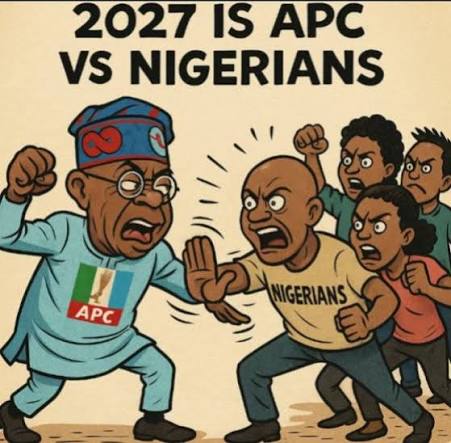
THE DANGER OF THE "WE CAN FIX EVERYTHING" OPPOSITION PROMISE
But there is another side to this argument.
The failure of one government does not automatically prove that its opponent can govern better.
This is perhaps the greatest lesson APC offers to Nigeria's opposition parties.
It is not enough to say: "APC has failed."
It is not enough to say: "We will do better."
It is not enough to say: "We have the solution."
The Nigerian electorate should ask:
How?
With what money?
With what institutions?
Under what laws?
Using what personnel?
With what timeline?
What happens if the policy fails?
What independent institutions will monitor implementation?
How will corruption be prevented?
What sacrifices will citizens have to make?
What evidence shows that the proposed policy will work in Nigeria rather than somewhere else?
What happens to those who disagree?
How will states, local governments, traditional institutions, civil society, professional bodies, women, youth and persons with disabilities participate?
A party that cannot answer these questions has a slogan, not a governing plan.
NIGERIA DOES NOT NEED ANOTHER MESSIAH
This may be the most important conclusion from the APC experience.
Nigeria does not need a political messiah.
It needs institutions.
It needs leaders capable of listening.
It needs independent oversight.
It needs competent public servants.
It needs citizens willing to scrutinise government.
It needs media organisations willing to investigate both government and opposition.
It needs political parties whose internal democracy is stronger than their appetite for power.
It needs elections whose credibility does not depend on which party wins.
It needs courts capable of adjudicating disputes without fear.
It needs security institutions accountable to law.
It needs economic policies designed around human welfare as well as macroeconomic stability.
And it needs citizens who understand that democracy does not end when they vote.
THE APC YEARS HAVE ALSO EXPOSED THE WEAKNESS OF POLITICAL MEMORY
One of Nigeria's greatest political weaknesses is short memory.
Politicians frequently present themselves as new solutions to problems their own political organisations helped create.
Politicians who were yesterday in government may become tomorrow's opposition.
Officials who supported one policy may later campaign against it.
Parties may condemn policies they previously defended.
Politicians can change party colours without necessarily changing governing philosophy.
This is why Nigerians need institutional memory.
Every government should leave behind a publicly accessible record of: • promises made; • policies introduced; • budgets approved; • funds released; • projects completed; • projects abandoned; • loans obtained; • debts accumulated; • agencies created; • agencies abolished; • security outcomes; • employment figures; • poverty indicators; • inflation; • exchange rates; • revenue; • expenditure; • corruption investigations; • prosecutions; • convictions; • election reforms; • and measurable development outcomes.
Without such records, politics becomes an endless battle of competing narratives.
WHAT SHOULD THE NEXT POLITICAL PARTY LEARN?
Any political party seeking to replace APC should study the APC record carefully.
Not merely to attack it.
To avoid repeating it.
A new government should not assume that removing subsidies automatically makes the economy healthy.
It should not assume that attracting investment automatically reduces poverty.
It should not assume that GDP growth automatically improves household welfare.
It should not assume that appointing political loyalists creates competent government.
It should not assume that anti-corruption slogans constitute anti-corruption policy.
It should not assume that passing legislation creates institutional capacity.
It should not assume that winning an election eliminates questions about electoral legitimacy.
It should not assume that centralising decision-making produces efficiency.
And it should not assume that Nigerians will indefinitely accept hardship simply because government says the hardship is necessary.
THE QUESTION OF CONSULTATION
Perhaps one of the greatest lessons from the APC experience is the importance of carrying people along.
Reforms have consequences.
Fuel prices affect transport.
Exchange rates affect food.
Interest rates affect businesses.
Taxes affect investment.
Electricity tariffs affect manufacturers.
Security policy affects communities.
Education policy affects families.
Agricultural policy affects farmers.
Therefore, reforms cannot be designed solely from Abuja.
The people who live with the consequences must be part of the conversation.
This does not mean every citizen must approve every government policy.
That would be impossible.
It means government must build mechanisms through which stakeholders can understand, challenge and improve policy before implementation.
THE REAL QUESTION ABOUT APC
The question is not whether APC has made mistakes.
It has.
The question is not whether APC has achieved anything.
It has.
The question is whether the totality of its eleven-year record justifies every promise it made when it sought power.
That is for Nigerians to examine using evidence.
The public record contains both successes and failures.
It contains reforms and reversals.
It contains infrastructure development and persistent infrastructure gaps.
It contains economic stabilisation efforts and severe household hardship.
It contains anti-corruption campaigns and continuing institutional vulnerabilities.
It contains electoral reforms and continuing questions about electoral trust.
It contains security operations and persistent insecurity.
It contains new policies and old problems.
And that complexity is precisely why responsible journalism must resist the temptation to turn the story into a simple political advertisement.
THE NATIONAL LESSON
The greatest mistake any political party can make is believing that it alone possesses the wisdom necessary to govern Nigeria.
Nigeria is too large.
Too diverse.
Too complicated.
Too talented.
Too resourceful.
And too fragile.
No president knows everything.
No political party knows everything.
No minister knows everything.
No opposition leader knows everything.
No technocrat knows everything.
No religious institution knows everything.
No ethnic group possesses the complete Nigerian answer.
No region possesses it.
No ideology possesses it.
Nigeria's solution must therefore be collective.
The country needs the knowledge of its economists, the practical wisdom of its traders, the innovation of its young people, the experience of its farmers, the technical expertise of its engineers, the courage of its journalists, the insight of civil society, the discipline of its security professionals, the knowledge of its academics, the networks of its traditional institutions and the moral responsibility of its religious communities.
That is not weakness.
That is nation-building.
FROM APC TO WHATEVER COMES NEXT
The next political party that seeks the Nigerian presidency should be warned:
Do not campaign as though Nigeria is a blank sheet of paper.
Do not promise miracles.
Do not promise that corruption will disappear overnight.
Do not promise that insecurity will end in six months.
Do not promise that the naira will suddenly become strong.
Do not promise cheap petrol without explaining who pays the difference.
Do not promise free everything without explaining the revenue source.
Do not promise massive infrastructure without explaining procurement and maintenance.
Do not promise jobs without explaining the productive sectors that will create them.
Do not promise institutional reform without explaining how the institutions will be protected from political interference.
And above all: Do not mistake political victory for governing competence.
The APC experience demonstrates that the distance between winning an election and successfully governing Nigeria is enormous.
A FINAL WARNING TO THE ELECTORATE
Nigerians should also examine themselves.
Political parties do not manufacture their voters.
They emerge from society.
The politicians who dominate Nigeria come from Nigeria.
The corruption found in government did not arrive from another planet.
The ethnic divisions exploited during elections did not originate solely in political party headquarters.
The patronage system survives because people participate in it.
Vote buying survives because citizens accept money for votes.
Political godfatherism survives because politicians and citizens sustain the relationships.
False promises survive because voters sometimes demand miracles rather than measurable plans.
Therefore, accountability must run in both directions.
Government must answer to the people, but citizens must also take responsibility for the choices they make.