
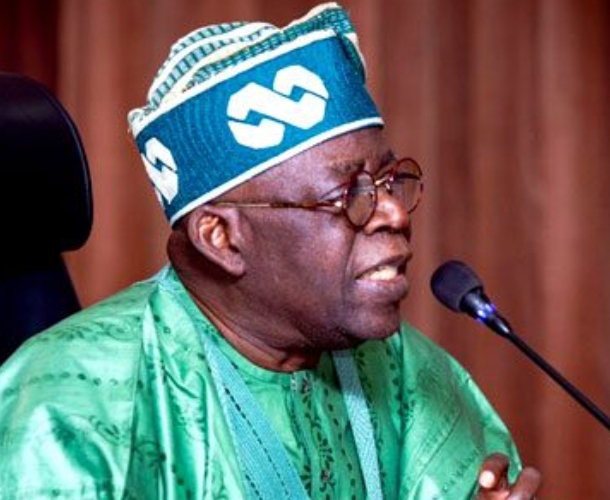
Tinubu Campaign Promises | By SkyDNews Editorial Desk
Tinubu campaign promises formed the foundation of the Renewed Hope agenda that resonated with millions of Nigerians during the 2023 presidential election. Voters were promised economic recovery, job creation, poverty reduction, improved security, stable electricity supply, and a stronger national currency. However, as inflation rises, the cost of living worsens, insecurity persists, and opposition politics become increasingly fragile, many citizens are questioning whether the Tinubu campaign promises have translated into meaningful improvements in their daily lives. For critics, the widening gap between expectation and reality is becoming one of the defining political issues ahead of the next general elections.
When Nigerians went to the polls in 2023, many did so with expectations anchored on the Tinubu campaign promises of Renewed Hope. The campaign of President Bola Ahmed Tinubu was presented as a roadmap to economic recovery, prosperity, job creation, improved security, stable prices, and a more optimistic national future. Three years into the administration, however, a growing number of Nigerians are asking an uncomfortable question: Where is the renewed hope?
Across markets, motor parks, universities, hospitals, factories, and rural communities, the mood appears increasingly defined by frustration, economic hardship, and skepticism about the government's ability to deliver on the Tinubu campaign promises that formed the foundation of its electoral appeal. This widening gap between expectation and reality may well become one of the defining issues in Nigeria's next general elections.

Tinubu Campaign Promises: The Promise of Prosperity
President Tinubu campaigned on a platform designed to inspire confidence in Nigeria's economic future. The promises were ambitious and resonated with millions of voters seeking relief from years of economic uncertainty. Jobs were expected to be created, investments attracted, industries revitalized, poverty reduced, and the economy placed firmly on the path to sustainable growth.
For many Nigerians, however, everyday realities of Tinubu campaign promises tell a more complicated story. Food inflation continues to place enormous pressure on household budgets. Transportation costs remain prohibitively high, while the purchasing power of wages and salaries has been significantly diminished. Families that once managed modest but stable livelihoods now find themselves struggling to meet basic needs. For a large segment of the population, the debate is no longer about macroeconomic indicators, fiscal projections, or statistical improvements. It is about survival.
Citizens often assess governments through the realities they encounter in their homes and communities, by the food on their tables, the prices in the markets, the value of their earnings, and their ability to provide for their families. They ask simple but profound questions: Can they afford school fees? Can they access quality healthcare? Can they sustain their businesses? Can they save for the future? Can they maintain the standard of living they once enjoyed?
For many citizens, these questions remain unanswered. Consequently, a growing number believe that their economic circumstances have deteriorated since the current administration assumed office, raising concerns about whether the promise of renewed prosperity is yet to be fully realized.
Fuel Subsidy Removal: Necessary Reform or Political Miscalculation?
One of the administration's earliest and most consequential policy decisions was the removal of fuel subsidy. For years, economists and policy experts had argued that the subsidy regime was fiscally unsustainable, excessively costly, and susceptible to corruption and inefficiency.
In principle, many agreed that reform was inevitable. However, critics maintain that while subsidy removal may have been economically necessary, its implementation was not accompanied by adequate social protection measures to cushion its impact on vulnerable citizens.
The consequences were immediate and far-reaching. Petrol prices soared, transportation costs surged, food prices climbed, and production expenses increased across sectors. Businesses, faced with rising operating costs, passed these burdens on to consumers, further intensifying inflationary pressures. For millions of Nigerians already grappling with economic uncertainty, the Tinubu campaign promises reform translated into immediate hardship without corresponding visible relief. The expectation that savings from subsidy removal would rapidly improve public services, infrastructure, and social welfare programmes has yet to be fully realized in the eyes of many citizens.
Government officials continue to insist that the current difficulties represent temporary sacrifices required to secure long-term economic stability. Yet politics is seldom assessed through promises of future gains alone. It is often evaluated through present realities. Citizens experiencing rising living costs and declining purchasing power are more likely to judge reforms by their immediate effects than by projections of future prosperity.

Tinubu Campaign Promises: The Naira Crisis and the Rising Cost of Living
Another defining challenge of the current administration has been the persistent instability of the naira. Currency depreciation has produced significant ripple effects throughout the economy, affecting businesses, households, and public institutions alike. Imported goods have become increasingly expensive. Manufacturers reliant on foreign raw materials and inputs face escalating production costs. Medical care has become less affordable, educational expenses have risen sharply, and household budgets have been stretched to their limits.

Although the government has defended exchange-rate reforms as necessary to address structural distortions and restore confidence in the economy, many Nigerians remain more concerned with practical outcomes than with economic theories. The ordinary trader seeks affordable goods to sustain business. The civil servant desires a salary that retains its purchasing power. The farmer hopes for lower transportation costs to move produce to markets. The student wants stable tuition and living expenses. The entrepreneur seeks a predictable economic environment in which investments can thrive. Until these expectations begin to align with the realities experienced by citizens, economic reforms, however well intentioned, are likely to continue facing public skepticism and resistance.
Reducing poverty was one of the administration's central campaign commitments. Nigeria already faced the daunting reality of millions of citizens living below acceptable standards of living, and expectations were high that deliberate policy interventions would provide rapid relief and expand economic opportunities. However, many Nigerians contend that living conditions have become increasingly difficult. Communities across the country report growing hardship. Charitable organizations and faith-based institutions face mounting pressure to support vulnerable families. Many households have been forced to reduce the number of meals they consume daily. Parents struggle to meet educational expenses, graduates continue to search for employment opportunities, and small businesses are buckling under the weight of rising operating costs.
</span style="font-size:>
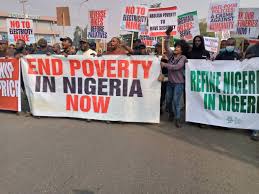
Economic hardship rarely remains confined to statistics or policy debates. Over time, it manifests as social anxiety, frustration, and uncertainty about the future. Such sentiments can eventually translate into political discontent. History suggests that citizens are often willing to endure difficult periods when they perceive fairness, transparency, and a credible pathway toward improvement. However, when sacrifices appear unending and the benefits remain elusive, public confidence gradually weakens, and optimism begins to fade.
Security Challenges Persist
Security constituted another major pillar of campaign messaging. Nigerians expected decisive progress in addressing insurgency, banditry, kidnapping, and other forms of violent crime. While security agencies have recorded operational successes in certain areas, concerns about persistent insecurity remain widespread. Communities in several states continue to experience attacks, while kidnapping has become an enduring feature of national life. Farmers in some regions fear returning to their farmlands, travellers remain cautious about using certain highways, and investors increasingly factor security concerns into their business decisions.
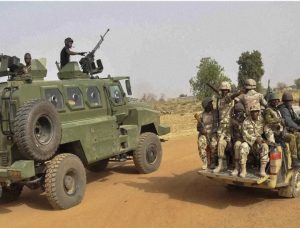
The consequences of insecurity extend far beyond the immediate loss of lives and property. Persistent security challenges weaken local economies, discourage domestic and foreign investment, disrupt agricultural production, deepen poverty, and erode public trust in state institutions. Ultimately, security is not merely a governance issue; it is a fundamental determinant of economic stability, social cohesion, and political confidence. When citizens feel unsafe, their assessment of government performance is inevitably affected, and this perception often shapes electoral behaviour.
Electricity: The Promise Yet to Materialize
Reliable electricity has long remained one of Nigeria's most pressing developmental aspirations. Successive administrations have pledged to transform the power sector, yet meaningful progress continues to elude many citizens. While the current administration inherited longstanding structural challenges within the electricity industry, it also campaigned on a promise of change.
During the electioneering period, President Bola Tinubu declared that if he failed to provide stable electricity within four years, Nigerians should withhold their support in the next election cycle. Expectations were therefore high that tangible improvements would follow. However, many Nigerians argue that the anticipated transformation has yet to materialize.
Across the country, households continue to endure erratic and unreliable power supply despite rising electricity tariffs. Small and medium-sized enterprises spend substantial amounts on generators and alternative energy sources just to remain operational, while manufacturers grapple with escalating production costs driven largely by energy expenses.
For a nation aspiring to industrialization, economic competitiveness, and inclusive growth, persistent energy insecurity remains a major impediment. Without a dependable power supply, efforts to stimulate investment, create jobs, and improve living standards will continue to face significant constraints.
Tinubu Campaign Promises and the Politics of Expectations
Perhaps the greatest challenge confronting the Tinubu administration is not merely economic; it is psychological. The Renewed Hope agenda created a powerful emotional bond with millions of Nigerians.
Hope is a potent political currency, capable of inspiring confidence, mobilizing support, and sustaining public patience. Yet hope can quickly give way to frustration when expectations remain unmet. Many Nigerians believed they were voting for immediate relief from economic hardship.
They anticipated visible improvements within a relatively short period and expected the dividends of governance to become evident in their daily lives. Instead, what many citizens say they have experienced is an extended period of economic adjustment, accompanied by rising costs and declining purchasing power. The challenge for any government is that public patience is not inexhaustible.
Administrations often underestimate the extent to which economic realities shape political loyalty. Citizens rarely assess governments solely through macroeconomic indicators or theoretical projections of future prosperity. More often, they judge leadership through lived experiences, whether they can afford food, pay school fees, meet healthcare costs, and maintain a decent standard of living. If households continue to struggle, assurances of long-term gains may gradually lose their persuasive appeal.
State Governors May Not Determine Electoral Outcomes
Politically, the ruling party enjoys considerable advantages. It controls numerous states, commands significant institutional influence, and possesses well-established political structures across the country. However, Nigeria's political history repeatedly demonstrates that incumbency alone does not guarantee electoral success. Elite dominance does not always translate into grassroots acceptance.
Governors can mobilize political machinery, coordinate campaigns, and shape local political dynamics. They can deliver endorsements and negotiate alliances. What they cannot easily do, however, is erase citizens' memories of economic hardship or persuade people that their lived experiences are inconsequential. They cannot manufacture enthusiasm where disappointment has become entrenched. Ultimately, elections are influenced as much by emotions and perceptions as by party structures and political calculations.
Citizens often vote with their wallets. They vote through the lens of their frustrations, aspirations, and expectations. Above all, they vote according to whether they believe leaders have honoured the promises upon which they sought and obtained public trust.
Tinubu Campaign Promises and the Growing Fear of a One-Party State
Beyond economic grievances and unmet campaign promises, another issue increasingly dominating political conversations across Nigeria is the perception that the country's democratic space is gradually shrinking. The recent wave of defections by serving governors and influential political actors into the ruling party has generated intense debate among citizens, political analysts, and civil society groups. Supporters of these defections describe them as ordinary political realignments, arguing that politicians naturally gravitate towards platforms they believe can advance their ambitions and serve their constituencies.
Critics, however, tell a different story. Some allege that several defections are driven not by ideology or conviction but by political survival. There are persistent claims in opposition circles that some politicians were pressured, intimidated, or compelled by circumstances to seek refuge within the ruling establishment. Others allege inducements and political bargaining, although such claims often remain difficult to substantiate publicly.
Whether these allegations are factual or merely products of partisan contestation, what cannot be ignored is the growing concern that Nigeria's political landscape is becoming increasingly lopsided. Democracy flourishes on competition. It thrives on strong institutions. It depends upon the existence of credible opposition voices capable of scrutinizing government policies, presenting alternative visions, and holding power accountable.
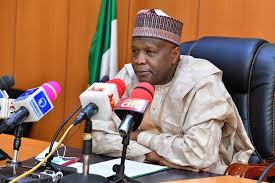
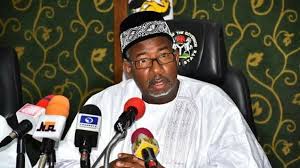
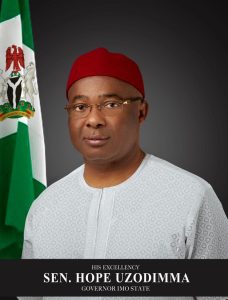
The concentration of political influence within a single dominant platform raises legitimate questions about the future health of Nigeria's democratic experiment. Many observers fear that the country may gradually drift toward a de facto one-party state, not necessarily by constitutional amendment, but through political attrition, institutional pressure, and the systematic weakening of alternative centres of power.
The opposition's troubles have also fueled suspicions among critics. Several parties have become trapped in prolonged leadership disputes, litigations, and internal crises. The leadership contestations within the opposition have become recurring features of Nigeria's political discourse. Some critics allege that moles are strategically planted within opposition parties to sow discord, deepen factionalism, and eventually weaken their organizational capacity ahead of elections. While such allegations remain largely speculative and difficult to prove conclusively, they persist because of the timing and persistence of internal conflicts affecting major opposition platforms.
Questions have equally arisen regarding the increasing judicialization of politics. Legal battles over party leadership, candidate nominations, and internal affairs have become commonplace. There are growing concerns among legal scholars and democracy advocates about instances where courts of coordinate jurisdiction appear to issue conflicting decisions, creating uncertainty and public confusion. For many citizens, the spectacle of prolonged litigation has become emblematic of a broader crisis in Nigeria's democratic architecture.
Political parties that ought to be preparing alternative policy blueprints for governance are instead consumed by courtroom battles, factional struggles, and leadership disputes. This has been observed in varying degrees across opposition formations, where protracted conflicts have diverted attention away from issue-based politics. The danger in this trend is profound. When opposition parties are weakened, fragmented, or incapacitated, democratic accountability suffers. Governments perform better when subjected to rigorous scrutiny. Policies improve when alternative viewpoints are allowed to compete freely.
Citizens benefit when political choices are abundant rather than limited. Nigeria's democratic journey has always been sustained by pluralism. The country emerged from decades of military rule with the understanding that democracy is strengthened not by uniformity of political allegiance but by diversity of ideas, robust competition, and institutional independence. If the perception gains wider acceptance that political competition is being narrowed, opposition parties systematically undermined, or dissenting voices intimidated, public confidence in democratic institutions may suffer significant damage.
Ultimately, the health of any democracy should not be measured merely by the number of governors aligned with the ruling party, but by the ability of opposition parties to organize freely, compete fairly, and present themselves as viable alternatives without fear of political persecution, institutional manipulation, or judicial uncertainty.
For President Tinubu and the ruling establishment, these concerns deserve careful consideration. Political dominance may provide short-term stability, but sustainable democratic legitimacy is built upon inclusion, openness, tolerance of dissent, and the preservation of a genuinely competitive political environment. The strength of a democracy is not demonstrated by the weakness of its opposition, but by its willingness to allow that opposition to exist, organize, criticize, and compete on equal footing.
Tinubu Campaign Promises: The Road to 2027
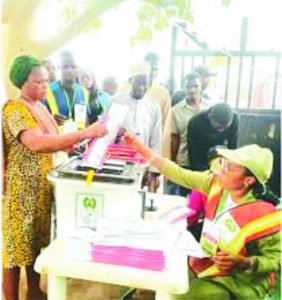
Calls from certain quarters for President Tinubu's resignation may not represent a nationwide consensus, but they do reflect a growing sense of frustration among segments of the population. They are symptomatic of a broader concern about the pace at which promised reforms are translating into tangible improvements in the lives of ordinary Nigerians.
The administration still has an opportunity to reshape public perception. Governments can recover politically. Economic reforms can begin to yield measurable outcomes. Inflation can ease, investments can increase, living standards can improve, security can be strengthened, and public confidence can be restored. Yet politics is ultimately a race against time, and time moves swiftly. Every election cycle eventually becomes a referendum on performance.
Campaign promises are more than political slogans; they constitute an unwritten social contract between leaders and the people. Citizens remember those promises. They measure them against their daily experiences. They ask difficult questions about governance, accountability, and results. In democratic societies, questions that remain unanswered often find expression at the ballot box. President Tinubu may continue to enjoy the support of party leaders, governors, and political allies. However, history repeatedly demonstrates that political establishments become most vulnerable when they begin to lose the confidence of ordinary citizens.
Institutional strength and elite endorsements can sustain a government, but they cannot indefinitely substitute for public approval. The administration's greatest challenge may therefore not lie in opposition parties or political rivals, but in narrowing the gap between campaign expectations and lived realities. For millions of Nigerians, the central question remains simple yet profound: Has Renewed Hope translated into renewed living conditions? Until a significant number of citizens can answer that question in the affirmative, public dissatisfaction is likely to persist, and its political implications may become increasingly pronounced as Nigeria moves closer to another defining electoral season in 2027.
</span style="font-size:>
#Tinubu Campaign Promises, #Bola Tinubu, #Renewed Hope, #APC, #Nigeria #Politics, #Economic Hardship, #Inflation, #Fuel Subsidy Removal, #Opposition Politics, #One-Party State, #Democracy in Nigeria, #PDP, #ADC, #NDC, #Governance, #2027 Elections, #Nigerian Economy, #Cost of Living Crisis, #Political Defections, #Judiciary, #SkyDNews
Editorial Note: This commentary on Tinubu campaign promises reflects a critical assessment of governance based on public perceptions, campaign commitments, and prevailing socioeconomic conditions. It does not advocate for any political party or candidate but examines how performance and public expectations may influence future electoral outcomes.
</span style="font-size:>