
SKYDNEWS | SPECIAL POLITICAL INVESTIGATION | NOVEMBER 2026
Igbo marginalisation in Nigeria remains one of the country's most enduring national questions, shaped by the unresolved consequences of the Civil War, political exclusion, selective justice, insecurity, economic marginalisation, unequal development, continuing demands for justice, representation, equal citizenship, and the emerging politics of 2027.
Nigeria is approaching another defining political moment. As President Bola Ahmed Tinubu's supporters intensify political mobilisation ahead of the 2027 presidential election, a more fundamental question deserves national attention: What does Nigeria genuinely offer the Igbo people in exchange for their continued participation in the Nigerian federation? This question is neither an invitation to secession nor an endorsement of any political party. It is a demand for historical honesty, constitutional equality, political fairness and national reconciliation. For decades, successive Nigerian governments have appealed to the Igbo people to remain committed to one Nigeria. They have spoken about national unity, peace, reconciliation and the need to forget the bitterness of the past. Yet, the difficult question remains: Has Nigeria done enough to make the Igbo feel that this country belongs to them as much as it belongs to every other Nigerian?
National unity cannot be built by repeatedly asking one section of the population to forget its grievances while leaving the underlying causes of those grievances unresolved. The Igbo question is not simply about who becomes president. It concerns the distribution of political power, the protection of civil liberties, access to public institutions, regional development, security, justice and the recognition of the dignity of every Nigerian. And, perhaps most importantly, it concerns the difference between being physically accommodated within a country and being genuinely accepted as an equal stakeholder in its future.
The Nigerian Civil War: The wound that was never properly healed
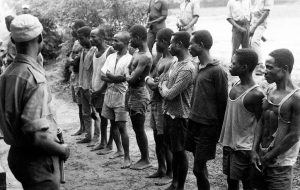
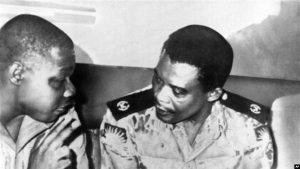
Any serious examination of Igbo marginalisation must begin with the events leading to the Nigerian Civil War of 1967-1970. The January 1966 military coup, the counter-coup of July 1966, the killings of Igbo and other Easterners in Northern Nigeria, and the subsequent breakdown of trust between the Eastern Region and the Federal Government created an atmosphere of fear and insecurity. Thousands of people of Eastern Nigerian origin were killed during the anti-Igbo pogroms, while many survivors fled back to the Eastern Region.
The declaration of the Republic of Biafra by Lieutenant Colonel Chukwuemeka Odumegwu Ojukwu in May 1967 led to a devastating war between the Federal Government and the secessionist territory. The conflict ended in January 1970, following the defeat of Biafra. However, the end of the war did not automatically mean the end of the grievances that produced it. Nigeria adopted the language of reconciliation, reconstruction and rehabilitation. General Yakubu Gowon declared that there was no victor and no vanquished. But what happened to the people who lost their homes, businesses, savings and livelihoods? What happened to those who returned to find that their properties had been occupied or their financial resources had disappeared? What happened to the families who lost their breadwinners? And what happened to the political relationship between the former Biafran population and the Nigerian state? These questions remain important because a country cannot achieve genuine reconciliation simply by announcing that a war is over.
The controversial £20 policy
One of the most enduring grievances of the post-war period was the treatment of bank deposits belonging to people from the former Biafran territory. Under the post-war banking arrangements, many people who had substantial savings before the conflict were allowed to receive only £20, irrespective of the amount they had previously held in their accounts. Imagine a businessman who had accumulated thousands of pounds through years of legitimate commercial activity before the war. Imagine a family whose entire savings had been entrusted to a bank. After the war, the family returned to discover that its accumulated wealth had effectively disappeared, with only the stipulated £20 available under the arrangement. This policy was particularly devastating because the affected people were expected to rebuild their lives in an economy where they had lost their businesses, property and financial security. The policy was presented within the context of post-war reconstruction and financial stabilisation. Nevertheless, its consequences became a lasting symbol of the economic punishment associated with the war.
Abandoned property and the unfinished business of restitution
Another major grievance concerned properties belonging to people who had fled during the war, particularly in Port Harcourt and other parts of the former Eastern Region. The issue of abandoned property generated prolonged disputes over ownership, occupation and restitution. For families who had invested their lifetime savings in houses and businesses, returning home to find those properties lost was not merely an economic inconvenience. It was a profound violation of their sense of belonging. The question Nigeria must answer is simple:
If national reconciliation was genuinely intended, why were the mechanisms for restitution, compensation and rebuilding not sufficient to address the losses suffered by ordinary citizens?
There is no responsible argument for pretending that every post-war policy was deliberately designed to punish every Igbo person. But neither should the state expect the victims of those policies to pretend that the consequences were insignificant. A nation that refuses to confront historical injustice eventually transfers the burden of that injustice to another generation.
Political exclusion: Why does the Igbo presidency remain such a difficult national conversation?
Nigeria's political history presents an uncomfortable reality concerning the distribution of its highest political offices. Dr Nnamdi Azikiwe became Nigeria's ceremonial President in 1963, under the First Republic. Major General Johnson Aguiyi-Ironsi briefly served as military Head of State in 1966. Since the return to civilian democracy in 1999, however, no Nigerian president has emerged from the South-East. The civilian presidency has passed through Olusegun Obasanjo, Umaru Musa Yar'Adua, Goodluck Jonathan, Muhammadu Buhari and Bola Ahmed Tinubu. Goodluck Jonathan was from Bayelsa State in the South-South, not the South-East. His emergence should not be misrepresented as an Igbo presidency simply because of geographical proximity or historical associations. The distinction matters. The Igbo are one of Nigeria's major ethnic nationalities, with a substantial population, an extensive commercial network, considerable professional influence and a long history of participation in national affairs. Yet, the South-East has never produced a civilian president since 1999. Does this automatically establish an organised conspiracy against the Igbo? No. Presidential elections are competitive, and no ethnic group has an automatic constitutional entitlement to the presidency. But it raises a legitimate political question about whether Nigeria's informal arrangements for power rotation and political inclusion have operated equitably.
The 2023 presidential election: An opportunity and a political test
The 2023 presidential election brought this question to the centre of national politics. Peter Obi, the Labour Party candidate from Anambra State, emerged as a major contender and attracted substantial support beyond the South-East, particularly among young voters and urban populations. According to INEC's declared national results:
Candidate |
Votes |
Bola Tinubu |
8,794,726 |
Atiku Abubakar |
6,984,520 |
Peter Obi |
6,101,533 |
Rabiu Kwankwaso |
1,496,687 |
Peter Obi secured approximately 25.4 per cent of valid votes nationally. His performance demonstrated that an Igbo presidential candidate could attract a significant national constituency. It also exposed the continuing divisions within Nigeria's political structure. Rather than treating the election as an opportunity to examine the country's longstanding regional mistrust, sections of the political establishment and public commentary turned the election into an argument about ethnic entitlement, regional loyalty and the supposed suitability of particular nationalities for the presidency. That was unfortunate. An Igbo candidate should not need to apologise for seeking the presidency. Neither should a Hausa, Yoruba, Ijaw, Tiv, Kanuri, Fulani or any other Nigerian. The real test is whether the candidate can earn the confidence of Nigerians across the federation. The presidency belongs to the Nigerian electorate, not to an ethnic association. However, political parties also have a responsibility to demonstrate that their internal arrangements do not permanently shut out particular nationalities.
The politics of zoning and selective fairness
One of the most contentious questions in Nigerian politics is the principle of zoning. Political parties frequently invoke zoning when it serves their electoral calculations. They also abandon or reinterpret it when their interests change. The South-East has repeatedly been told to wait for its turn, negotiate with other regions, build alliances and demonstrate political maturity. But where is the enforceable national commitment to equitable inclusion? If political leaders can recognise the importance of regional balance when negotiating their own interests, why should the South-East's demand for a fair opportunity be dismissed as ethnic agitation? This is not a demand that Nigeria must elect an Igbo president simply because the Igbo deserve compensation. It is a demand that the political system should not make the emergence of an Igbo president appear permanently unacceptable or politically inconvenient.
Five states against six geopolitical zones: An institutional disadvantage that cannot be ignored
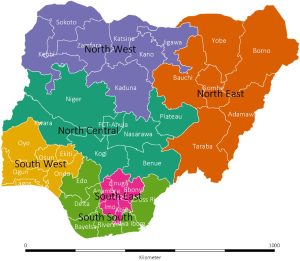
The South-East comprises only five states:
-
Abia
-
Anambra
-
Ebonyi
-
Enugu
-
Imo
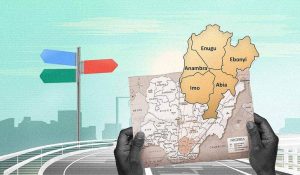
The North-West has seven states, while the North-East, North-Central, South-West and South-South each have six. Consequently, the South-East is the only geopolitical zone with five states. This difference has practical constitutional and political implications. Every state has three senators, irrespective of population. Every state also has a minimum of one representative in the House of Representatives, while the total number of representatives is apportioned according to population. The five-state arrangement therefore gives the South-East fewer state-based Senate seats than a six-state zone. It also affects the region's representation in institutions where appointments and administrative structures are distributed by state. The Federal Government cannot dismiss these consequences as mere political complaints.
In October 2025, a joint committee of the National Assembly reviewing the Constitution approved a proposal for an additional state in the South-East. This was an important development, although committee approval is not the same as final constitutional creation. Why should the South-East have to repeatedly negotiate for a basic measure of structural balance? Why has the issue remained unresolved for so long? And if Nigeria genuinely believes in equality among its geopolitical zones, should this imbalance not be treated as a matter of national importance? A sixth state would not solve every problem facing the Igbo people. But it would address one identifiable structural disadvantage.
Selective treatment of separatist agitation: Security must not become a licence for discrimination
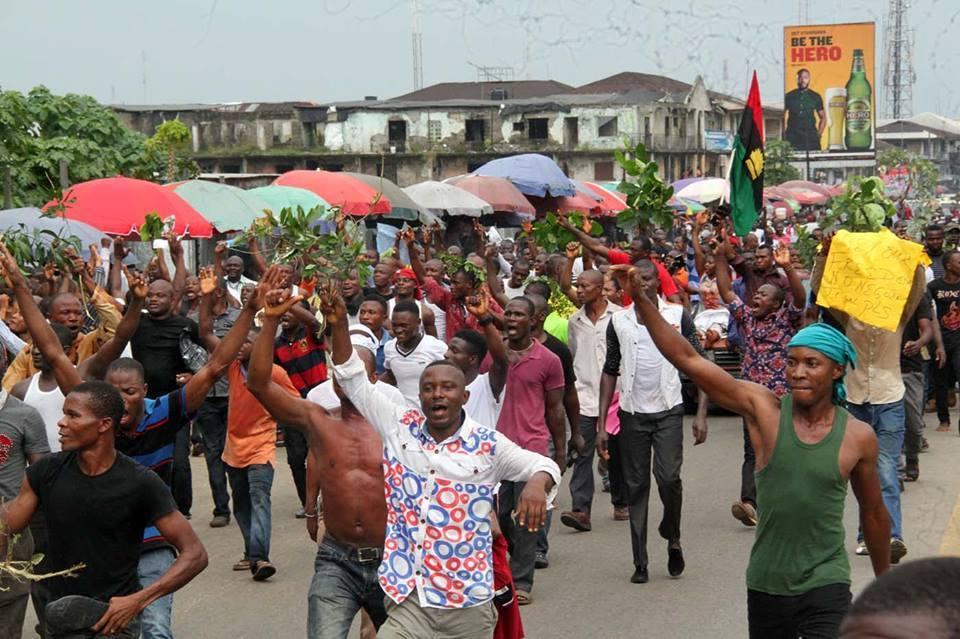
Perhaps nowhere is the crisis of trust between the Igbo population and the Nigerian state more visible than in the treatment of separatist agitation. The emergence of the Indigenous People of Biafra (IPOB), led by Nnamdi Kanu, did not occur in a historical vacuum. It developed against a background of unresolved Civil War grievances, perceived political exclusion, unemployment, regional insecurity and a widespread feeling among sections of the population that the promises of national reconciliation had not been fulfilled. This does not mean that every action undertaken in the name of Biafra is justified. It does not justify killings, intimidation, attacks on security personnel, destruction of property, forced closures of businesses or the enforcement of sit-at-home orders. IPOB and its armed wing, the Eastern Security Network, have faced serious allegations of violence. Innocent residents, security personnel and other citizens have suffered from attacks by armed groups. But the existence of criminality does not give the government permission to abandon due process.
Operation Python Dance and the question of proportionality
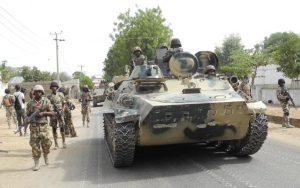
In 2016 and 2017, the Nigerian military conducted operations in the South-East, including Operation Python Dance. These operations generated serious controversy over the treatment of civilians and pro-Biafra activists. Amnesty International's November 2016 investigation documented the killing of at least 150 IPOB members and supporters by security forces between August 2015 and August 2016. It also documented allegations of excessive force, extrajudicial executions, arbitrary arrests and torture. These are grave allegations. The important issue is not whether the Nigerian state has a responsibility to maintain security. It unquestionably does. The issue is whether security operations are conducted according to constitutional safeguards, the rule of law and internationally recognised human rights standards. Why should a peaceful demonstration be answered with lethal force? Why should someone suspected of supporting a political movement be presumed guilty without an individual investigation? Why should an entire community live under the fear that an encounter with security personnel could result in disappearance, detention or death? The same standards must apply whether the alleged offender is from the South-East, North-East, North-West, South-West or Middle Belt.
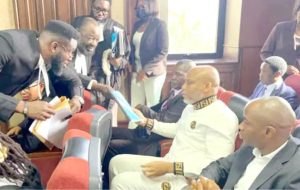
The 2021 rendition of Nnamdi Kanu from Kenya
Are all forms of separatist agitation treated equally?
This is where Nigeria needs to confront the question of consistency. The country has experienced different forms of separatist agitation, regional self-determination campaigns and political mobilisation. The question is not whether every movement is identical. They are not. Their organisational structures, methods, political objectives and alleged offences differ. But the state must explain why comparable conduct receives different treatment depending on the identity of the actors or the region in which it occurs. A peaceful political advocate should not be treated as an armed insurgent simply because of the political position he or she expresses. Conversely, a person who commits murder or terrorism must face the law regardless of ethnicity, religion or political affiliation. The problem is not that Nigeria enforces its laws. The problem arises when citizens begin to believe that the law is enforced more aggressively against some communities than others.
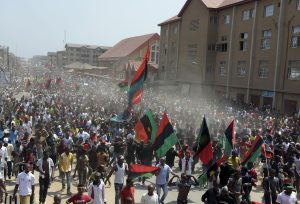
The danger of collective punishment
The security situation in the South-East is particularly complicated. Amnesty International's August 2025 report, A Decade of Impunity: Attacks and Unlawful Killings in South-East Nigeria, estimated that 1,844 people were killed in the region between January 2021 and June 2023. The report documented violations by multiple actors, including security forces, IPOB/ESN, unknown gunmen, cult groups, vigilantes and Ebube Agu. A subsequent UK Home Office country report also highlighted the complex nature of the violence and the existence of allegations of extrajudicial killings, arbitrary detention and other abuses. This evidence exposes two simultaneous failures. First, the Nigerian state has not adequately protected ordinary residents from armed violence. Second, armed non-state actors have also inflicted suffering on the very communities they claim to defend. The Igbo population should not be forced to choose between criminal violence and abusive state conduct. They deserve protection from both.
Selective arrests, prolonged detention and the perception of unequal justice
One of the greatest threats to national unity is the perception that the criminal justice system operates differently depending on who is involved. The Igbo have repeatedly raised concerns about arrests, prolonged detention, military operations, disappearances and prosecutions associated with separatist agitation. These concerns should not be dismissed simply because some individuals associated with separatist movements have committed serious offences. There is a fundamental difference between prosecuting an individual for a demonstrable crime and criminalising an entire political or ethnic community. Consider the following questions:
-
Why should a person suspected of supporting Biafra be subjected to unlawful detention or ill-treatment before a court establishes guilt?
-
Why should a peaceful political gathering be treated as an existential security threat?
-
Why should security operations destroy homes, businesses and community livelihoods where the occupants have not been individually implicated in a crime?
-
Why should allegations of enforced disappearance or extrajudicial killing not receive independent and transparent investigations?
-
Why should citizens have to prove their loyalty to Nigeria before enjoying the constitutional rights available to every other Nigerian?
These questions are not an attempt to defend criminality. They are questions about the limits of government power.
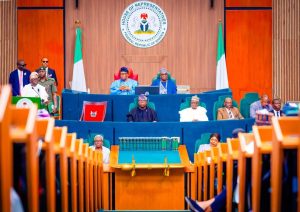
A judicial system must not become an instrument of political intimidation
The Nigerian Constitution guarantees fundamental rights, including the right to life, dignity, personal liberty, fair hearing and freedom of expression. Those rights do not disappear because a person is suspected of supporting a controversial political movement. Indeed, the more controversial a political movement becomes, the more important it is for the government to demonstrate that it can uphold the law impartially. The Nigerian state should publish credible information about arrests, prosecutions, convictions and acquittals arising from security operations in the South-East. It should also investigate allegations against security personnel and compensate victims where unlawful conduct is established. Justice cannot be selective. A country that demands obedience from its citizens must also demonstrate obedience to its own Constitution.
The hypocrisy surrounding political freedom and the right to self-determination
Nigeria is a federation of diverse nationalities. Its political history is filled with movements that demanded restructuring, regional autonomy, resource control, constitutional reform and greater political participation. Such demands are not automatically treasonable. There is an important distinction between advocating constitutional change and engaging in violence to achieve a political objective. The government must protect the right to peaceful advocacy, even where it disagrees with the position being advocated. The right to peaceful political expression is particularly important in a country where historical grievances have not been adequately addressed. If citizens cannot peacefully express dissatisfaction with the federation, where should they take their grievances? If they cannot organise, debate and advocate constitutional reform, what democratic alternatives remain available? It is dangerous to assume that silencing dissent will automatically produce national unity. It may produce temporary silence, but silence is not reconciliation.
Why Biafra agitation persists
The persistence of Biafra agitation should be understood through several interconnected factors:
-
The unresolved emotional and economic consequences of the Civil War.
-
Perceived exclusion from the highest political offices.
-
The imbalance in the number of states within the South-East.
-
Complaints about federal appointments and public-sector opportunities.
-
Insecurity and allegations of human rights violations.
-
Youth unemployment and economic frustration.
-
A lack of confidence in the ability of political institutions to address regional grievances.
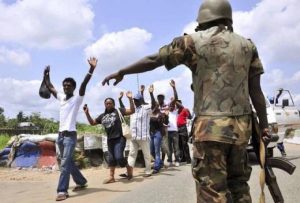
A British government country-policy report published in April 2026 also noted that unresolved reconciliation issues, repression of separatist movements and the unwillingness of major political parties to present an Igbo presidential candidate have contributed to perceptions of marginalisation among some Igbo people. This observation deserves serious attention. It is not an endorsement of Biafra. It is a recognition that political grievances have causes, and that addressing those causes is more effective than treating every expression of dissatisfaction as a security problem.
Federal appointments and the question of who truly belongs
Nigeria's Constitution provides an important safeguard against sectional domination. Section 14(3) of the 1999 Constitution, as amended, requires the composition of the Federal Government and its agencies to reflect Nigeria's federal character, ensuring that persons from a few states or ethnic groups do not dominate government institutions. Section 14(4) extends the principle to state and local governments. The Federal Character Commission exists to monitor and promote compliance with these provisions. The principle is not a favour to any ethnic group. It is a constitutional obligation. However, constitutional provisions are meaningful only when implemented. The important questions include:
-
What proportion of senior federal appointments goes to each geopolitical zone?
-
Are recruitment exercises conducted transparently?
-
Are qualified candidates from the South-East given equitable opportunities?
-
Are security and intelligence institutions representative of the country's diversity?
-
Are federal boards, commissions and regulatory agencies constituted fairly?
-
Do the leadership structures of major federal institutions reflect the national character required by the Constitution?
Representation must mean more than occupying a ministerial seat
Infrastructure, federal investment and the feeling of abandonment
Infrastructure is one of the most visible ways citizens measure whether their government considers them important. The South-East is a major commercial and industrial region. Its people are involved in manufacturing, trade, transportation, agriculture, education, technology, professional services and international business. Cities such as Onitsha, Aba, Nnewi, Enugu and Owerri have substantial economic importance. The region also provides a significant contribution to national commerce through its extensive internal and international trading networks. Yet, complaints about poor federal roads, inadequate infrastructure, unreliable electricity, limited rail connectivity and insufficient public investment have remained persistent.
The Second Niger Bridge: A symbol of progress and unfinished obligations
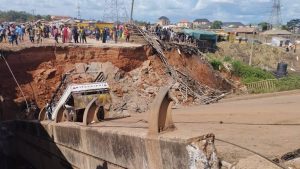
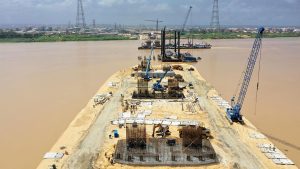
The Second Niger Bridge is an important federal infrastructure project connecting Anambra and Delta States. Its completion represents a significant improvement in connectivity and should be acknowledged. It would be dishonest to suggest that the Federal Government has done absolutely nothing for the South-East. But one completed project cannot settle the broader question of regional infrastructure inequality. The Enugu-Port Harcourt road, the Enugu-Onitsha corridor, the Owerri-Aba route and other critical roads have experienced longstanding rehabilitation and maintenance challenges. The appropriate response is to examine actual project allocations, contract awards, disbursements, completion rates and the quality of completed works.
Follow the money, not political speeches
Nigeria's 2025 budget provides an opportunity to examine federal infrastructure priorities. An analysis by the Nigerian Economic Summit Group identified substantial infrastructure allocations to federal ministries and major projects, including the Lagos Green Line Metro counterpart funding and the Lafia-9th Mile-Otukpo-Makurdi-Keffi road project. The existence of major projects in other regions is not itself evidence of discrimination. Indeed, every region deserves development. But a responsible national assessment should compare federal expenditure across all regions using:
-
Federal road rehabilitation and construction allocations.
-
Rail infrastructure investment.
-
Seaport and inland waterway development.
-
Federal university and teaching hospital investment.
-
Electricity transmission and distribution projects.
-
Industrial development initiatives.
-
Federal housing programmes.
-
Project completion and actual releases, rather than budget announcements alone.
The South-East should not have to depend on political favour to receive the infrastructure required for economic development. Federal resources are national resources. Citizens from Abia, Anambra, Ebonyi, Enugu and Imo contribute to the national economy and deserve equitable access to national investment.
The maritime and industrial question
The South-East's geographical position and proximity to the Niger Delta should also encourage serious discussions about the development of ports, inland waterways, industrial corridors and logistics infrastructure. The region's economic development should not be limited to road construction. There is a strong case for investing in manufacturing clusters, export processing, agricultural value chains, technology enterprises and modern transportation networks. A prosperous South-East benefits the entire Nigerian economy. Marginalising an economically productive region, whether deliberately or through persistent policy neglect, is not a sensible national development strategy.
The City Boy Movement, Igbo Political Mobilisation and the Politics of Accountability
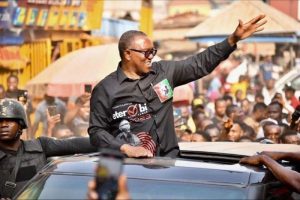
Another development requiring careful examination is the growing political mobilisation around President Bola Ahmed Tinubu's City Boy Movement. The movement publicly presents itself as a youth-driven, urban-focused platform supporting the President's Renewed Hope Agenda and mobilising citizens across the country. Its public platform also advertises a nationwide organisational structure covering the 36 states and the Federal Capital Territory. There is nothing inherently wrong with recruiting supporters from the South-East. Igbo businessmen, entrepreneurs, young professionals and political activists are entitled to support any candidate or political party of their choice. An Igbo businessman who supports Tinubu is not betraying the Igbo nation, just as one who opposes his re-election is not an enemy of national unity. The more important question, however, is whether such political mobilisation translates into meaningful inclusion or merely provides another avenue for securing electoral support. Are Igbo businessmen being recruited as genuine political partners or primarily as instruments of electoral mobilisation?
The danger of political patronage
Nigeria has a long history of political actors relying on influential businessmen, traditional rulers, religious leaders, entertainers and community figures to mobilise electoral support. Such relationships are not necessarily improper. Indeed, democratic participation allows individuals and organisations to support candidates and political causes they believe in. The problem arises when political access is exchanged for unquestioning loyalty, or when supporters are expected to defend government actions regardless of their consequences. A businessman should be free to support a president while criticising his policies. A community leader should be able to acknowledge government achievements while demanding better roads, electricity, security and employment opportunities. A political supporter should not be expected to surrender independent judgement simply because he belongs to a movement associated with the government. The Igbo have a long history of entrepreneurship, commercial independence and self-reliance. Their participation in national politics should therefore not be reduced to becoming electoral agents for another person's presidential ambition. They should be recognised as citizens and stakeholders with legitimate expectations concerning representation, development, economic opportunity and equal treatment.
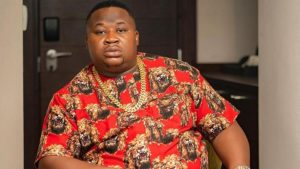
Cubana Chief Priest and Dave Umahi: When political mobilisation collides with accountability
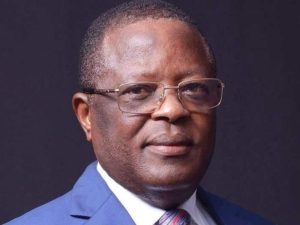
The minister reportedly referenced prominent Nigerian businessmen Aliko Dangote and Femi Otedola, suggesting that genuine achievements should speak louder than public declarations of wealth. Cubana Chief Priest subsequently responded on November 8, 2026, with a more politically charged message. Addressing Umahi as the "Pharaoh of our time", he demanded that the minister identify the federal infrastructure projects he had delivered in the South-East. He also questioned the minister's reported political promises concerning the delivery of South-East votes for Tinubu, asking what tangible achievements could persuade people in the region to support the President's re-election. His response included the pointed declaration: "Pharaoh, let our people go." Cubana also made an allegation concerning Umahi's supposed political succession plans for his son in Ebonyi State. The exchanges, reported by several Nigerian media platforms on November 8 and 9, have generated a debate that goes beyond the personalities involved.
The real issue is bigger than Cubana Chief Priest and Dave Umahi
The uncomfortable question about the City Boy Movement
The disagreement between Cubana Chief Priest and Umahi also demonstrates that political association does not necessarily eliminate differences of opinion. Indeed, the ability to criticise a public official, even within the same broad political environment, is an important feature of democratic participation. Political support should never mean surrendering the right to ask questions.
Dave Umahi must answer with his ministry's record, not personal exchanges
As Minister of Works, Umahi has a responsibility to provide Nigerians with a transparent account of federal infrastructure delivery. The South-East, like every other geopolitical zone, deserves to know what the Federal Government has done, what it is doing and what remains outstanding. A detailed South-East infrastructure scorecard would help move the debate from personal accusations to verifiable performance. Such a report should include:
-
Federal roads inherited by the ministry and their present conditions.
-
New road contracts awarded in Abia, Anambra, Ebonyi, Enugu and Imo States.
-
Projects completed since Umahi assumed office.
-
Projects still under construction and their actual stages of completion.
-
Contract values, funds released and payments made.
-
Contractors responsible for delayed or abandoned projects.
-
The quality and durability of completed roads and bridges.
-
Maintenance arrangements and timelines for outstanding work.
What does this mean for Tinubu's re-election ambition?
The disagreement exposes a contradiction in the politics of electoral mobilisation. Political leaders and their associates may promise to deliver votes from particular regions, but voters are not the personal property of ministers, governors, businessmen, traditional rulers or campaign organisers. The South-East is not a political estate that any individual can hand over to a presidential candidate. The people must make their own assessments based on government performance, economic conditions, security, infrastructure, constitutional rights, political representation and their expectations for the future.
If Umahi believes Tinubu deserves another term, he should be able to demonstrate the administration's achievements and explain what more it intends to deliver for the South-East. If Cubana Chief Priest believes the administration has failed to provide sufficient benefits to the region, he should support that criticism with verifiable evidence. Both positions deserve public scrutiny. Neither should be mistaken for the collective position of the Igbo people. Ultimately, the President's re-election prospects in the South-East should not depend on how many influential businessmen can be recruited into a political movement or how many political figures claim they can deliver votes. They should depend on whether the administration has earned the confidence of ordinary citizens through policies, performance, fairness and inclusion.
The larger lesson for the Igbo political class
The Igbo political class must learn to distinguish between political access and genuine political influence. Being invited into a political movement is not necessarily the same as participating in national decision-making. Being appointed a minister is not necessarily the same as securing equitable development for one's constituency. Being photographed with the President is not evidence that the concerns of one's people have been addressed. The real measure of political inclusion is whether citizens enjoy equal rights, equitable opportunities, adequate infrastructure, security, economic participation and meaningful representation.
The City Boy Movement, or any other political organisation seeking support in the South-East, should be prepared to engage with these issues. The same standard should apply to opposition parties and their political allies. The Igbo should not be asked to exchange their legitimate expectations for campaign positions, political appointments, personal access or proximity to the corridors of power. Their participation in national politics should be guided by informed choices, measurable commitments and the freedom to hold every government accountable. Political loyalty is a choice; accountability is a democratic obligation.
The Tinubu question: What did he mean by his 1997 remarks about Nigeria?
President Tinubu's political history also deserves scrutiny. In an interview published by ThisDay on 13 April 1997, during his period of political opposition to the military dictatorship, Tinubu was asked whether he believed in the Nigerian state. His response included the statement: "I am no longer inclined to believe in that Nigeria. It will break up." He also discussed the possibility of self-determination in the context of oppression and political repression under military rule. This interview should not be stripped of its historical context. Tinubu was then a NADECO activist opposing military dictatorship, and the country was experiencing serious political repression following the annulment of the June 12, 1993 presidential election. It would therefore be unfair to automatically equate his 1997 position with his present responsibilities as an elected civilian president. However, it is reasonable to ask how his understanding of national unity has evolved.
If political oppression and exclusion could lead him to question Nigeria's continued existence in 1997, should he not understand why the Igbo and other nationalities raise similar concerns about exclusion and injustice? A president who believes in national unity must demonstrate that belief through equal treatment. It cannot be enough to invoke unity when seeking votes and dismiss grievances when those votes have been secured.
The Muslim-Muslim ticket and political expediency
Tinubu's 2023 presidential ticket, with Kashim Shettima as his running mate, generated substantial debate because both candidates are Muslims. The decision was criticised by many Christian organisations and political stakeholders who considered it insensitive to Nigeria's religious diversity. Others defended it as a political decision based on electoral strategy and the constitutional right of political parties to choose their candidates. The important point is that the ticket exposed how easily national inclusion can become secondary to electoral calculations. Now, as the 2027 election approaches, the president is seeking support across different religious, ethnic and regional constituencies. That is a normal feature of democratic politics. However, the same standard of inclusion should apply to the Igbo.
If Northern Christian leaders, Yoruba political interests, Hausa political interests and other constituencies are important enough to attract sustained presidential engagement, the South-East should not be approached merely as another electoral market. It deserves substantive engagement on security, infrastructure, political representation, economic opportunities and national reconciliation.
The Northern political experience: A warning about transactional politics
The account of a Northern Christian who recalled his experience in Lagos in 1987 provides another dimension to this discussion. In the account, a Northern Christian narrated how a Yoruba personnel officer allegedly refused to process his employment documentation because he presented a statement of results from Ahmadu Bello University, Zaria. He claimed that a Yoruba course mate presenting the same university document had already been accepted. According to his narration, a senior Northern Muslim officer intervened, provided him with ₦300 and arranged transportation to the airport so that he could travel to Kaduna to obtain his original certificate. The account illustrates an important idea: people can overcome religious and regional divisions when they recognise one another's humanity. However, the incident remains a personal recollection that requires independent verification. It should not be used to establish that Yoruba people generally discriminate against Northerners. The more important lesson is that political identity should not determine who receives justice.
General TY Danjuma and the politics of 2027
The North has its internal political disagreements. The South-West has its political interests. The South-East has its own legitimate expectations. No region should be required to surrender its independent political judgment to secure recognition from the presidency. The lesson for the Igbo is clear: they must not allow political actors to turn their collective interests into bargaining chips for individual ambitions. They should negotiate with every administration, regardless of party or ethnicity, on clearly defined commitments. Those commitments should include measurable development, constitutional equality, protection of civil liberties and meaningful participation in national decision-making.
The contradiction of national unity: Why should the Igbo continually prove their loyalty?
This may be the most fundamental question in the entire debate. Why does the question of Igbo loyalty to Nigeria repeatedly arise in national political discussions? Are the Igbo not Nigerian citizens? Have they not served in the Nigerian armed forces? Have they not occupied positions in the civil service, judiciary, academia, business, sports, diplomacy and other national institutions? Have Igbo entrepreneurs not established businesses throughout the federation? Are Igbo doctors, engineers, teachers, traders, lawyers, public servants and professionals not contributing to the Nigerian economy? Why, then, should an ethnic nationality with such an extensive contribution to national life repeatedly face questions about whether it belongs? An Igbo citizen should not have to demonstrate loyalty by remaining silent about injustice. A Hausa citizen should not have to demonstrate loyalty by supporting every Northern political leader. A Yoruba citizen should not have to demonstrate loyalty by defending every decision of a Yoruba president. And a Christian or Muslim should not have to surrender constitutional rights to demonstrate religious patriotism. Citizenship is not a political favour. It is a constitutional status carrying rights and obligations. Nigeria cannot demand unquestioning loyalty while providing unequal protection.
The problem with treating criticism as disloyalty
There is a dangerous tendency in Nigerian political discourse to interpret criticism of the federation as hostility towards the country. This attitude is counterproductive. When a citizen complains about poor roads, that citizen is not attacking Nigeria. When an ethnic group demands equitable representation, it is not necessarily threatening national unity. When citizens demand accountability for unlawful killings, they are not supporting terrorism. When people call for constitutional restructuring, they are participating in a legitimate national debate. Indeed, the ability to accommodate criticism is one of the strongest indicators of a mature democracy. A country that cannot tolerate disagreement will eventually struggle to maintain genuine national cohesion.
The Igbo contribution to Nigeria: A nationality that cannot be reduced to its political grievances
Any balanced examination of Igbo marginalisation must also recognise the extraordinary contribution of the Igbo to Nigeria's development. Igbo entrepreneurship is visible in virtually every major Nigerian commercial centre. From Onitsha to Aba, Nnewi to Enugu, and from Lagos to Kano, Igbo-owned businesses have established extensive commercial networks. Igbo professionals have contributed to medicine, engineering, law, education, technology, manufacturing, construction, agriculture and public administration. Igbo communities abroad have also developed international networks that connect Nigerian businesses with markets, knowledge and investment opportunities. This is not to suggest that other ethnic nationalities contribute less. Nigeria's development is the collective product of its diverse populations. However, it is important to recognise that the Igbo have remained active participants in the Nigerian economy despite the historical trauma of the Civil War and continuing political grievances. There is a contradiction in celebrating Igbo commercial success while treating the Igbo political demand for equality as an inconvenience. If the Igbo are good enough to build businesses, employ Nigerians, pay taxes, invest in property and contribute to the economy, they are equally entitled to seek the highest political office. Economic participation should not become a substitute for political equality.
What must Nigeria do if it genuinely wants to preserve national unity?
National unity must move beyond political speeches and ceremonial declarations. The following measures would provide a practical foundation for addressing the grievances discussed in this investigation.
-
Establish a credible national reconciliation and historical justice process - Nigeria needs a comprehensive national reconciliation initiative that addresses the consequences of the Civil War and other major episodes of ethnic and political violence. Such a process should examine:
-
The anti-Igbo pogroms of 1966.
-
-
The post-war £20 banking policy.
-
Abandoned property disputes.
-
Allegations of unlawful killings and other abuses by security forces.
-
The experiences of displaced families and surviving victims.
-
Guarantee equitable political participation - Major political parties should adopt transparent and credible internal democratic processes. The South-East should have a fair opportunity to compete for the presidency without ethnic intimidation, political stereotyping or deliberate institutional exclusion. Political parties should also publish their approaches to zoning, internal representation and the selection of presidential candidates. The decision should ultimately remain with Nigerian voters.
-
Address the five-state imbalance - The National Assembly should conclude the constitutional process on the proposal for an additional state in the South-East. The process must be conducted transparently and according to the constitutional requirements for state creation. The issue should not be treated as a reward for political support. It is a question of structural equity.
-
Publish federal appointment and recruitment data - The Federal Character Commission should regularly publish accessible reports showing the distribution of federal appointments and recruitment across states and geopolitical zones. These reports should include:
-
Senior political appointments.
-
Federal civil service recruitment.
-
Leadership of major government agencies.
-
Security and intelligence institutions.
-
Federal boards and commissions.
-
Public-sector employment opportunities.
This would enable Nigerians to assess compliance with Section 14(3) using evidence rather than political propaganda.
-
Investigate human rights violations in the South-East - An independent mechanism should investigate credible allegations of extrajudicial killings, enforced disappearances, torture, arbitrary detention and destruction of civilian property. The mechanism should also investigate murders, kidnappings, attacks on security personnel, extortion and other crimes committed by armed non-state actors. Victims deserve justice irrespective of the identity of the perpetrators. The government must not excuse abuses by security personnel simply because they are operating against a separatist movement. Equally, separatist groups must not excuse attacks on innocent citizens by claiming to be fighting for self-determination.
-
Create a comprehensive South-East development programme - The Federal Government should work with South-East governors, the private sector and development institutions to produce a measurable regional development programme. Priority areas should include:
-
Federal road rehabilitation and maintenance.
-
Industrial development in Aba, Nnewi, Onitsha and other commercial centres.
-
Improved electricity transmission and distribution.
-
Agricultural processing and rural enterprise development.
-
Rail and inland waterway connectivity.
-
Technical and vocational education.
-
Youth employment and entrepreneurship.
-
Federal university and teaching hospital infrastructure.
-
Export development and trade facilitation.
-
Security and community-based peacebuilding.
Every project should have a budget, implementation timetable, responsible agency and public reporting mechanism.
-
Pursue political dialogue rather than permanent militarization - The Federal Government should establish a credible dialogue process involving South-East governors, traditional rulers, religious leaders, civil society organisations, youth representatives, constitutional lawyers, human rights organisations and other relevant stakeholders. Such dialogue should address the underlying grievances that sustain separatist agitation. It should not legitimise violence. It should create peaceful channels for addressing political and constitutional disagreements.
-
Reform the electoral system and political party culture - Political parties should stop treating ethnic identity as an electoral weapon. They should demonstrate that their presidential candidates and national leadership structures are selected through transparent processes. They should also make public their commitments to regional development and national inclusion. Nigeria needs political parties that can win votes because of their policies, competence and credibility rather than relying primarily on ethnic fear, religious division and patronage.
A message to Igbo political leaders and businessmen: Do not confuse access with inclusion
There is also a responsibility that belongs to the Igbo political and business class. Not every political arrangement offered by a president should be accepted simply because it provides access to the Presidential Villa. Not every appointment represents collective progress. Not every political endorsement advances the interests of the people. And not every politician who speaks positively about the Igbo during an election campaign is committed to addressing their historical grievances. Igbo political leaders must learn to negotiate collectively on issues of national importance without surrendering their independence to any political party. Businessmen joining the City Boy Movement or any other political organisation should be free to do so. However, they should ask for measurable commitments rather than settle for photographs, ceremonial titles and campaign positions. They should demand:
-
Protection of their businesses and investments.
-
Better federal infrastructure in the South-East.
-
Equitable access to public contracts.
-
Improved electricity and transportation.
-
Fair representation in federal institutions.
-
Protection of citizens' constitutional rights.
-
A credible national reconciliation programme.
