
Cooperative Societies in Nigeria | SkyDNews
Cooperative societies in Nigeria offer ordinary people a practical way to overcome economic challenges, from individual struggles to collective prosperity, they build businesses and create better opportunities through collective effort. From farmers seeking affordable agricultural inputs to women entrepreneurs looking for capital and young people exploring business opportunities, belonging to a well-managed cooperative can make a meaningful difference. But what exactly are the benefits, and why should you consider joining one?

How Cooperative Societies in Nigeria Turn Small Contributions into Opportunities
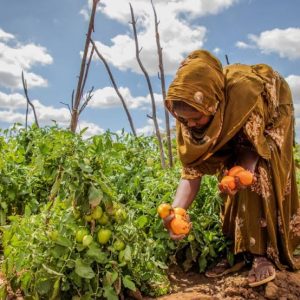
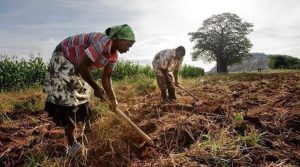
Consider a practical example. Imagine 30 farmers in a community. Each farmer needs improved seeds, fertiliser and access to equipment before the planting season. Buying these individually can be expensive, particularly when suppliers sell at wholesale rates or require substantial purchases. However, if the farmers organise themselves into a cooperative, they can collectively identify their needs, plan their purchases and negotiate with suppliers. Instead of 30 individuals approaching the same supplier separately, the cooperative can negotiate as an organised group. The potential advantages include better bargaining power, reduced procurement costs, coordinated access to equipment and improved opportunities to connect with buyers. The same principle applies to women who process agricultural products, artisans, traders, transport operators, food vendors and young entrepreneurs.
Cooperative societies in Nigeria do not magically create wealth, but it creates an organised structure through which people can pursue opportunities that may be beyond their individual capacity.
Seven practical benefits of belonging to Cooperative Societies in Nigeria
1. Access to collective savings and financial support - One of the biggest challenges facing low-income earners and small business owners is access to affordable finance. A properly organised cooperative can encourage regular savings and establish transparent arrangements for members to access loans or other financial support, subject to its rules and available resources. For instance, a woman who sells vegetables may need ₦100,000 to increase her stock. Rather than depending entirely on expensive informal borrowing, she may be able to access a cooperative facility if she qualifies under the society's lending arrangements. The important point is that members are not merely saving money; they are building a collective financial resource that can support productive activities.
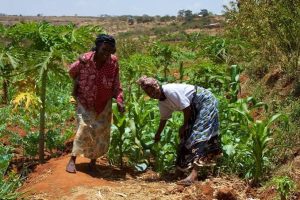
2. Better bargaining power and reduced costs - Buying individually is not always economical. Imagine 20 women who produce food items and need packaging materials. Each woman buying small quantities may pay more than a group purchasing in bulk. Through a cooperative, members can aggregate their orders, negotiate prices and potentially reduce their operating costs. Farmers can apply the same approach to fertiliser, seeds, tools and other agricultural inputs. The money saved can be reinvested into their businesses or used to improve household welfare.
3. Business development and employment opportunities - A cooperative can become a platform for creating businesses rather than simply distributing financial assistance. For example, members can identify a local economic opportunity, develop a business plan, acquire equipment and establish an enterprise that serves both members and the wider community. In a farming community, this could mean food processing, storage, packaging and marketing. In an urban community, it could mean waste recycling, food production, small-scale manufacturing or other viable enterprises. When such activities are properly organised, they can create income-generating opportunities and employment for members and other residents.
4. Access to training, knowledge and new opportunities - Not everybody has the same level of business knowledge, technical skills or access to information. A cooperative can bridge this gap through training, peer learning, mentorship and partnerships with relevant institutions. A farmer who understands cultivation but knows little about modern marketing can learn from another member. A young entrepreneur can acquire basic financial management skills. A woman who has never used digital payment or business management tools can receive practical training. The International Cooperative Alliance recognises education, training and information as one of the seven internationally accepted cooperative principles. This is important because Cooperative societies in Nigeria do not only help members access resources; it should also help them become more knowledgeable, productive and independent.
7. Community development and long-term prosperity - The benefits of Cooperative societies in Nigeria should extend beyond the individual members. When members develop profitable businesses, employ people, purchase locally and reinvest in their communities, the wider local economy can benefit. A cooperative that supports farmers can contribute to food production. One that empowers women can improve household incomes. A recycling cooperative can help address environmental problems while creating economic opportunities.
This is the broader significance of cooperation: individuals become stronger, businesses become more organised, and communities gain opportunities for sustainable development.
FAGCO: A Practical Cooperative Society in Nigeria
One organisation that illustrates the relevance of the cooperative model is Favoured Farmers Agro-Geo Cooperative Society Limited (FAGCO). FAGCO represents an approach that goes beyond the traditional understanding of cooperatives as associations established solely for farmers or people who want to save money. Its cooperative framework provides an opportunity to bring people, particularly women and other economically active community members, together around agriculture, enterprise development, environmental sustainability and economic empowerment.
Consider its proposed initiative, Empowering Women Through Renewable Energy and Clean Cooking Enterprises. The initiative is designed around 50 women organised into three practical economic activity groups:
-
-
Waste Collection and Recycling: 17 women focusing on waste collection, sorting and recycling opportunities.
-
Compost Production: 16 women focusing on converting organic waste into useful compost products.
The initiative also incorporates entrepreneurship development, financial literacy and Village Savings and Loan Association (VSLA) approaches.

Cooperative societies in Nigeria: What makes this example important?
It demonstrates that economic empowerment does not have to begin with everyone receiving cash. Sometimes, it begins with identifying a local problem, organising people around a practical solution, providing appropriate skills and equipment, and creating opportunities for members to earn income. Consider the possibilities.
-
A woman who participates in waste collection and recycling can develop an income-generating activity from materials that might otherwise be discarded.
-
Another woman trained in compost production can turn organic waste into a useful agricultural input that farmers may purchase.
-
A woman involved in clean cooking and renewable energy can explore opportunities to supply, promote or provide services around cleaner cooking technologies.
FAGCO's approach illustrates how a cooperative can connect people to productive activities while encouraging financial discipline, entrepreneurship and collective responsibility. It also provides an opportunity for members to participate in economic sectors that are increasingly relevant to sustainable development. Of course, the success of such an initiative will depend on effective implementation, proper financial management, member participation, access to markets and the sustainability of the enterprises established. That is precisely why cooperative membership, active participation and responsible leadership matter.

Why Women and Young People Should Join Cooperative Societies in Nigeria
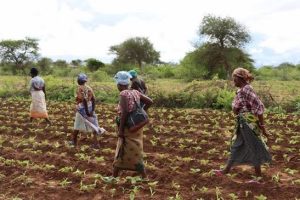
Many young Nigerians are searching for employment opportunities, while others are attempting to establish businesses without sufficient capital, equipment or support. Rather than viewing cooperative societies as organisations exclusively for older people, young Nigerians should consider them platforms for enterprise development. A group of young people with different skills can establish a cooperative around agriculture, technology, digital services, manufacturing, creative industries or other viable economic activities. One member may understand marketing, another may have technical skills, while another may have business management experience. Working together, they can develop an enterprise with a broader range of capabilities than any one member might possess independently. Women, particularly those operating micro and small businesses, also have much to gain from collective organisation. A cooperative can help women move from isolated economic activities towards organised production, joint purchasing, business expansion and access to new markets. However, membership should not be viewed as an automatic entitlement to grants, government money or free loans. The real value lies in building an organised, accountable and productive economic community.
Cooperative Society Membership: Why Active Participation Matters
There is something important prospective members must understand. Registering Cooperative societies in Nigeria do not automatically make it successful. Neither does collecting membership fees or electing executives. A cooperative becomes valuable when its members actively participate in its activities and hold themselves and their leaders accountable. Before joining any cooperative, prospective members should ask some important questions:
-
-
What are its objectives and actual economic activities?
-
What are the membership requirements and financial obligations?
-
Are its constitution, rules and financial records accessible to members?
-
How are leaders elected and held accountable?
-
How are members' contributions managed?
-
What practical opportunities does the cooperative offer?
-
Are members involved in decision-making?
Members should also understand that contributions and savings are subject to the cooperative's rules. They should not assume that every contribution is immediately withdrawable or that every member is automatically entitled to a loan. Transparency, accountability, proper record-keeping and democratic leadership are essential. A cooperative that operates without these safeguards can undermine the very trust and solidarity upon which the cooperative movement is built. The responsibility therefore belongs to both the leadership and the membership.
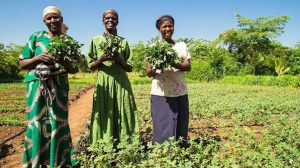
The Nigerian opportunity: Stop struggling alone
Nigeria has millions of people engaged in agriculture, trading, small-scale production, transportation, services and other informal economic activities. Many of these people have the determination to succeed but lack the structures, resources and networks that could help them grow. Cooperative societies in Nigeria offer one practical way of addressing this challenge. Instead of every farmer struggling to obtain agricultural inputs independently, farmers can organise. Instead of every woman operating a small business without support, women can build collective enterprises. Instead of young people waiting indefinitely for salaried employment, they can explore viable businesses through organised cooperation. Instead of communities treating waste only as a disposal problem, they can explore recycling and compost production as economic opportunities. This is not an argument that everybody must belong to the same cooperative or that cooperatives can solve every economic problem. Different people have different needs, interests and capacities. The important thing is to recognise that collective economic organisation is an opportunity worth taking seriously.
The international cooperative movement, guided by the International Cooperative Alliance, is founded on self-help, self-responsibility, democracy, equality, equity and solidarity. These values remind us that people can become active participants in their economic future rather than remaining entirely dependent on individual resources or external assistance.