
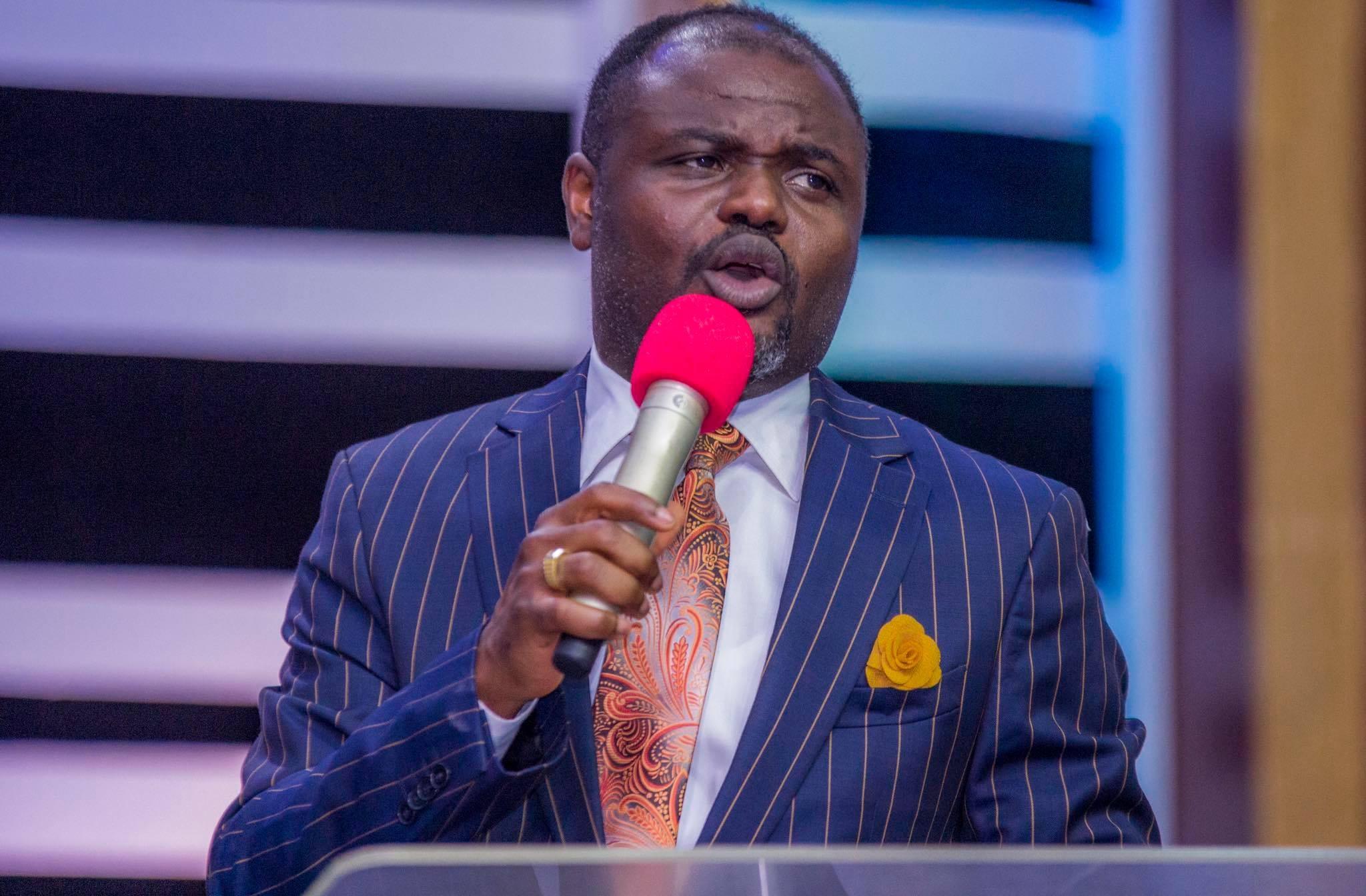
ABEL DAMINA | SKYDNEWS INVESTIGATIVE COMMENTARY | RELIGION, POWER, ACCOUNTABILITY AND PUBLIC TRUST
When a man who once helped build a controversial religious system turns around to challenge the very system he helped popularise, the public deserves more than applause, condemnation or emotional reactions. It deserves answers. There are stories that deserve to be told, not necessarily because the people involved are unknown, but because the questions surrounding them have become too important to ignore.
Dr. Abel Damina is one such personality. Over the years, Abel Damina has developed a distinctive public identity through his preaching, theological arguments and growing influence in Christian media. His journey through Nigerian Christianity raises important questions about religious influence, prosperity preaching and the responsibility of spiritual leaders. To some, he is a courageous preacher who has dared to challenge what they consider the excesses, manipulations and commercialisation of Christianity. To others, he is a controversial religious figure whose confrontational approach, theological positions and public pronouncements deserve closer scrutiny. There are also those who question whether his present criticism of certain practices represents genuine spiritual transformation or a complicated personal disagreement with the religious establishment. But perhaps the most important question is neither whether Abel Damina is right nor whether his critics are right. It is this: When someone claims to have participated in a system that exploited people's faith, what does genuine repentance require, and how should society assess that person's subsequent conduct?
That question deserves serious investigation, especially where the livelihoods, marriages, families, spiritual convictions and financial sacrifices of ordinary people are concerned. For SkyDNews, however, this must be an investigation, not a predetermined conviction. Claims of fraud, deliberate deception, personal enrichment and revenge must be established through verifiable statements, records and independent evidence. A person's own controversial confession can be examined, but it should not automatically be converted into proof of every allegation made against them.
Who Is Abel Damina? His Background and Ministry
Abel Damina and His Former Prosperity Gospel
Perhaps the most significant aspect of Abel Damina's public history is his admission that he once preached the very prosperity-oriented messages he now criticises. In June 2019, Church Times Nigeria published an account of his testimony in which he described himself as a leading promoter of prosperity preaching in his environment. He reportedly admitted that he was so deeply involved in the message that he preached prosperity, organised deliverance programmes and raised money with considerable enthusiasm. One particularly striking part of his testimony was his admission that he preached sermons about financial prosperity which he knew were not practically convincing, and that some Biblical passages he quoted were not being interpreted correctly. He also recalled asking himself whether ministry had become nothing more than raising money and teaching people how to make money. This is important. It means the criticism Abel Damina now directs at prosperity-oriented Christianity is not coming from someone who has merely observed the movement from outside. By his own account, he was once deeply involved in it.
In the account published in 2024 by Idoma Voice, drawing from his appearance on the Honest Bunch podcast, he recalled a period when he had money, cars, a convoy, an entourage and police escorts, yet felt spiritually empty. He explained that he began questioning the direction of his ministry and eventually undertook a period of prayer and research with his wife. He subsequently encountered the teachings of American preacher Andrew Wommack, whose books, according to his testimony, helped him reconsider his understanding of Christianity. The transformation, as he presents it, was substantial. He says he returned to his congregation and apologised for teaching that Christians must pay tithes and sow financial seeds to obtain divine blessings.
In his account, he gave members the freedom to leave if they could no longer trust him. He further claimed that approximately half of his congregation left following the change. That admission raises an important question: if the teachings were sufficiently wrong to warrant an apology, what responsibility did he accept towards those who had made financial and personal sacrifices because of them?
Abel Damina: Genuine Repentance or a Change of Theology?
The question surrounding Abel Damina's repentance is not simply whether he has changed his teachings, but whether he has adequately addressed the consequences of his former ministry practices. This is where the conversation becomes considerably more complicated. There is a difference between changing one's religious beliefs and making restitution for the harm caused by one's former teachings. There is also a difference between publicly admitting that one was wrong and taking measurable steps to address the consequences of that wrongdoing. Abel Damina has publicly acknowledged his former involvement in prosperity preaching. He has also said that he apologised to his congregation and instructed people to discard his earlier prosperity-oriented books.
In December 2023, reports attributed to him a directive that people should burn his old prosperity books because he considered their teachings misleading. These are not insignificant actions. A preacher who publicly repudiates his previous teachings, even at the cost of losing followers, deserves to have that decision examined fairly. However, the question of restitution remains. Did he establish a process through which people who suffered financial losses because of his former teachings could seek redress? Did he identify the financial practices he considered wrong and explain the extent of his own participation? Did he return money or assets obtained through practices he now considers misleading, where such proceeds can be identified? Did he make a public effort to reach former members who left with financial, emotional or spiritual grievances? Has he published an account of the practical steps he took to repair the consequences of his former ministry?
These are legitimate accountability questions, not allegations that he has been found guilty of a crime. Repentance is more than discovering that one's previous message was wrong. It is also about accepting responsibility for what happened while one was preaching it.
The Biblical account of Zacchaeus in Luke 19:1-10 is particularly relevant. Zacchaeus did not merely acknowledge that his conduct had been wrong. He offered restitution to those he had defrauded. The distinction matters. A person can change direction, but the people affected by the former direction may still be living with its consequences. There is, however, an important Biblical nuance: Zacchaeus was not instructed to give away absolutely everything he possessed. He voluntarily pledged half his possessions to the poor and fourfold restitution to anyone he had defrauded. That is the actual standard described in the passage.
For SkyDNews, the central question should therefore be whether Abel Damina's publicly declared change has been accompanied by transparent and verifiable efforts to address any identifiable harm. And whether apologising to his congregation and instructing people to discard his earlier prosperity-oriented books will come with a prize. You wrote a book, advertised it and I bought it. You later came telling me that I should discard the book because you no longer hold the same opinions contained in the book. What happens to the money I used in purchasing the book, the time you made waste to read lies from you?
Why Abel Damina Now Challenges Church Leaders
There is a legitimate public interest in these arguments. Religious giving should never be extracted through threats, coercion, false promises or the exploitation of vulnerable people. Church members have a right to understand how their contributions are used, and religious leaders should be accountable for the resources entrusted to them. But there is another side to this conversation. If Abel Damina was once a participant in the very culture he now condemns, the public is entitled to ask whether he has adequately addressed his own past before positioning himself as one of its most vocal critics. That does not invalidate his present arguments. It makes his own history an essential part of the discussion.
Abel Damina's Admission About the Prosperity Gospel: "Some of them, it's my template they are using"
Perhaps one of the most consequential statements attributed to Abel Damina comes from his discussion of the prosperity-preaching culture he once championed. In a report published by Idoma Voice in August 2024, Abel Damina was quoted as saying: "I was a master in that gospel. Some of them, it's my template they are using." He went further to explain how the message developed around the proposition that men of God should not be poor because God Himself is not poor. According to his account, the message began to make sense to those involved, and they started seeing pastors raise money and enjoy improved lifestyles. He acknowledged that he too wanted to live better. This is an extraordinary admission, and it deserves closer examination. If a preacher says that he was a master of a particular religious fundraising culture, and that other preachers adopted the template he helped popularise, what exactly was the template? Was it a particular interpretation of Biblical passages? Was it the use of prophetic declarations to motivate financial contributions? Was it the systematic association of financial giving with miracles, breakthroughs, protection and prosperity? Or was it a broader model of religious entrepreneurship in which the pastor's material success became evidence of divine favour?
These questions are important because religious fundraising is not inherently fraudulent. Churches need resources to operate, support communities, maintain facilities, pay staff and carry out charitable work. The ethical problem arises when people are made to believe that their financial survival, healing, marriage, employment or divine acceptance depends on giving money to a religious leader. When a poor widow is made to believe that surrendering her last savings is the necessary price for a miracle, the consequences can be devastating. When a struggling family sells property, borrows money or neglects the education of its children because of promises of supernatural financial returns, the matter goes beyond theological disagreement. And when a religious leader later admits that the teachings used to motivate such sacrifices were misleading, the public is entitled to demand accountability. Did Abel Damina create the system, or was he one of its participants?
Abel Damina and His Former Ministerial Associates
There is another dimension to this story that deserves attention. Abel Damina has increasingly become a vocal critic of prominent Nigerian Christian leaders, particularly those associated with prosperity preaching and the financial expectations placed on Church members. His disagreements have become particularly visible in his exchanges with prominent figures, including Pastor David Ibiyeomie and Pastor Paul Enenche.
In his August 2024 Punch interview, Abel Damina discussed his relationship with several prominent Church leaders and defended his position on tithing and other Christian teachings. He also spoke about his former association with the Pentecostal Fellowship of Nigeria, where he said he served as National Youth Chairman for eight years. In subsequent controversies, his criticism became more direct. In 2025, for instance, he challenged claims attributed to other preachers about Jesus and poverty, arguing that some prosperity-oriented interpretations were inconsistent with the character and teachings of Christ. The question is whether his present confrontation with the religious establishment is entirely about correcting theological errors.
It is possible for someone to have genuinely changed and still be angry about the practices they once supported. It is equally possible for personal disagreements to influence how someone presents a public campaign. But it would be irresponsible to conclude, without evidence, that Abel Damina's criticism is motivated by jealousy, wounded pride, loss of influence or revenge. Those are questions about his intentions, and intentions cannot be established merely by examining the intensity of his criticism. Nevertheless, his public admission that others adopted a template he helped popularise invites a difficult question:
If he believes that the system was wrong, why should the public be satisfied with his exposure of other people without a comprehensive account of his own involvement and the consequences?
If his former associates are now operating practices he considers deceptive, the public needs evidence of those practices, not simply accusations.
And if there are identifiable victims, they deserve to be heard independently of the rivalry between religious personalities.
Why Abel Damina Divides Christian Opinion: Some Christians applaud him, while others consider him controversial
It would be inaccurate to suggest that Abel Damina has no legitimate supporters or that every criticism of him is necessarily justified. There are Christians who appreciate his emphasis on grace, the finished work of Christ, Biblical interpretation and freedom from financial manipulation. Some believers have become increasingly uncomfortable with the commercialisation of religious activities. They question why a person must pay for special prayers, purchase particular religious materials or make financial commitments to obtain what is presented as a divine blessing. For such people, Abel Damina's arguments represent a refreshing challenge to established practices. There are also people who believe his approach is unnecessarily confrontational and that some of his interpretations depart from accepted Christian doctrine. The disagreement is not merely theoretical.
Abel Damina's Former Teachings and Their Wider Impact
These are not hypothetical concerns invented to attack one preacher. They are the kinds of experiences that responsible journalism must investigate wherever religious exploitation is alleged. The psychological consequences can be as serious as the financial ones. A person who has given away money under intense religious pressure may experience shame, guilt, confusion and a loss of confidence. Some may blame themselves for not having enough faith. Others may conclude that God has abandoned them. Families can suffer when one person's religious commitments consume resources needed for rent, healthcare, food, education and other responsibilities. Children may bear the consequences of decisions they never participated in. Marriages may become strained when spouses disagree over repeated financial contributions to religious institutions. And when such individuals eventually withdraw from organised religion, their disappointment may extend beyond the particular preacher or Church that influenced them. It can affect their relationship with Christianity itself. This is why the debate must not be reduced to whether Abel Damina has defeated another Pastor in an online argument. The real issue is whether religious institutions are protecting or exploiting the trust of the people they serve. What about the souls allegedly lost through deception?
Christianity takes spiritual responsibility seriously. A preacher who knowingly misrepresents the faith for personal gain raises profound moral questions. However, SkyDNews tries to be very careful here, not to declare that particular people have gone to hell because they were exposed to a particular preacher's teachings. That is not something a journalist can establish. What can be examined is whether people were misled, whether their faith was damaged, whether they abandoned religious communities, whether they experienced psychological distress and whether the leaders involved took responsibility. A religious leader's responsibility is not limited to the money collected. It also extends to the trust, expectations and spiritual vulnerability placed in that leader.
Abel Damina: Questions About Wealth and Accountability
Abel Damina's own testimony provides an interesting starting point. He has recalled having money, cars, a convoy and an entourage during the period when he was deeply involved in prosperity preaching. He has also admitted that he raised substantial funds through the ministry practices he subsequently questioned. But there is an important distinction between what he has publicly said about his former lifestyle and what can independently be established about his present wealth. There is currently insufficient independently verified public evidence in the sources reviewed to establish the value of his personal assets, the source of every asset, or the claim that he controls a multi-trillion-naira empire built from questionable religious fundraising. It would therefore be wrong to present that figure as fact. Nevertheless, the questions are legitimate: What were the major sources of income for his ministry during the prosperity-preaching years? What financial records exist from that period? How much money was collected through tithes, seed offerings, special offerings and other religious contributions? What became of the assets acquired during that period? Which assets belong to the Church, which belong to associated organisations, and which are personally owned? What steps, if any, were taken to compensate people who can demonstrate that they suffered financial losses as a direct consequence of misleading representations?
These questions should be put to Abel Damina and his ministry for a response. The same standard should apply to every other religious leader whose financial practices are under scrutiny. If a preacher admits that certain teachings were wrong, it is reasonable to ask whether the financial benefits associated with those teachings were also examined. A change of doctrine should not automatically end a conversation about financial accountability.
Abel Damina: Fighting for Truth or Personal Conviction?
This is the question that will probably continue to divide public opinion. There is a temptation to interpret Abel Damina's present activities through the lens of personal conflict. His public statements about having created a template adopted by other preachers can easily lead people to speculate that he is dissatisfied with the success of those who continued practising what he abandoned. But speculation is not evidence. A person who once participated in a harmful system can become one of its most effective critics. Indeed, people who have experienced wrongdoing from within sometimes possess valuable knowledge that outsiders do not have.
Equally, someone can identify genuine wrongdoing while having unresolved personal grievances. The two possibilities are not mutually exclusive. Abel Damina could be right about certain abuses within Nigerian Christianity and still owe his former followers a more comprehensive account of his own history. He could be genuinely committed to correcting theological errors while still needing to demonstrate that his present ministry operates according to the standards of transparency he demands from others. He could be sincere in his repentance, but sincerity alone does not answer questions about restitution. And he could be exposing genuine wrongdoing without necessarily being the only person qualified to determine who is preaching the true gospel. The public should therefore resist the temptation to make him either a hero beyond criticism or a villain without evidence.
The questions SkyDNews believes Dr Abel Damina must answer
In the interest of fairness, transparency and public accountability, SkyDNews believes the following questions deserve direct responses from Dr Abel Damina.
A]. On his former ministry:
-
You have admitted that you were once a leading preacher of prosperity messages. What specific practices did you employ that you now consider misleading?
-
When you say that some of today's preachers are using your template, what exactly did you introduce or popularise?
-
Did you ever knowingly preach Biblical interpretations that you personally doubted at the time?
-
What were the principal sources of income for your ministry during the years you championed prosperity preaching?
B]. On repentance and restitution:
-
You have publicly apologised for your former teachings. Did that apology extend to financial restitution for people who may have suffered losses because of those teachings?
-
Did you establish any mechanism through which former members could bring complaints or seek redress?
-
Have you made any effort to identify people who may have sold property, borrowed money or sacrificed essential family needs because of the financial promises made under your former ministry?
-
What happened to the wealth and assets accumulated during the period you now describe as spiritually misguided?
C]. On his present confrontations:
-
When you criticise other pastors for practising methods you once employed, how do you distinguish your campaign for accountability from personal disagreements?
-
Have any of your former ministerial associates directly threatened, intimidated or wronged you, and are there verifiable records of such incidents?
-
Are you prepared to subject your present ministry, financial practices and teachings to the same public scrutiny you demand of other religious leaders?
-
What safeguards exist within your present ministry to ensure that future leaders do not repeat the mistakes you say you made?
