Global Emergency Preparedness | SkyDNews Investigative Desk
From Britain to Germany, Japan, Sweden and the United States, governments are strengthening household emergency preparedness. Is this simply disaster management, a response to rising geopolitical tensions, or a warning about the vulnerability of modern societies? And why is Africa not having a more visible conversation about it?

BRITAIN: A NEW PUBLIC PREPAREDNESS CAMPAIGN
On 22 October 2026, the British government announced updated household emergency-preparedness advice under its Be Ready campaign. The initiative is the first stage of a three-year public campaign encouraging households to prepare for temporary disruptions to essential services, including electricity, water, telephone networks and internet connectivity.
The government recommends maintaining three days of drinking water, at approximately three litres per person daily, alongside non-perishable food, essential medicines, a first-aid kit, a torch, spare batteries, a power bank, a radio, cash and important documents. Importantly, the campaign encourages households to build their emergency supplies gradually rather than engage in panic buying. Britain's advice is particularly interesting because the government is no longer treating emergency preparedness as something exclusively reserved for emergency services and security agencies. It is making household readiness part of a wider national resilience programme. The official announcement identifies severe weather and disruptions to everyday services as reasons for preparation. It does not declare that war is imminent (Source: UK Cabinet Office, 22 October 2026).
GERMANY: TEN DAYS OF SELF-SUFFICIENCY
SWEDEN: WHEN A GOVERNMENT EXPLICITLY MENTIONS WAR
NORWAY: FROM THREE DAYS TO ONE WEEK
THE NETHERLANDS: THE FIRST 72 HOURS ARE EVERYONE'S RESPONSIBILITY
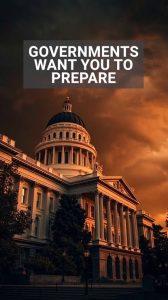
The Netherlands launched its nationwide Denk Vooruit, translated as Think Ahead, campaign in November 2025. The campaign encourages citizens to prepare for at least 72 hours without electricity, water or internet access. Its three central recommendations are straightforward:
-
Assemble an emergency kit.
-
Prepare a household emergency plan.
-
Communicate with neighbours, family members and other members of the community.
BELGIUM: PREPARE FOR 72 HOURS WITHOUT ESSENTIAL SERVICES
FINLAND: WHY THE 72-HOUR PERIOD MATTERS
JAPAN: PREPAREDNESS IS PART OF NATIONAL CULTURE
THE UNITED STATES: EMERGENCY SUPPLIES ARE NOT A NEW CONCEPT
The United States has long promoted household emergency preparedness through FEMA, Ready.gov and other public safety institutions. American guidance encourages households to maintain emergency food and water supplies, with a three-day supply of commercially bottled water per person forming a recognised baseline in federal food-safety guidance. The US Department of Agriculture's Food Safety and Inspection Service recommends keeping at least three gallons of bottled water per person, equivalent to approximately 11.4 litres, for three days. Households are also advised to maintain non-perishable food, medicines, first-aid materials and supplies for infants and pets. The American example is important because it demonstrates that emergency stockpiling is not necessarily a new response to current geopolitical tensions. It is an established component of disaster readiness.
THE BIGGER PICTURE: EUROPE IS BUILDING A PREPAREDNESS UNION
Perhaps the most significant development is not any single country's household checklist. It is the European Union's Preparedness Union Strategy, launched on 26 March 2025. The strategy identifies growing geopolitical tensions, armed conflicts, hybrid threats, cyberattacks, foreign information manipulation, climate change and natural disasters as interconnected challenges. It proposes 30 key actions, including strengthening essential services, improving strategic stockpiles, developing crisis-response coordination, conducting preparedness exercises and encouraging citizens to maintain at least 72 hours of essential supplies. The European Commission is therefore not merely encouraging citizens to buy bottled water. It is pursuing a wider programme to strengthen the ability of governments, institutions, businesses and communities to function when serious disruptions occur. There is an important security dimension to this approach.
NATO's September 2026 updated resilience requirements also place emphasis on civilian preparedness, continuity of government, resilient energy supplies, food and water security, communications, transport and the ability to support military operations during crises and conflict. NATO explicitly identifies cyberattacks, sabotage, attacks on critical infrastructure, supply-chain vulnerabilities and extreme weather as threats that can undermine national resilience. This is a substantial development. It demonstrates that, within the Euro-Atlantic security framework, civilian resilience is increasingly regarded as an integral part of national and collective defence.
SO, IS SOMETHING COMING THAT GOVERNMENTS ARE NOT TELLING US?
This is where speculation must give way to evidence. There are at least five developments that explain why governments are placing greater emphasis on preparedness.
-
The possibility of geopolitical escalation - The war in Ukraine and wider tensions between major powers have forced European governments to reconsider the vulnerability of their territories, infrastructure and supply chains. Civilian preparedness is consequently being incorporated into national security planning. However, preparedness for a possible conflict does not establish that a particular conflict has been scheduled or is inevitable.
-
Cyberattacks and sabotage - Modern societies depend heavily on interconnected digital and physical infrastructure. Electricity distribution, banking, telecommunications, water treatment, transport and healthcare systems depend on networks that can be disrupted by technical failures or malicious attacks. A major cyber incident or coordinated sabotage operation could create consequences extending far beyond the original target. A country does not necessarily need to experience a conventional military invasion before its population faces a serious national emergency.
-
The vulnerability of global supply chains - Food, fuel, medicines, industrial materials and other essential products move through complex international supply networks. Conflict, trade restrictions, shipping disruptions, energy shortages or major transport failures can affect availability and prices far beyond the location where the original crisis occurs. Governments increasingly recognise that national resilience depends partly on the ability to withstand interruptions to international supply chains.
Household preparedness reduces the pressure on emergency services during the first hours and days of a crisis. That is the logic behind the 72-hour recommendation.
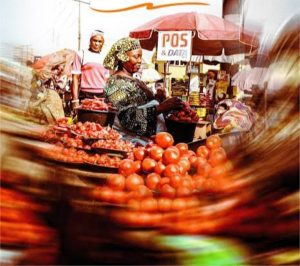
AND AFRICA? ARE OUR GOVERNMENTS PAYING ATTENTION?
The suggestion that no African country is doing anything about emergency preparedness would be inaccurate. Nigeria, Ghana and South Africa, among others, have established disaster-management structures and public preparedness programmes. However, there is a legitimate question about the scale, consistency and visibility of public-facing household preparedness campaigns across the continent.
Ghana's National Disaster Management Organisation (NADMO) also provides household and community safety guidance, including emergency kits containing water, food, medicines and important documents. South Africa provides another useful example. The City of Cape Town's official disaster guidelines recommend that households maintain enough supplies to survive at least three days, including five litres of water per person daily, non-perishable food, medication, a radio, batteries and first-aid materials. Therefore, Africa is not entirely silent. The more serious problem is that emergency preparedness across much of the continent is often communicated through separate hazard-specific interventions rather than a highly visible, consistent national household-resilience programme.
Nigeria, in particular, needs to move beyond seasonal flood warnings and emergency relief after disasters have already occurred. A comprehensive preparedness culture should address power failures, telecommunications disruptions, cyber incidents, fuel shortages, epidemics, flooding, insecurity, supply-chain disruptions and other emergencies. It should also extend beyond Abuja and state capitals into rural communities, informal settlements and vulnerable households.

WHAT SHOULD NIGERIA DO NOW?
Nigeria does not need to wait for a major international crisis before strengthening its household and national preparedness systems. The Federal Government, through NEMA and relevant ministries, should consider introducing a national household emergency-preparedness campaign with the following priorities:
-
A national 72-hour preparedness guideline: Provide simple, affordable advice on drinking water, food, medicines, sanitation, lighting, communication and first aid.
-
State and local preparedness plans: Require State Emergency Management Agencies and Local Emergency Management Committees to develop practical community-level emergency plans.
-
Public information and early-warning systems: Improve the delivery of timely, accessible and credible warnings through radio, television, mobile networks, community leaders and digital platforms.
-
Critical infrastructure protection: Strengthen contingency arrangements for electricity, telecommunications, water supply, transport, hospitals and financial services.
-
Community emergency networks: Train volunteers, community organisations, faith institutions and civil society groups in basic preparedness, first aid, evacuation and emergency communication.
-
Protection of vulnerable populations: Ensure that emergency plans account for older people, children, persons with disabilities, displaced populations and people dependent on essential medicines.
-
