Contents
- 0.1. Peace is more than the absence of war, violence or visible conflict. It represents the attitudes, institutions and structures that create and sustain peaceful societies. But what does peace really mean?
- 0.2. Is a community peaceful simply because there are no gunshots, no bomb explosions, no protests and no visible violence?
- 0.3. Can we genuinely describe a society as peaceful when children go to bed hungry, young people have no hope of employment, women live under the threat of violence, citizens have lost confidence in public institutions, and communities are divided by mistrust, inequality and discrimination?
- 0.4. These are important questions that challenge us to look beyond the conventional understanding of Positive Peace.
- 0.5. Positive Peace is not simply the silence of guns; it is the presence of conditions that allow people to live with dignity, security, justice, opportunity and hope.
- 1. The dangerous misconception about peace
- 1.1. One of the greatest misconceptions about peacebuilding is that it begins only when conflict breaks out.
- 1.2. In reality, the foundations of conflict are often laid long before violence becomes visible.
- 1.3. A young person who feels excluded from economic opportunities, a woman whose rights are continually violated, a community that feels abandoned by government, or a population that has lost trust in its institutions may be experiencing conditions that gradually weaken social stability.
- 1.4. Not every disadvantaged person becomes violent, and poverty alone does not cause conflict. However, persistent inequality, exclusion, injustice, weak institutions and unresolved grievances can create conditions in which instability becomes more likely.
- 1.5. This is why peacebuilding must be proactive rather than reactive.
- 1.6. We should not wait until communities are displaced, lives are lost and infrastructure is destroyed before investing in peace.
- 2. Understanding Positive Peace: A different way of looking at society
- 2.1. The Institute for Economics & Peace (IEP) promotes an important concept known as Positive Peace.
- 2.2. Positive Peace refers to the attitudes, institutions and structures that create and sustain peaceful societies.
- 2.3. It reminds us that sustainable peace is not achieved through security measures alone.
- 2.4. It requires functioning institutions, social trust, equal opportunities, respect for rights and systems that enable people and communities to thrive.
- 2.5. The Positive Peace framework identifies eight interconnected pillars:
- 2.6. Well-functioning Government: Institutions that are effective, accountable, transparent and responsive to citizens.
- 2.7. Sound Business Environment: Economic conditions that encourage enterprise, investment, innovation and employment.
- 2.8. Equitable Distribution of Resources: Fair access to opportunities, services and essential resources.
- 2.9. Acceptance of the Rights of Others: Respect for human rights, diversity, inclusion and individual freedoms.
- 2.10. Good Relations with Neighbours: Trust, cooperation and peaceful relationships within and between communities.
- 2.11. Free Flow of Information: Access to credible information, independent communication and informed public participation.
- 2.12. High Levels of Human Capital: Investment in education, skills, health and human development.
- 2.13. Low Levels of Corruption: Integrity, accountability and responsible management of public resources.
- 2.14. These pillars are not independent activities. They reinforce one another. Weakness in one area can undermine progress in others.
- 3. What does this mean for communities in Africa?
- 3.1. Across many African communities, peacebuilding cannot be separated from development. So, positive peace equals Sustainable Development in Africa.
- 3.2. Consider a community where young people have access to quality education, vocational training, decent employment and opportunities to participate in decision-making.
- 3.3. Consider another where women are economically empowered, girls can attend school safely, public institutions are accountable, and citizens can access reliable information.
- 3.4. Which of these communities is more likely to develop lasting social stability?
- 3.5. The answer is not difficult.
- 3.6. This is why development interventions should not be measured only by the number of people trained, the quantity of materials distributed or the number of projects completed.
- 3.7. We must also ask:
- 3.8. Have we strengthened trust within the community?
- 3.9. Have we reduced exclusion and inequality?
- 3.10. Have we improved people's confidence in institutions?
- 3.11. Have we created opportunities for meaningful participation?
- 3.12. Have we strengthened the capacity of communities to resolve disagreements peacefully?
- 3.13. Are the changes sustainable beyond the lifespan of the project?
- 3.14. These questions should become part of how development organisations, governments, community leaders and international partners measure impact.
- 4. The role of civil society and community leadership
- 4.1. As someone working in community development through Rosana Empowerment Foundation (REF), I believe civil society organisations have an important responsibility in building the foundations of peaceful societies.
- 4.2. Our work in women's and youth empowerment, community resilience, civic participation and social development provides opportunities to address some of the structural conditions that undermine peace.
- 4.3. However, we must move beyond implementing isolated projects.
- 4.4. A women's empowerment programme, for instance, should not only provide skills or financial support. It should also promote dignity, participation, economic independence, leadership and the recognition of women's rights.
- 4.5. Similarly, youth development should go beyond training young people. It should create pathways for productive engagement, responsible citizenship, innovation and constructive participation in society.
- 4.6. Community health, education, access to information, environmental sustainability and accountable governance are also part of the broader peacebuilding conversation.
- 4.7. Development is most transformative when it strengthens not only people's livelihoods but also the relationships, institutions and opportunities that hold society together.
- 5. An important lesson for the next generation
- 6. My reflection as an IEP Ambassador Programme learner
- 6.1. My engagement with the Institute for Economics & Peace Ambassador Programme is an opportunity to deepen my understanding of the relationship between peace, development, governance and social stability.
- 6.2. I am particularly interested in how evidence-based peacebuilding approaches can be translated into practical community interventions, especially in fragile and conflict-affected settings across Nigeria and Africa.
- 6.3. I believe that the future of peacebuilding depends on our ability to connect research with reality, policy with people, and global frameworks with local solutions.
- 6.4. We need to understand not just where conflict occurs, but why the conditions that sustain peace are sometimes absent.
- 6.5. Ultimately, the question should not only be how we stop the next conflict, but how we build societies in which conflict is less likely to escalate into violence in the first place.
- 6.6. Let us stop treating peace as an emergency response. Let us start treating it as a development priority.
- 6.7. Because the strongest evidence of a peaceful society is not merely that its people are not fighting, but that they have genuine reasons to live together, trust one another and build a shared future.
Peace is more than the absence of war, violence or visible conflict. It represents the attitudes, institutions and structures that create and sustain peaceful societies. But what does peace really mean?
Is a community peaceful simply because there are no gunshots, no bomb explosions, no protests and no visible violence?

Can we genuinely describe a society as peaceful when children go to bed hungry, young people have no hope of employment, women live under the threat of violence, citizens have lost confidence in public institutions, and communities are divided by mistrust, inequality and discrimination?
These are important questions that challenge us to look beyond the conventional understanding of Positive Peace.
Positive Peace is not simply the silence of guns; it is the presence of conditions that allow people to live with dignity, security, justice, opportunity and hope.
The dangerous misconception about peace
One of the greatest misconceptions about peacebuilding is that it begins only when conflict breaks out.
In reality, the foundations of conflict are often laid long before violence becomes visible.
A young person who feels excluded from economic opportunities, a woman whose rights are continually violated, a community that feels abandoned by government, or a population that has lost trust in its institutions may be experiencing conditions that gradually weaken social stability.
Not every disadvantaged person becomes violent, and poverty alone does not cause conflict. However, persistent inequality, exclusion, injustice, weak institutions and unresolved grievances can create conditions in which instability becomes more likely.
This is why peacebuilding must be proactive rather than reactive.
We should not wait until communities are displaced, lives are lost and infrastructure is destroyed before investing in peace.
Understanding Positive Peace: A different way of looking at society
The Institute for Economics & Peace (IEP) promotes an important concept known as Positive Peace.
Positive Peace refers to the attitudes, institutions and structures that create and sustain peaceful societies.
It reminds us that sustainable peace is not achieved through security measures alone.
It requires functioning institutions, social trust, equal opportunities, respect for rights and systems that enable people and communities to thrive.
The Positive Peace framework identifies eight interconnected pillars:
-
Well-functioning Government: Institutions that are effective, accountable, transparent and responsive to citizens.
-
Sound Business Environment: Economic conditions that encourage enterprise, investment, innovation and employment.
-
Equitable Distribution of Resources: Fair access to opportunities, services and essential resources.
-
Acceptance of the Rights of Others: Respect for human rights, diversity, inclusion and individual freedoms.
-
Good Relations with Neighbours: Trust, cooperation and peaceful relationships within and between communities.
-
Free Flow of Information: Access to credible information, independent communication and informed public participation.
-
High Levels of Human Capital: Investment in education, skills, health and human development.
-
Low Levels of Corruption: Integrity, accountability and responsible management of public resources.
These pillars are not independent activities. They reinforce one another. Weakness in one area can undermine progress in others.
What does this mean for communities in Africa?
Across many African communities, peacebuilding cannot be separated from development. So, positive peace equals Sustainable Development in Africa.
Consider a community where young people have access to quality education, vocational training, decent employment and opportunities to participate in decision-making.
Consider another where women are economically empowered, girls can attend school safely, public institutions are accountable, and citizens can access reliable information.
Which of these communities is more likely to develop lasting social stability?
The answer is not difficult.
This is why development interventions should not be measured only by the number of people trained, the quantity of materials distributed or the number of projects completed.
We must also ask:
-
-
Have we reduced exclusion and inequality?
-
Have we improved people's confidence in institutions?
-
Have we created opportunities for meaningful participation?
-
Have we strengthened the capacity of communities to resolve disagreements peacefully?
-
Are the changes sustainable beyond the lifespan of the project?
These questions should become part of how development organisations, governments, community leaders and international partners measure impact.

The role of civil society and community leadership
Our work in women's and youth empowerment, community resilience, civic participation and social development provides opportunities to address some of the structural conditions that undermine peace.
However, we must move beyond implementing isolated projects.
A women's empowerment programme, for instance, should not only provide skills or financial support. It should also promote dignity, participation, economic independence, leadership and the recognition of women's rights.
Similarly, youth development should go beyond training young people. It should create pathways for productive engagement, responsible citizenship, innovation and constructive participation in society.
Community health, education, access to information, environmental sustainability and accountable governance are also part of the broader peacebuilding conversation.
Development is most transformative when it strengthens not only people's livelihoods but also the relationships, institutions and opportunities that hold society together.
An important lesson for the next generation
Peace is everybody's responsibility and, we must build positive peace through community leadership.
Governments must create enabling environments. Civil society must promote accountability and inclusion. Religious and traditional institutions must encourage tolerance and peaceful coexistence. The media must uphold responsible journalism and counter misinformation. Young people must become active contributors to constructive social change.
Even ordinary citizens have a role to play.
How we respond to disagreement, how we treat people who are different from us, the information we share, and the values we promote all contribute to the social environment in which peace either grows or deteriorates.
We cannot preach peaceful coexistence while promoting hatred. We cannot demand justice while practising discrimination. We cannot expect accountable leadership while normalising corruption.
Peace must become a practice, not merely a slogan.
My reflection as an IEP Ambassador Programme learner
My engagement with the Institute for Economics & Peace Ambassador Programme is an opportunity to deepen my understanding of the relationship between peace, development, governance and social stability.
I am particularly interested in how evidence-based peacebuilding approaches can be translated into practical community interventions, especially in fragile and conflict-affected settings across Nigeria and Africa.
I believe that the future of peacebuilding depends on our ability to connect research with reality, policy with people, and global frameworks with local solutions.
We need to understand not just where conflict occurs, but why the conditions that sustain peace are sometimes absent.
Ultimately, the question should not only be how we stop the next conflict, but how we build societies in which conflict is less likely to escalate into violence in the first place.
Let us stop treating peace as an emergency response. Let us start treating it as a development priority.
Because the strongest evidence of a peaceful society is not merely that its people are not fighting, but that they have genuine reasons to live together, trust one another and build a shared future.
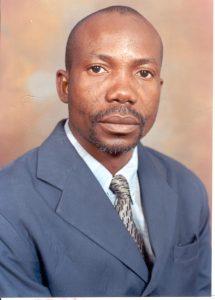
Vitus Chibueze Ejiogu is the Executive Director, Rosana Empowerment Foundation (REF) | IEP Ambassador Programme Learner | Nigeria