

There is a disturbing reality confronting Nigerians today.
Hospitals are filled with people battling hypertension, diabetes, kidney disease, liver problems, obesity and other chronic illnesses.
Families are struggling to pay for repeated medical treatment.
Some people who were apparently healthy yesterday suddenly find themselves undergoing investigations, taking multiple medications or receiving dialysis.
Kidney disease, in particular, has become a subject of growing concern.

But while Nigerians rightly ask why these illnesses are becoming so common, another question deserves equal attention:
What are we eating, drinking and putting into our bodies every day - and what are we doing, or failing to do, that may be damaging our health?
This question does not mean that every illness is caused by food.
It would be medically inaccurate to make such a sweeping claim.
But it is equally dangerous to pretend that diet, lifestyle, unsafe food practices, substance exposure, drug misuse and lack of preventive healthcare have nothing to do with our health.
They do.
Research conducted in different parts of Nigeria has identified hypertension, diabetes, obesity, traditional medicine use, analgesic misuse and other factors among important risks associated with kidney disease.
A systematic review of Nigerian population studies also identified age, obesity, diabetes, hypertension, family history and traditional medication use among observed risk factors.
The message, therefore, should not be one of fear.
It should be one of prevention.
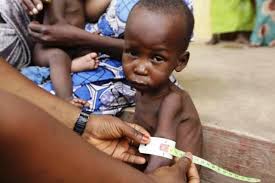
We Are Gradually Moving Away From What Nature Gave Us
Nigeria is an extraordinarily blessed country.
We have palm trees, fruits, vegetables, grains, legumes, tubers, spices, herbs, livestock, fish and enormous agricultural potential.
Our ancestors did not need to import everything they ate.
They cultivated food.
They harvested it.
They processed it.
They cooked it.
They shared it.
And they understood that food was not merely something to fill the stomach.
Food was part of life.
But modern Nigeria is experiencing a dramatic transformation in the way people eat.
We increasingly prefer what is fast to what is fresh.
We prefer what looks attractive to what is naturally produced.
We sometimes choose what has been heavily processed because it is convenient, colourful or strongly flavoured.
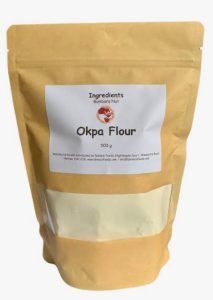
And in the race for profit, some producers may be tempted to make food look, smell or taste better than the underlying ingredients justify.
That is where food safety becomes a public-health issue.
Palm Wine: From the Palm Tree to the Factory
Consider palm wine.
For generations, fresh palm wine has been part of the cultural heritage of many Nigerian communities.
A palm tree is tapped.
The liquid is collected.
People drink it fresh or allow it to ferment naturally.
It is associated with traditional gatherings, ceremonies and community life.

But today, the broader beverage market has changed.
Commercially produced beverages increasingly compete with traditional drinks, and consumers sometimes encounter products marketed as traditional or natural even though their production processes may be very different from what people historically understood as palm wine.
This does not mean that every commercially produced palm-wine-style beverage is dangerous.
It means that consumers should ask questions.
What exactly am I buying?
Who produced it?
How was it processed?
Is the product properly registered where registration is required?
What ingredients are present?
Can the producer be identified and held accountable?
Food safety cannot depend solely on appearance or taste.
A product can look attractive and still require scrutiny.
The Ọkpa Question: A Popular Delicacy That Deserves Investigation, Not Rumour
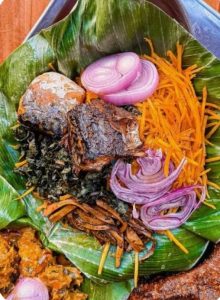
Now we come to Ọkpa.
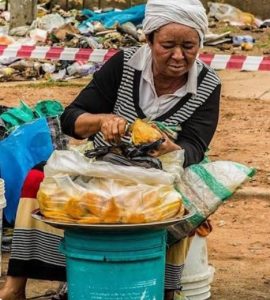
For many people from Enugu and other parts of southeastern Nigeria, Ọkpa is more than food.
It is tradition.
It is breakfast.
It is a roadside delicacy.
It is something people grew up eating.
And anyone who knows Ọkpa knows that preparation differs from one location to another.
Some are yellow.
Some are deeper in colour.
Some are soft.
Some are firm.
Some are heavily seasoned.
Some are mildly seasoned.
Some consumers often have their preferred vendor.
</p style="text-align:>

But there is an important public-health lesson here:
Taste and colour are not scientific evidence of safety.
A story circulating among consumers claims that some Ọkpa sellers or producers use special oils, colourings or sweeteners to make their products more attractive and tasty.
Such allegations should not simply be dismissed, but neither should they be presented as established fact without laboratory evidence.
If a particular vendor adds an unsafe substance to food, that is a food-safety violation.
But it does not follow that Ọkpa itself causes kidney failure.
There is currently no credible evidence establishing that eating Ọkpa from Enugu causes kidney disease.
That distinction matters.
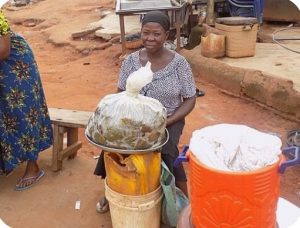
And What About the Red Urine?
Some people have reported noticing changes in urine colour after eating certain strongly coloured foods.
That observation should not automatically be interpreted as proof of kidney damage.
Urine colour can change for many reasons, including hydration status, food pigments, medications and blood in the urine.
If urine genuinely appears red, pink or cola-coloured, especially repeatedly, it should not be ignored.
See a qualified healthcare professional.
Blood in the urine can have several causes, some of which require medical attention. The responsible message is therefore not:
"You ate Ọkpa and your kidneys are failing."
The responsible message is:
"If you experience persistent or unexplained changes in urine, get medically evaluated rather than guessing about the cause."
That is how public-health journalism should work.
The Bigger Problem Is Much Larger Than Ọkpa
If Nigerians concentrate all their attention on one traditional food, we may miss the bigger problem.
</p style="text-align:>
There are many other behaviours and exposures that deserve serious attention.
Research among Nigerians has found significant associations between kidney-disease risk and factors including indiscriminate analgesic use, misuse of medicines, traditional remedies, herbal supplements, alcohol consumption, high salt intake, diabetes and hypertension.
Another Nigerian study found hypertension and diabetes among major causes of chronic kidney disease in patients receiving care.
This means that the kidney-health conversation must become much broader.

Stop Treating Painkillers Like Sweets
One dangerous habit deserves special mention.
Many Nigerians take painkillers casually.
Headache?
Painkiller.
Back pain?
Painkiller.
Toothache?
Painkiller.
Body pain?
Another tablet.
Some people take medicines repeatedly without medical supervision.
Yet certain medications, particularly when misused or taken excessively, can damage the kidneys.
Nigerian research has specifically identified indiscriminate analgesic use and over-the-counter medicine misuse among important concerns associated with kidney disease.
The medicine cabinet should not become a substitute for medical diagnosis.
Herbal Does Not Automatically Mean Safe
There is another misconception Nigerians must confront.
"It is natural" does not automatically mean "it is harmless."
A plant can contain powerful biologically active substances.
The dose matters.
The preparation matters.
Contamination matters.
Interactions with medicines matter.
And the condition of the person taking it matters.
Research in Nigeria has identified traditional medicine and herbal use among factors requiring attention in the kidney-disease conversation.
This is not an attack on traditional medicine.
It is a call for responsible use, proper investigation and safety.
Salt, Sugar, Alcohol and Sedentary Living
The modern Nigerian lifestyle is also changing.
People are consuming more processed foods.
Some meals contain excessive salt.
Sugary drinks are widely available.
Alcohol consumption is common.
Physical activity is declining for many people whose work and transportation habits keep them seated for long periods.
These factors matter because hypertension, diabetes and obesity are important contributors to chronic disease.
A population-based study in North-Central Nigeria found chronic kidney disease in 12% of the studied population and identified diabetes, obesity, age and albuminuria among important predictors.
This is why the health conversation cannot simply be about one ingredient or one food.
It must be about the whole lifestyle.
What About Fruits Artificially Ripened With Chemicals?
Another concern frequently raised by Nigerians is the artificial ripening of fruits.
Consumers sometimes see perfectly yellow bananas, brightly coloured oranges or uniformly attractive fruits and immediately suspect chemical treatment.
But appearance alone cannot tell us whether a fruit has been artificially ripened or whether a particular chemical was used.
Some legitimate post-harvest ripening methods exist, and not every fruit that ripens quickly has been dangerously treated. Therefore, allegations about chemically ripened fruit should be investigated rather than repeated as universal fact.
The bigger message remains valid:
Consumers deserve safe food, transparent food production and effective enforcement of food-safety standards.
Zobo, Tiger-Nut Drinks and Local Fruit Juices Need Better Regulation
Nigeria has an enormous informal food and beverage economy.
Zobo sellers.
Tiger-nut drink producers.
Local fruit-juice vendors.
Street-food sellers.
Small restaurants.
Roadside food processors.
These businesses provide livelihoods for millions of people and affordable products for consumers.
They should not be treated as enemies.
</p style="text-align:>
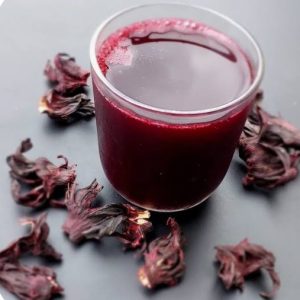
But food safety must accompany entrepreneurship.
Where drinks are produced under unhygienic conditions, contaminated water is used, unsafe additives are added, or products are improperly stored, consumers can be exposed to avoidable risks.
This is precisely why regulation, education and quality control are necessary.
Consumers should also learn to identify properly registered and traceable products where applicable. NAFDAC provides a system through which consumers can verify registered products using their NAFDAC numbers.

Nigeria Needs a Food-Safety Revolution
We cannot build a healthy population while treating food safety as a minor issue.
Government agencies must strengthen inspection.
Food producers must become more responsible.
Market associations must educate their members.
Consumers must become more discerning.
Researchers must investigate claims scientifically.
Universities should conduct more independent studies on food additives, contamination, adulteration and emerging health risks.
And journalists must stop presenting rumours as medical facts.
This last point is particularly important.
A sensational health story can frighten millions of people.
A responsible health story can save lives.
We Need Serious Research on Kidney Disease Across Nigerian States
The concern about kidney disease deserves much more serious research.
Instead of relying on speculation about which state has the highest burden, Nigeria needs properly designed population-based studies comparing states and regions.
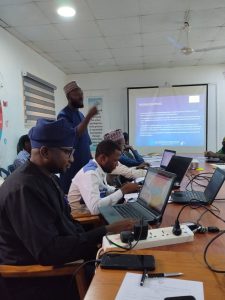
If people suspect that a particular food, environmental exposure, occupational practice, medicine or traditional remedy contributes to kidney disease in a particular community, researchers should investigate it.
Collect data.
Test samples.
Conduct epidemiological studies.
Examine medical records.
Test food and beverages in laboratories.
Measure kidney function.
Identify exposure patterns.
Compare affected and unaffected populations.
Then publish the evidence.
That is how Nigeria can move from speculation to knowledge.
We Cannot Eat Our Way Out of Poverty by Destroying Our Health
There is another dimension to this crisis.
Nigeria has enormous agricultural potential.
Yet we sometimes abandon locally available, nutritious foods in pursuit of highly processed alternatives.
We have vegetables.
We have beans.
We have fruits.
We have grains.
We have legumes.
We have fish.
We have traditional foods.
We have indigenous knowledge.
We have fertile land. We have farmers.
We have sunshine.
We have water resources in many parts of the country.
We have everything required to build a strong local food system.
What we need is better organisation, safer processing, improved storage, stronger regulation and better consumer education.

The Return to Natural Does Not Mean the Rejection of Science
There is a danger of going too far in the opposite direction.
The answer is not to reject modern science.
The answer is to combine the best of both worlds.
Let science test traditional foods.
Let laboratories test suspected contaminants.
Let nutritionists identify healthier diets.
Let farmers produce safer food.
Let regulators enforce standards.
Let manufacturers disclose ingredients.
Let consumers demand accountability.
Let doctors investigate symptoms.
Let researchers follow the evidence.
That is how a modern Nigeria should approach public health.
What Can the Average Nigerian Do?
There are practical steps ordinary Nigerians can take.
1. Know what you are eating - Do not consume food blindly simply because it looks attractive.
2. Prepare more food at home - Where possible, buying fresh ingredients and preparing meals yourself gives you greater control over what enters your food.
3. Reduce excessive salt and sugar - Do not wait until hypertension or diabetes develops before changing your diet.
4. Be careful with painkillers - Do not routinely self-medicate or take medicines beyond recommended doses.
5. Treat herbal remedies with caution - "Natural" is not a guarantee of safety.
6. Drink safe water - Water quality is fundamental to health.
7. Exercise - Physical activity is one of the simplest forms of preventive health.
8. Check your blood pressure - Hypertension can damage the kidneys and may remain unnoticed for years.
9. Check your blood sugar - Diabetes is an important contributor to kidney disease.
10. Do not ignore unusual urine changes - Persistent blood, unusual colour, excessive foaming, reduced urine output or other unexplained changes deserve medical evaluation.
11. Buy food from trustworthy sources - Where packaged products are involved, check labelling, expiry dates and regulatory information.
12. Do not forward every health claim you receive on WhatsApp - A frightening voice note is not a scientific study.
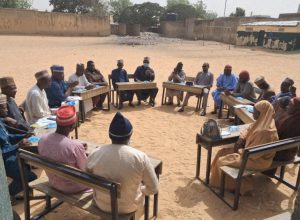
Nigerians Deserve Better Than Fear
There is a growing temptation to blame every health problem on one food, one chemical or one group of people.
That approach will not solve Nigeria's health crisis.
The real challenge is more complicated.
It involves diet.
It involves lifestyle.
It involves poverty.
It involves food production.
It involves regulation.
It involves environmental exposures.
It involves healthcare access.
It involves self-medication.
It involves traditional remedies.
It involves hypertension and diabetes.
It involves obesity and inactivity.
It involves late presentation at hospitals.
And it involves our individual choices.
Studies of Nigerian kidney patients have repeatedly documented late presentation and serious disease at first contact, demonstrating the enormous cost of discovering illness only after it has progressed.
</p style="text-align:>
We Must Stop Waiting Until the Kidneys Fail
Perhaps the greatest lesson is this:
Prevention is cheaper than dialysis.
A blood-pressure check is cheaper than years of treatment for complications.
A healthy diet is cheaper than many chronic-disease bills.
Moderate exercise costs little.
Avoiding unnecessary drug misuse costs nothing.
Washing food properly costs little.
Preparing safe drinks at home can reduce uncertainty about ingredients and hygiene.
Seeking medical attention early is often better than waiting until a disease becomes advanced.
We should therefore stop viewing health as something that belongs exclusively to hospitals.
Health begins long before the hospital.
It begins in the kitchen.
It begins in the market.
It begins on the farm.
It begins with the water we drink.
It begins with the medicine we swallow.
It begins with whether we exercise.
It begins with whether we take symptoms seriously.
Nigeria Still Has Everything It Needs to Thrive
Nigeria has not run out of opportunities.
We have simply failed in many areas to convert our God-given resources into healthy, productive lives.
Our agricultural wealth can feed us.
Our natural resources can support livelihoods.
Our indigenous foods can form part of healthy diets.
Our young people can drive innovation.
Our farmers can produce.
Our scientists can investigate.
Our entrepreneurs can process.
Our regulators can protect consumers.
And our citizens can make wiser choices.
The solution is not to return blindly to the past.
The solution is to recover what was good, discard what was harmful, and use modern science to determine the difference.

The Warning We Should All Take Seriously
Let us therefore be careful about what we eat.
Let us be careful about what we drink.
Let us be careful about what medicines we take.
Let us be careful about unverified remedies.
Let us demand safer food.
Let us demand responsible food production.
Let us demand stronger enforcement of food-safety regulations.
Let us support serious research into Nigeria's growing burden of kidney disease and other chronic illnesses.
And above all, let us stop waiting until sickness becomes severe before we begin to care about our health.
Do not be afraid of food.
Be informed about food.
Do not fear traditional foods without evidence.
Demand evidence when safety is questioned.
Do not believe every health claim you receive.
Investigate.
Ask questions.
Consult qualified professionals.
Because the goal is not simply to live longer.
The goal is to live healthier, more productive and more dignified lives.
Nigeria has enough challenges already.
We should not allow ignorance, unsafe practices and preventable habits to become additional causes of suffering.
Our health is too precious to gamble with.
</p style="text-align:>