
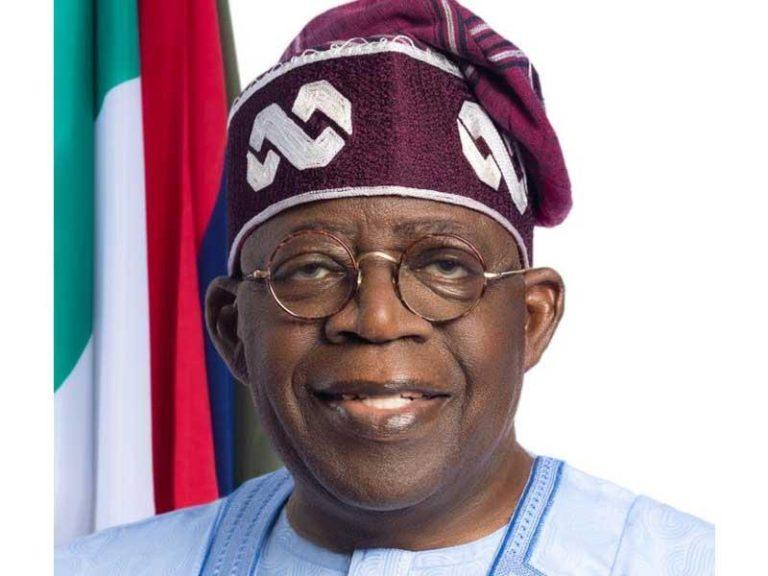
The Tinubu Administration | SkyDNews Report
The Tinubu administration is facing growing accountability questions as developments at home and abroad renew scrutiny of Nigeria's electoral credibility, security situation and public institutions. From the confrontation involving INEC Chairman Joash Amupitan in London to questions raised during a US congressional hearing, the government faces increasing pressure to demonstrate transparency, competence and respect for democratic accountability ahead of the 2027 general elections.
Nigeria's political climate is becoming increasingly contentious as a series of developments at home and abroad bring renewed attention to the administration of President Bola Ahmed Tinubu, the credibility of the electoral system, the government's handling of insecurity and the accountability of public institutions. On Thursday, November 12, 2026, the Chairman of the Independent National Electoral Commission (INEC), Professor Joash Ojo Amupitan, was confronted by angry Nigerian demonstrators outside Chatham House in London. The incident occurred against the background of growing criticism of the commission's preliminary voters' register and concerns about the credibility of the 2027 general elections.
Around the same period, the United States House of Representatives' Subcommittee on Africa held a hearing examining Nigeria's efforts to protect Christian communities and address insecurity, particularly in the Middle Belt. Other developments have added to the political pressure. They include allegations surrounding the arrest and transfer of a Bayero University Kano student, the reported restriction of public communication by members of President Tinubu's re-election campaign team, and renewed controversy over the President's educational history. Although these developments are different in character, they raise a common question: how effectively are Nigeria's political leaders and public institutions responding to demands for transparency, accountability, security and public confidence?
Tinubu Administration Faces INEC Credibility Questions After London Protest
The confrontation involving INEC Chairman Professor Joash Amupitan outside Chatham House in London has brought the commission's credibility back into the international spotlight. Amupitan was in the United Kingdom to participate in a discussion on Nigeria's 2027 elections and democratic development. However, following his engagement, demonstrators believed to be Nigerian diaspora activists confronted the vehicle conveying him as he attempted to leave the venue. Videos circulating online showed protesters shouting at the electoral chief and demanding that he address their concerns. Some described him as a criminal, while others accused INEC of compromising its independence and favouring President Tinubu and the ruling All Progressives Congress (APC). One protester reportedly displayed a placard bearing the message: "Amupitan, no more election fraud." The demonstrators demanded his resignation and raised concerns about alleged irregularities in the preliminary voters' register, including duplicate registrations, questionable polling units and photographs suspected of being artificially generated or manipulated. Reports by TheCable, Punch and BusinessDay indicate that the protesters were particularly concerned about the commission's handling of these issues. The confrontation was significant not merely because of the allegations but because it occurred outside an internationally recognised policy institution while Nigeria's electoral chief was participating in a discussion about the country's democratic future. Why should the voters' register controversy matter?
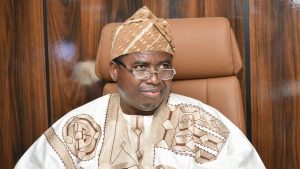
The protesters' concerns cannot be considered entirely detached from issues previously acknowledged by INEC. The commission had disclosed that it identified suspicious entries in its preliminary voters' register, including manipulated photographs, and reportedly removed approximately 1.6 million invalid records. It also stated that 54 officials across 10 states had been flagged in connection with irregularities. INEC attributed the problems to misconduct by some registration officials and said measures were being taken to address them. These disclosures make demands for transparency and accountability particularly important. However, they do not, by themselves, establish that Amupitan personally rigged an election or that INEC deliberately manipulated the register in favour of the APC. During his Chatham House engagement, Amupitan reportedly acknowledged that problems associated with result transmission during the 2023 general elections had damaged public confidence. He also discussed technical safeguards intended to improve the transmission and uploading of results in 2027. He further pledged not to accept political or diplomatic appointments after leaving INEC, presenting this as an assurance of his commitment to impartiality. Nevertheless, assurances alone cannot restore public confidence. Nigerians need an electoral register that can be independently scrutinised, transparent procedures for correcting disputed entries, effective sanctions for electoral misconduct and an election management process that inspires confidence across political divides. The London protest demonstrates that dissatisfaction with INEC is not confined to domestic political discussions. The commission must recognise that its credibility will ultimately be determined by the transparency of its actions and the integrity of the elections it conducts.
US Congress Raises Fresh Questions Over Nigeria's Security Crisis
Nigeria's security situation also came under renewed international examination on November 12, 2026, when the United States House of Representatives' Subcommittee on Africa convened a hearing titled One Year Later: Assessing Nigeria's Efforts to Protect Christians and Secure the Middle Belt. Chaired by Representative Chris Smith, the hearing examined Nigeria's response to religious violence, the protection of vulnerable communities, the prosecution of perpetrators and the effectiveness of security cooperation between Washington and Abuja. The witnesses included Frank Garcia, Assistant Secretary of State for African Affairs; Riley Barnes, Assistant Secretary of State for Democracy, Human Rights and Labour; and representatives of international policy and religious freedom organisations. The hearing followed the designation of Nigeria as a Country of Particular Concern by President Donald Trump's administration on October 31, 2025, over concerns about religious freedom and violence against Christian communities. In his opening statement, Garcia acknowledged that violence had continued despite diplomatic engagement and security cooperation with Nigeria. He referred specifically to an attack on a Christian community in Kaduna on July 27 and killings in Plateau State during August and September. He also indicated that Washington expected measurable improvements in the protection of Christian communities, more effective responses to early warnings, stronger accountability mechanisms and deeper security cooperation. The hearing further highlighted concerns about civilian casualties, the return of displaced persons and transparency in humanitarian assistance. What did the congressional hearing actually reveal?
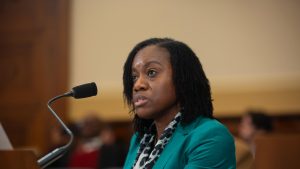
One of the important contributions came from Oge Onubogu, Director and Senior Fellow of the Africa Programme at the Centre for Strategic and International Studies (CSIS). Drawing on her recent visit to Jos, Plateau State, and consultations with affected communities, Onubogu argued that Nigeria's insecurity could not be adequately understood through religious identity alone. While acknowledging the horrific attacks suffered by Christian communities, she also stressed that Muslim communities had experienced devastating violence. Her testimony identified several overlapping drivers of insecurity, including criminality, land disputes, political competition, livelihood pressures, governance failures and longstanding grievances. She warned that military and security operations alone would not resolve the crisis without effective policing, functioning courts, accountability and adequate infrastructure. Among the recommendations were thorough investigations of attacks, prosecution of perpetrators, improved early-warning responses and the safe return of displaced communities. The hearing also exposed differences of opinion over American policy. According to reporting by Northwestern University's Medill School, Representative Mark Pocan questioned the impact of cuts to human rights personnel and USAID programmes on America's ability to assist Nigeria. Concerns were also raised about corruption risks associated with financial assistance.
An important distinction must, however, be maintained: the hearing was not a judicial proceeding and did not establish that President Tinubu personally directed or participated in the killings. Its documented focus was the Nigerian government's responsibility to protect citizens, address persistent violence and demonstrate measurable improvements in security. For Nigeria, the implications are substantial. International partners are increasingly interested not merely in government assurances but in whether security agencies can prevent attacks, whether perpetrators are prosecuted and whether displaced Nigerians can safely return to their communities. With the 2027 elections approaching, these questions have become even more urgent.
Security Agencies Under Scrutiny: The Alidor Jonah Case and Questions About Selective Enforcement
One of the most troubling issues confronting Nigeria is the growing public perception that security institutions sometimes appear more effective in pursuing individuals involved in politically sensitive matters than in protecting communities threatened by banditry, kidnapping and terrorism. This perception raises an uncomfortable but legitimate question: why does the Nigerian state sometimes appear capable of locating, arresting and prosecuting individuals in politically sensitive cases while communities facing repeated attacks continue to struggle for protection? The question goes beyond political disagreement. It concerns institutional priorities, operational capacity, equal protection under the law and the responsibility of the state to safeguard every citizen. The case of Indigenous People of Biafra (IPOB) leader Nnamdi Kanu remains an important reference point in public discussions about the exercise of state power. His extraordinary rendition from Kenya to Nigeria in June 2021, followed by his detention and prosecution, generated sustained controversy over due process and the treatment of separatist movements.
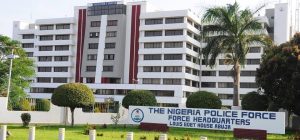
SkyDNews editorial clarification: The specific petition, police confirmation, charge and remand details in Alidor Jonah's case require independent corroboration from the relevant police commands, court records and the individuals involved. They should not be presented as conclusively established facts until the relevant documentation is obtained. However, the wider question remains: Who protects ordinary Nigerians?

Tinubu's Campaign Restricts Media Spokespersons After Controversial Television Appearances
"A lot of ministers pay billions and billions, and you know, to get themselves appointed, the first thing they think of is how to recoup that money."

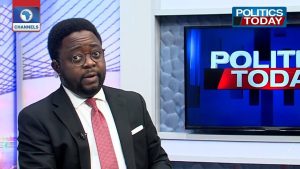
The allegation was particularly damaging because it came from someone speaking in defence of the administration. Although Hassan suggested that the alleged practice predated the APC government, he did not identify the ministers involved or provide documentary evidence to substantiate his claim. Nevertheless, his statement raised serious questions about political patronage, the integrity of ministerial appointments and the possibility of public offices being treated as financial investments rather than positions of public responsibility. If the allegation is true, it points to a potentially disturbing relationship between political patronage, corruption and public administration. If it is false or exaggerated, it raises equally serious questions about the quality of information being disseminated by individuals entrusted with defending the government. The Presidency and relevant anti-corruption agencies should not simply dismiss such an allegation. It deserves clarification and, where credible evidence exists, investigation. The second incident occurred on Tuesday, November 10, 2026, when Hassan appeared on Channels Television's Politics Today, anchored by Seun Okinbaloye. While promoting the achievements of the Tinubu administration, Hassan cited Nigeria's 112 emergency telephone number as an important government achievement. He challenged the presenter to dial the number during the live broadcast to demonstrate that Nigerians could use it to request emergency assistance. Okinbaloye accepted the challenge. However, the call failed to connect during the live demonstration.
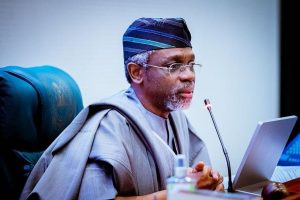
Under the revised arrangement, official spokesperson duties were restricted to three senior figures:
-
Abdulaziz Yari, Director-General of the campaign council.
-
Dele Alake, Minister of Solid Minerals Development.
-
Mohammed Idris, Minister of Information and National Orientation.
Tinubu's Chicago State University Credentials Back in the Spotlight: What Is Being Withheld, and Why?
Another politically sensitive issue has resurfaced: President Bola Ahmed Tinubu's educational history and his claim to have graduated from Chicago State University (CSU) in the United States. The controversy gained renewed attention following comments by Dr Adetokunbo Pearse, a former lecturer at Chicago State University and the Peoples Democratic Party's 2027 Lagos State governorship candidate. Appearing on News Central Television's Breakfast Central, Pearse challenged the President's educational claims, insisting that Tinubu never attended the institution. He said he worked at the university between 1985 and 1990 and was familiar with its academic environment and programmes. During the interview, Pearse described Tinubu as a "professional crook" and alleged that the President presented false educational information to INEC. He also questioned the Education Minister, Dr Tunji Alausa's defence of the President's academic credentials. These are serious allegations. They deserve examination against verifiable records rather than political sentiments or partisan loyalties. But beyond Pearse's intervention lies a question Nigerians have continued to ask: why has a matter as straightforward as a university academic record generated so much controversy, suspicion and prolonged public argument? What exactly is the difficulty in making the relevant academic records clear?
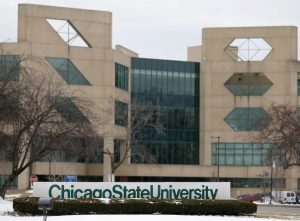
One of the more provocative claims circulating in the public debate is the allegation that the individual whose academic records appear in connection with Chicago State University was actually a woman rather than President Bola Ahmed Tinubu. Some commentators have gone further, suggesting that a woman bearing the name Bola A. Tinubu attended and graduated from the institution, while a man is claiming the same academic credentials. This is an extraordinary allegation and must be treated with caution. It has not been established by the university's official records or by a conclusive judicial finding. Nevertheless, it raises a question that deserves a clear documentary explanation: who was the actual student, and what do the institution's admission and graduation records establish about that person's identity? It is not sufficient for public debate to revolve endlessly around matching names, disputed photographs, certificates and competing political interpretations. Chicago State University is better positioned than political commentators, campaign spokespersons or partisan activists to explain the records in its custody, subject to applicable privacy and legal requirements. If the institution confirms that a Bola A. Tinubu attended and graduated in 1979, it should be able to explain the relevant identity records, the basis for its confirmation, the academic programme and the provenance of the certificate associated with that student. That would help distinguish a genuine identity dispute from politically motivated speculation. What did available university records establish?
Before accepting or dismissing the allegations, it is important to examine the documentary evidence already available. Chicago State University has confirmed that Bola A. Tinubu attended the institution between August 1977 and June 1979. In a letter dated June 27, 2022, the university's Office of the Registrar confirmed that Tinubu majored in Accounting and was awarded a Bachelor of Science degree in Business Administration with honours on June 22, 1979. The matter subsequently became the subject of legal proceedings in the United States initiated by former Vice-President Atiku Abubakar, who sought access to Tinubu's academic records. In October 2023, the university's Registrar, Caleb Westberg, testified under oath concerning the President's records. The university maintained that Tinubu attended and graduated from the institution in 1979. These are important documentary developments. They cannot simply be dismissed because a former lecturer or political opponent has made a contrary assertion. However, the existence of a university record bearing a particular name does not automatically answer every question concerning the identity of the individual, the history of the documents or the specific certificate submitted to INEC. These are separate issues requiring careful examination.
Key Issues Requiring Conclusive Clarification: What Do Tinubu's Chicago State University Records Actually Establish?
Despite the documents released, the university's official statements and the testimony of its Registrar, Caleb Westberg, several questions surrounding President Bola Ahmed Tinubu's academic credentials continue to attract public attention. These questions should neither be dismissed as political persecution nor treated as proof of wrongdoing without sufficient evidence. They require clear, documentary explanations from the institution concerned and the individuals making the respective claims. The following issues deserve particular attention.
2. Academic history: What do the complete university records establish? - Chicago State University has confirmed that Bola A. Tinubu attended the institution between August 1977 and June 1979, majored in Accounting and graduated on June 22, 1979, with a Bachelor of Science degree in Business Administration with honours. These are important official confirmations. However, a comprehensive examination of the academic records should establish the complete history of the student's admission, transfer arrangements, course registration, academic performance, graduation requirements and final degree classification. What do the original records show about the student's academic progression? What courses were completed, what grades were obtained and what was the cumulative grade point average at graduation? These questions are particularly relevant given the subsequent assertion by the Minister of Education that Tinubu graduated with first-class honours. The university's confirmation that a degree was awarded should be distinguished from the separate question of the precise academic classification attached to it.
3. Certificate authenticity and provenance: Which diploma was actually submitted to INEC? - Another significant area of controversy concerns the diploma presented to the Independent National Electoral Commission. During his deposition, Registrar Caleb Westberg acknowledged that the diploma submitted to INEC did not resemble the 1979 diploma samples produced by Chicago State University. However, he explained that the university's diploma designs had changed over the years and that replacement certificates reflected the formats in use when they were issued. The university reportedly could not locate the original 1979 diploma collected by the graduate. It did, however, retain another replacement diploma, which the university was able to authenticate. The BBC subsequently examined the documents and reported that the diploma submitted to INEC resembled replacement diplomas issued during the 1990s. It also noted that the university's retained replacement diploma contained the wording "with honours". An important distinction must be maintained: the university's ability to authenticate a replacement diploma in its possession does not automatically establish that it physically authenticated the exact document submitted to INEC. This raises several questions:
-
What was the precise date and circumstance under which the diploma submitted to INEC was issued?
-
Was it an original certificate, a replacement or another form of academic confirmation?
-
Can the university establish its provenance and confirm that the document accurately represents the degree awarded to the student?
-
Why does its appearance differ from the original 1979 diploma samples?
-
What records exist concerning the issuance, replacement and collection of the various diplomas?
These questions are legitimate and should be answered with documentary evidence rather than political arguments. It is also important to understand the legal context. In Atiku Abubakar v. Bola Ahmed Tinubu, Case No. 1:23-cv-05099, the US District Court for the Northern District of Illinois granted Atiku Abubakar's application to obtain relevant documents from Chicago State University under Section 1782 of US law. The court's September 19, 2023 decision facilitated the production of evidence for use in Nigerian proceedings. It was not a judgment declaring Tinubu guilty of certificate forgery, nor did it resolve every question concerning his academic identity or the authenticity of every document associated with his educational history. That distinction is essential when interpreting the outcome of the American proceedings.
4. Documentary discrepancies: What explains the conflicting information? - The release of the academic records brought several discrepancies into public discussion, including differences in identifying particulars, the disputed gender designation and variations in the appearance of diploma documents. Chicago State University's Registrar attributed some discrepancies to clerical errors and explained that the institution's diploma formats had changed over time. However, a general explanation should not substitute for a document-by-document clarification. Which entries were affected by clerical errors? At what stage were those errors introduced? Were corrections subsequently made, and are there records documenting those corrections? What explains the differences between the Southwest College transcript and the Chicago State University admission records? What is the relationship between the original diploma, the replacement diploma retained by the university and the document submitted to INEC? The institution should be able to distinguish between administrative errors, changes in record-keeping practices and discrepancies that may have implications for the identification of the student. A transparent explanation would help prevent isolated inconsistencies from being interpreted as evidence of deliberate wrongdoing.
5. The first-class honours claim: Does the university confirm the Minister's assertion? - The controversy has acquired another dimension following a statement by the Minister of Education, Dr Tunji Alausa, during his appearance on Channels Television's Politics Today on November 4, 2026. The Minister categorically asserted that President Tinubu graduated with a first-class degree in Accounting from Chicago State University. He stated: "That had first class in Accounting." He further claimed to have personally met several of the President's university classmates. The assertion deserves particular attention because the university's records and the Registrar's testimony use the expression "with honours", which Westberg explained in the context of the institution's GPA distinction. The available records cited in the American proceedings do not independently establish that this classification was equivalent to a first-class degree under the university's applicable grading system. This distinction is important. While the Minister may possess additional information from classmates or other sources, his specific claim should be supported by documentary evidence from the university. What was Tinubu's final cumulative GPA? What grading system was applicable when he graduated in 1979? How did Chicago State University classify the degree under that system? Was the award equivalent to first-class honours, and can the university officially confirm that classification?
A certified academic transcript showing the student's grades, cumulative GPA and applicable grading scale would provide a more conclusive basis for answering these questions. The Minister's assertion should therefore be treated as a claim requiring documentary corroboration, not as an independently established university finding. It is equally necessary to examine the intervention of Dr Adetokunbo Pearse, who claimed to have worked at Chicago State University between 1985 and 1990. His stated period of employment occurred several years after Tinubu's recorded attendance and graduation. While his professional experience may be relevant to his observations, it does not, by itself, invalidate the university's official records or establish that the President never attended the institution.
The Presidency, the University and the Public: Who Owes Nigerians an Explanation?
The continuing controversy should not be reduced to a contest between supporters and opponents of President Tinubu. The Presidency and those defending the President's academic credentials should recognise that repeatedly dismissing questions as political persecution does little to resolve legitimate concerns about public records and constitutional eligibility. Equally, those accusing the President of certificate fraud or identity substitution must provide credible, verifiable evidence rather than rely on insinuations, speculation or unsubstantiated allegations. Chicago State University has a responsibility to maintain accurate academic records and provide reliable clarification through lawful procedures. The President, as a public officeholder, has a responsibility to ensure that the qualifications presented in support of his eligibility for public office are genuine and accurately represented. The media also has a responsibility to investigate the evidence without becoming an instrument of either political propaganda or institutional concealment. Ultimately, the central question is not whether President Tinubu's political opponents are satisfied with the available explanations. It is whether the documentary evidence can withstand independent scrutiny and whether the remaining questions can be answered without ambiguity. A controversy that could be substantially clarified through authentic academic records should not be allowed to become a permanent source of political suspicion. Nigerians deserve answers, not endless arguments. And if the records are genuine, transparent clarification should be the strongest defence available to the President.