
NGO tax compliance Nigeria is becoming a critical issue as regulatory expectations tighten across the nonprofit sector. What many organizations once considered a simple “tax-free” status is now a structured system requiring compliance with CAC annual returns, FIRS tax obligations, SCUML registration, and transparent digital reporting.
For organizations such as Rosana Empowerment Foundation (REF) and many others in the development space, the regulatory environment is no longer informal or fragmented in principle, it is structured, multi-layered, and increasingly digitized.
Yet, many NGOs still struggle with one core challenge: Compliance is scattered across multiple agencies, each with its own filing expectations, timelines, and processes.

This fragmentation raises an important national question: Should Nigeria move toward a unified NGO compliance system instead of multiple regulatory touchpoints?
This report examines the current structure, the role of key agencies, and the urgent need for harmonization.
1. The Legal Reality: NGOs Are Not Exempt from Compliance
In Nigeria, NGOs are registered under the Companies and Allied Matters Act (CAMA 2020) as Incorporated Trustees. This status grants them legal recognition, but also imposes obligations.
The misconception that NGOs are fully tax-free has been repeatedly corrected by regulatory practice and law. Instead, NGOs are:
- Exempt from Company Income Tax only under strict conditions
- Fully responsible for employee tax obligations
- Required to file periodic returns with multiple agencies
- Subject to financial scrutiny where necessary
Nonprofit status is a privilege conditioned on transparency, not a shield from regulation.
2. The Multi-Agency Compliance System: Who Requires What?
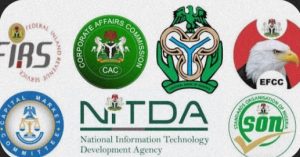
Nigeria’s NGO compliance framework is distributed across several regulatory bodies, each with a distinct role.
A. Corporate Affairs Commission (CAC)
The Corporate Affairs Commission is the primary registrar of NGOs.
Requirements:
- Annual returns filing (mandatory)
- Updates on trustees or governance changes
- Confirmation of active status
Why it matters:
- Confirms legal existence
- Prevents deregistration
- Maintains public trust registry
B. Nigeria Revenue Service/Federal Inland Revenue Service (FIRS / NRS)
The Nigeria Revenue Service (NRS), formerly the Federal Inland Revenue Service oversees tax compliance for NGOs.
Requirements:
- Annual tax returns (even for zero-tax NGOs)
- PAYE deductions for staff
- Withholding tax remittance
- VAT filings where applicable
Why it matters:
- Ensures financial transparency
- Prevents tax evasion risks
- Determines eligibility for tax clearance certificates
C. SCUML (EFCC Unit for NGOs and Nonprofits)
The Nigerian Financial Intelligence Unit (SCUML) operates under the framework of the Economic and Financial Crimes Commission (EFCC).
Requirements:
- Special Control Unit Against Money Laundering (SCUML) registration
- Periodic reporting of financial activities
- Monitoring of high-value transactions
Why it matters:
- Prevents money laundering risks in nonprofit sector
- Ensures compliance with anti-terrorism financing standards
- Builds donor confidence, especially for international funding

D. Economic and Financial Crimes Commission (EFCC)
The Economic and Financial Crimes Commission plays an enforcement and oversight role.
Focus:
- Investigates financial misconduct
- Enforces anti-money laundering laws
- Acts on suspicious NGO financial activity
Why it matters:
- Protects national financial integrity
- Ensures NGOs are not misused as financial channels
- Strengthens donor trust in the sector
3. The Core Problem: Fragmented Compliance System
Currently, NGOs must engage separately with:
- CAC (corporate filings)
- FIRS (tax filings)
- SCUML/EFCC (financial monitoring)
- State tax authorities (PAYE)
This creates:
- Administrative burden
- Duplication of data submission
- Confusion for small NGOs
- Increased cost of compliance
- Exposure to informal “facilitation” risks in physical processes
For smaller organizations, this fragmentation becomes a real barrier to sustainability and formalization.
4. The Case for a Unified Compliance Framework
A growing policy question is whether Nigeria should adopt a centralized NGO compliance system, similar to integrated regulatory models in other sectors.
What a Unified System Could Look Like:
A single digital portal where NGOs can:
- File CAC annual returns
- Submit FIRS tax returns
- Update SCUML compliance records
- Manage PAYE obligations
Benefits:
✔ Reduced Administrative Burden - One login, one dashboard, one submission cycle. ✔ Improved Transparency - All regulatory bodies access the same verified data. ✔ Lower Risk of Corruption - Digital-first systems reduce physical contact points. ✔ Better Data Accuracy - Eliminates inconsistencies across agencies.
✔ Stronger National Oversight - Government can better track NGO contributions and financial flows.
5. Why This Matters for NGOs Like REF
For organizations like Rosana Empowerment Foundation (REF), which operate in development, education, and empowerment spaces, compliance is no longer just a legal obligation, it is a strategic asset.
Donors now assess:
- Governance structure
- Financial transparency
- Regulatory compliance history
NGOs that fail compliance checks risk:
- Funding rejection
- Partnership delays
- Reputational damage

6. The Hidden Risk: Physical Filing and Informal Systems
One of the most persistent challenges in Nigeria’s compliance ecosystem is the continued reliance on physical filing in some processes.
This creates:
- Delays in processing
- Inconsistent documentation handling
- Exposure to informal payments or “assistance fees”
- Limited audit trails
7. The Shift Toward Digital Compliance Is Not Optional
Nigeria is already moving in the direction of digital governance:
- CAC e-filing systems
- FIRS online tax platforms
- SCUML digital registration portals
The direction is clear: Paper-based compliance is being phased out globally and nationally.
For NGOs, this shift should be embraced not as a burden, but as protection.
8. Transparency Is Now the Real Currency of Trust
In today’s development ecosystem, transparency is no longer optional.
It is the foundation for:
- Donor confidence
- International partnerships
- Government collaboration
- Long-term sustainability
An NGO that cannot demonstrate compliance is increasingly viewed as:
- High risk
- Low accountability
- Unsuitable for large-scale funding
9. The Future Must Be Unified, Digital, and Transparent
Nigeria’s NGO sector stands at a critical intersection.
On one side is the traditional system:
- Fragmented
- Manual
- Costly
- Vulnerable to inefficiencies
On the other side is the emerging system:
- Digital
- Integrated
- Transparent
- Efficient
The future of NGO sustainability lies clearly in the second.

Understanding NGO Tax Compliance Nigeria Requirements
For many organizations, NGO tax compliance Nigeria is still misunderstood, the question is no longer whether NGOs should comply with CAC, FIRS, SCUML, and other regulatory bodies. The real question is whether Nigeria is ready to simplify compliance into a single, transparent digital ecosystem that protects both the state and the civil society sector.For many organizations, NGO tax compliance Nigeria remains widely misunderstood. What used to be seen as a voluntary or secondary responsibility has now become a central requirement for legitimacy and sustainability. The issue is no longer whether NGOs should comply with the Corporate Affairs Commission, Federal Inland Revenue Service, SCUML, and other regulatory bodies, compliance is already mandatory. The more pressing question is whether Nigeria will move toward a simplified, integrated digital framework that reduces duplication, enhances transparency, and supports the efficiency of civil society organizations.
Ultimately, NGO tax compliance Nigeria is no longer optional, and until then, NGOs must adapt, comply, and digitize, not only to meet legal obligations, but to secure their legitimacy in an increasingly accountable world
Ultimately, NGO tax compliance Nigeria is no longer optional, and until then, NGOs must adapt, comply, and digitize, not only to meet legal obligations, but to secure their legitimacy in an increasingly accountable world.Ultimately, NGO tax compliance Nigeria is no longer optional, it is foundational. In the absence of a fully harmonized system, NGOs must take proactive steps to adapt, comply, and embrace digital processes. Doing so is not only essential for meeting legal obligations but also critical for securing credibility, attracting funding, and sustaining impact in an increasingly transparent and accountability-driven environment. #NGOsNigeria #TaxCompliance #NonprofitManagement #CACNigeria #FIRS #SCUML #Transparency #GoodGovernance #DevelopmentSector #CivilSociety #DigitalGovernance #Accountability