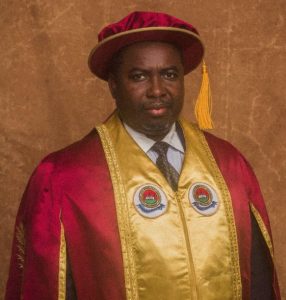
INEC Chairman Appointment | SkyDNews Network The INEC Chairman Appointment by President Bola Tinubu has sparked nationwide discussions about political neutrality and electoral credibility in Nigeria. In the wake of President Bola Tinubu’s appointment of the new Chairman of the Independent National Electoral Commission (INEC), many Nigerians have raised eyebrows, especially in light of Tinubu's description of the man as “apolitical.” The description given to the new INEC Chairman, Professor Joash Ojo Amupitan (SAN), may seem plausible on the surface; however, a closer examination of his recent professional history paints a picture that starkly contradicts this claim. First, the new INEC Chairman was a key member of the legal team that defended Bola Tinubu during the presidential election petition tribunal. As a Senior Advocate of Nigeria (SAN), he played a pivotal role in advocating for the legitimacy of Tinubu’s victory. In fact, his defense of the last presidential election as free, fair, and credible directly ties him to a partisan cause, defending the legitimacy of a political outcome in which his client, Tinubu, stood to gain the highest office in the land. This raises an immediate question: can someone with such direct ties to one of the most politically charged and controversial elections in Nigeria’s history truly be considered "apolitical"? Furthermore, the chairman’s involvement in this election tribunal is not just a matter of legal defense, but also a matter of allegiance. While legal professionals often represent clients with political affiliations, this situation is particularly telling because it involves a deeply polarizing political figure. The optics alone, coupled with the fact that the new INEC Chairman was defending an election that is widely contested, undermine any claim of impartiality. The role he played is not one of detached professionalism but one that aligns him with a specific political outcome, creating a potential conflict of interest for his new position. If this same individual, tasked with overseeing the credibility of elections across the country, could defend a process that many still question, one might ask: what other dubious positions might he feel compelled to defend in his new capacity? To describe him as apolitical seems not just naive but detached from the realities of his involvement in one of the most politically contentious moments in Nigeria’s recent history. In conclusion, while the INEC Chairman Appointment may hold the legal qualifications necessary for his new role, his past involvement with Tinubu’s election tribunal casts serious doubt on his ability to remain neutral.
The line between lawyer and political actor is not always clear, and in this case, it seems to have been irrevocably blurred.