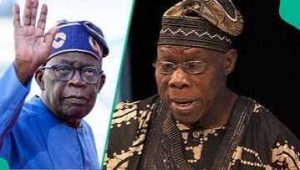
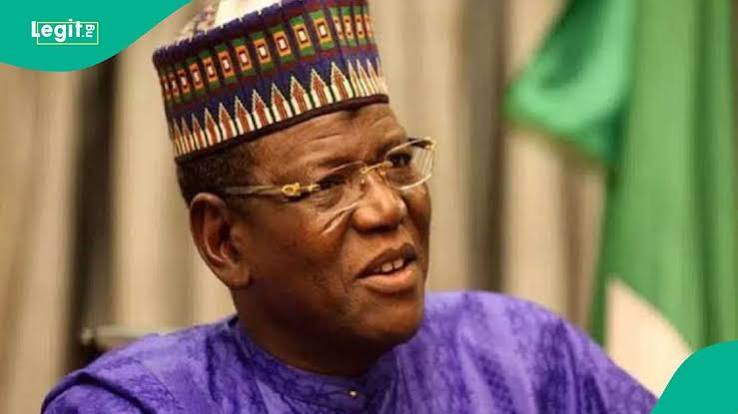
Shettima and Sule Lamido | SkyDNews | 2026
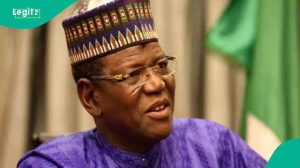
The political controversy involving Shettima and Sule Lamido has intensified after the former Jigawa State governor publicly rejected the Vice-President's claim that he supports President Bola Tinubu and the All Progressives Congress (APC).
Lamido’s ‘Kattuwunum’ Rebuttal Raises Fresh Questions Over Vice-President’s Political Claims as Obi Faces Accusations of Using Bogus Statistics The credibility of Vice-President Kashim Shettima's political assertions has come under fresh scrutiny following a public confrontation with former Jigawa State Governor, Sule Lamido, who has dismissed as a lie the Vice-President's claim that he is among prominent politicians backing President Bola Tinubu and the All Progressives Congress (APC). The development has added another dimension to the controversy surrounding Shettima's repeated attacks on former Anambra State Governor and presidential candidate of the Nigeria Democratic Congress (NDC), Peter Obi, whom he has accused of relying on lies, bogus statistics and incoherent economic prescriptions. Interestingly, while describing Obi as his good friend, Shettima has repeatedly questioned the credibility of the opposition politician's public statements. But following Lamido's emphatic rejection of his latest political claim, Nigerians are increasingly asking a question that goes beyond the disagreement between two politicians: Who should Nigerians believe when political leaders make claims that are subsequently challenged by the people directly concerned? The controversy has also revived discussions about political accountability, the responsible use of statistics and the growing tendency among Nigerian politicians to make sweeping declarations without providing supporting evidence.
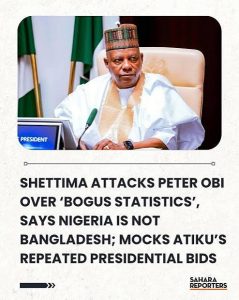
How Shettima Accused Peter Obi of Using Bogus Statistics
The controversy involving Obi dates back to October 14, 2026, when Shettima spoke at the inauguration of the APC Presidential Campaign Council at the Presidential Villa in Abuja. Describing Obi as his "very good friend", the Vice-President criticised the former Anambra governor's economic arguments, particularly his comparisons between Nigeria and other countries, including Bangladesh. Shettima argued that economic policies that work in one country cannot automatically be transferred to another without considering differences in population, economic structures, institutions and national circumstances. Using an analogy, he suggested that Obi appeared convinced that a size 36 shirt designed for Bangladesh would fit Nigeria's size 52 frame. He subsequently described Obi as the "master of bogus statistics and incoherent economic prescriptions". Shettima also questioned Obi's assertion that he won the 2023 presidential election, arguing that he had made the claim without providing evidence to substantiate it. The Vice-President's remarks attracted considerable political attention, particularly because he combined personal references to Obi as a friend with unusually strong criticism of his intellectual credibility and political arguments. The criticism did not go unanswered.
Kwankwaso Challenges Shettima's Assessment of Obi
On October 15, 2026, former Kano State Governor and NDC vice-presidential candidate, Rabiu Musa Kwankwaso, challenged Shettima's description of Obi's statistics as bogus. Speaking on Channels Television's Politics Today, Kwankwaso said he regularly listened to Obi's presentations and independently checked the figures he cited. According to him, most of the figures he had examined were correct, although he acknowledged that human beings could occasionally make mistakes or experience slips of the tongue. "I always listen to him (Peter Obi), like all others, I take time to check the statistics. As far as I am concerned, most of the figures he was saying were correct," Kwankwaso said. He further questioned the basis for Shettima's sweeping criticism. Kwankwaso's intervention introduced an important dimension to the debate: rather than dismissing Obi's statistics wholesale, the figures should be examined individually against their original sources. That is particularly important in a country where economic discussions frequently involve inflation, unemployment, poverty, debt, foreign exchange, productivity and international development comparisons.
Shettima Escalates His Attacks at Uyo Rally
The disagreement resurfaced on November 6, when Shettima again attacked Obi during the APC presidential campaign rally in Uyo, Akwa Ibom State. The Vice-President accused the NDC presidential candidate of squandering the goodwill he previously enjoyed among Nigerians. He said Obi had effectively run himself out of the 2027 presidential race through what he described as lies and bogus statistics. "I hear my friend Peter Obi is back in the country after sneaking out to have a rest," Shettima said. He added that Obi had lost much of the public goodwill he once enjoyed and no longer generated the excitement associated with his earlier political appearances. The remarks reinforced the impression that Shettima's disagreement with Obi had become a recurring feature of the ruling party's political messaging ahead of the 2027 general election. However, the Vice-President's own credibility would soon become the subject of a separate controversy.
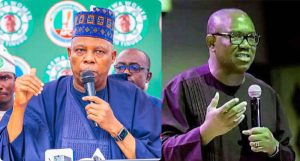
Shettima and Sule Lamido, What Triggered the Controversy?: 'Even Sule Lamido Is With Us'
On Tuesday, November 10, 2026, Shettima accompanied President Bola Tinubu to the APC presidential campaign rally in Dutse, Jigawa State. While addressing party supporters, the Vice-President declared that Jigawa was an APC stronghold and claimed that all four former governors of the state were supporting Tinubu's re-election bid. He specifically named Ali Sa'adu, Ibrahim Saminu Turaki, Muhammad Badaru Abubakar and Sule Lamido. According to Shettima:
"Jigawa State is a home for the APC. All who and who, any politician who answers a name is with us. The former governors of Jigawa State, Ali Sa'adu, Ibrahim Saminu Turaki, Muhammad Badaru Abubakar, and even former Governor Alhaji Sule Lamido, are with us."
The statement was politically significant. Lamido is a prominent opposition politician and former governor who governed Jigawa State from 2007 to 2015 under the Peoples Democratic Party (PDP). His inclusion in Shettima's list suggested that the ruling party had secured the support of an important opposition figure in a state where political alignments could influence the outcome of the 2027 presidential election. However, Lamido was not prepared to allow the assertion to pass without a response.
Lamido's Response: 'I Was Not APC in 2014, Why Now in 2026?'
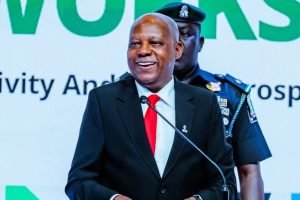
Why Lamido's Rejection Matters
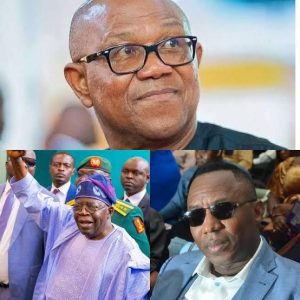
Between Obi's Statistics and Shettima's Political Claims
This brings the controversy back to the central question: between Obi and Shettima, who is now a liar? Strictly speaking, the two disputes must be examined separately. Shettima's accusation against Obi concerns the accuracy of statistics and the soundness of economic arguments. To establish whether Obi has been presenting bogus statistics, individual statements must be identified, checked against their original sources and assessed within their proper context. It is not sufficient to label all his figures bogus without demonstrating which figures are wrong and why. Similarly, Shettima's assertion that Lamido was supporting the APC is a verifiable political claim. If Lamido has not endorsed the APC or Tinubu, then the Vice-President's statement was inaccurate, irrespective of his political intentions. There is also a difference between making an incorrect statement and deliberately telling a lie. Establishing deliberate dishonesty requires evidence that the person knew the statement was false when making it. This distinction matters, particularly for someone occupying the office of Vice-President. Nigerians should not have to depend on political loyalty, party affiliation or personal admiration to determine which public statements are credible. Political leaders should be prepared to substantiate their claims, especially when those claims concern identifiable individuals, public finances, economic performance or national development. Equally, opposition politicians should be held to the same standard. Peter Obi should be expected to provide reliable sources for his statistics, just as Shettima should be expected to substantiate claims about political endorsements.