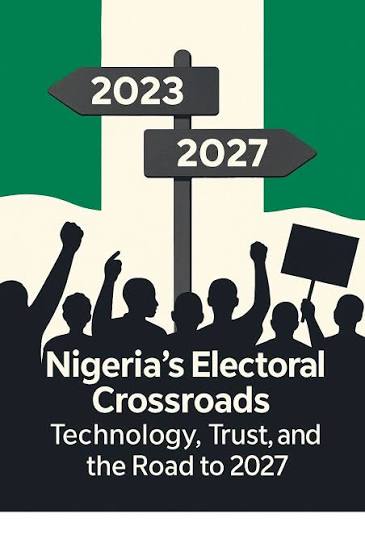
As Nigeria heads toward the 2027 polls, Meta's expanding role in election integrity deserves scrutiny, not because technology companies should be excluded, but because no private platform should exercise enormous influence over political communication without transparency, accountability and meaningful safeguards.
Nigeria's 2027 general election is already taking shape.
The Independent National Electoral Commission (INEC) has formally fixed the presidential and National Assembly elections for
20 February 2027, with governorship and State House of Assembly elections scheduled for
6 March 2027. The electoral body has described the success of the exercise as a collective responsibility involving government institutions, security agencies, the media, civil society and Nigerians themselves.
That list should prompt another question:
Where should the major technology platforms fit into that accountability chain?
Meta, the parent company behind
Facebook and Instagram, has already demonstrated that it sees itself as an important actor in Nigeria's electoral information environment.
Ahead of the 2023 elections, Meta announced that it would deploy people, technology and an election-specific operations centre to address misinformation, hate speech, coordinated inauthentic behaviour and other perceived threats to election integrity. It said it would work with INEC and Nigerian civil-society organisations, while also collaborating with fact-checking organisations and supporting voter-education initiatives.
Those objectives may sound entirely reasonable.
No responsible society wants violence, voter suppression, fabricated election information or coordinated manipulation.
But the bigger question is one that Nigeria should ask before 2027:
Who watches the digital gatekeepers?
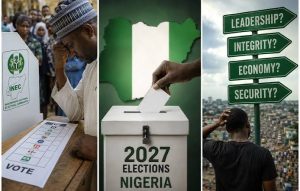 Meta Is Not Nigeria's Electoral Commission
There is an important distinction that must not be lost in the debate.
INEC has a constitutional and statutory mandate to organise elections.
Meta is a private technology company operating communication platforms used by millions of Nigerians.
The two cannot be treated as equivalent institutions.
Yet Meta's platforms occupy an extraordinary position in Nigeria's public conversation. Political parties campaign on them. Candidates communicate with voters through them. Journalists publish through them. Civil-society organisations mobilise through them. Government agencies disseminate information through them. Ordinary citizens debate national issues through them.
That makes decisions about content moderation, account restrictions, political advertising, misinformation and coordinated behaviour matters of considerable public interest.
The question is therefore not whether Meta should have rules.
It should.
The question is whether the exercise of that private power is sufficiently transparent and accountable when it affects democratic participation.
What Meta Promised Nigerians in 2023
Meta's own February 2023 announcement provides an important benchmark.
The company said it was investing in people and technology to help protect the integrity of Nigeria's general elections. It announced an Elections Operations Centre designed to identify potential threats in real time and accelerate responses.
It said it would remove certain categories of harmful misinformation, including false information intended to suppress voting or misinformation about voting dates, locations, times and methods.
It also said it worked with AFP, Africa Check, Dubawa and Reuters to fact-check content in English, Hausa, Yoruba and Igbo, with false or partly false material subject to warning labels and reduced distribution.
Meta also said political and electoral advertisers in Nigeria would undergo verification, that political advertisements would carry "Paid for by" disclaimers and that such advertisements would be stored in its Ads Library for seven years.
The company further said it had developed specialised teams to combat coordinated inauthentic behaviour and would remove and publicly disclose networks identified as attempting to manipulate public debate.
These are significant interventions.
And precisely because they are significant, they deserve scrutiny.
The More Power a Platform Has, the Greater the Need for Accountability
Imagine a political candidate preparing for an election.
Imagine a journalist investigating the government.
Imagine a civil-society organisation documenting alleged abuses.
Imagine a citizen criticising a public policy.
Now imagine that the person's primary communication platform suddenly becomes unavailable.
The consequences may extend beyond losing a social-media profile.
An account may contain years of journalism, public commentary, professional contacts, evidence of previous work, community relationships and an audience built over many years.
This is why the recent experience surrounding the VITUFEL70 social-media identity, which has been raised publicly by the Rosana Empowerment Foundation (REF), deserves attention within the wider digital-rights debate.
The issue is not whether Meta has the right to enforce its rules.
It does.
The question is whether
users whose accounts are disabled have sufficiently transparent explanations and meaningful opportunities to appeal decisions, particularly where the account represents substantial public-interest work.
This is not merely a question for one individual.
It is a question about the architecture of digital democracy.
Could the Same Digital Power That Protects Elections Also Affect Political Debate?
This is where Nigeria's 2027 election conversation becomes particularly important.
Meta's 2023 approach relied heavily on identifying misinformation, harmful content and coordinated manipulation.
But identifying harmful content is not always straightforward.
Political speech is complicated.
A statement may be controversial without being false.
A criticism may be harsh without being unlawful.
A journalist may publish an allegation that requires investigation rather than immediate removal.
A citizen may express an unpopular political opinion that is deeply disliked by another group but still deserves protection.
A satire may look like misinformation when taken out of context.
A historical photograph may be legitimate evidence but appear misleading when separated from its original context.
This is why context matters.
And because algorithms and moderation systems operate at enormous scale, mistakes are inevitable.
The question then becomes:
What happens when the system gets it wrong?
The 2023 Election Was Not Simply a "Social Media Election"
It would be inaccurate to blame Meta for the problems surrounding Nigeria's 2023 general election.
The evidence does not support such a conclusion.
Indeed, independent election observers identified numerous structural and operational problems that had little or nothing to do with Meta.
The European Union Election Observation Mission concluded that the 2023 elections exposed "enduring systemic weaknesses" and said shortcomings in law and electoral administration hindered well-run and inclusive elections and damaged public trust in INEC. It issued 23 recommendations, including reforms concerning electoral administration, results transparency, media protection and electoral-offence impunity.
The Commonwealth Observer Group similarly examined the election process and identified areas requiring improvement.
The Centre for Democracy and Development (CDD), which deployed more than 4,900 accredited observers across Nigeria, identified election-day operational challenges, technology, violence and voter suppression, voter behaviour and money, and online falsehoods among the major factors shaping the election environment.
The digital environment was certainly part of the problem.
CDD's research before the election documented increasingly sophisticated misinformation and disinformation campaigns, including efforts to glorify or delegitimise candidates and undermine confidence in INEC.
Freedom House also reported that powerful political actors and state-affiliated groups used misinformation and disinformation to manipulate public perceptions during the 2023 electoral period, while social media simultaneously provided citizens with a significant avenue for political participation and mobilisation.
This presents a much more complicated picture than simply saying that social media caused the election to fail.
The reality is that Nigeria's electoral crisis was multidimensional.
The Problem Is Not Meta's Participation. It Is Unchecked Influence.
There is nothing inherently wrong with Meta participating in efforts to protect election integrity.
In fact, technology companies can make valuable contributions.
They can help identify coordinated manipulation.
They can make political advertising more transparent.
They can provide voter information.
They can support digital literacy.
They can help users recognise false information.
They can provide tools for reporting harmful content.
All of these can potentially strengthen democratic participation.
But participation should not become unaccountable influence.
That distinction matters.
A private company should not become an invisible electoral umpire.
Neither should it be placed in a position where citizens cannot understand why certain political content is removed, restricted, labelled or amplified.
Nigeria's Democratic Environment Is Already Under Pressure
This concern becomes more important against the backdrop of Nigeria's broader civic environment.
Human Rights Watch's 2026 World Report documented arrests and prosecutions of journalists and social-media commentators in Nigeria during 2025, including cases involving alleged cyberstalking and defamation. It also raised concerns about the use of the Cybercrimes Act in cases involving online expression.
In May 2026, Human Rights Watch also raised concerns about a Federal High Court judgment ordering civil-society organisation SERAP to pay ₦100 million in damages to two DSS officials, following a case connected to SERAP's allegations concerning an alleged invasion of its Abuja office. HRW warned that such litigation could have a chilling effect on public-interest advocacy and freedom of expression.
These developments do not prove that Nigeria has ceased to be a democracy.
But they demonstrate why the protection of civic space, journalism and peaceful dissent remains an important public issue.
And this is where the digital environment becomes inseparable from democratic rights.
The Human Rights Foundation's Authoritarian Classification
There is also a new and highly consequential international assessment that Nigeria's policymakers and citizens should examine carefully.
In February 2026, the Human Rights Foundation launched its
Tyranny Tracker, a qualitative index classifying countries as democratic, hybrid authoritarian or fully authoritarian.
The Foundation's current classification places Nigeria among the countries it describes as
fully authoritarian.
That is the Human Rights Foundation's assessment—not an uncontested fact about Nigeria's constitutional status.
It should therefore be treated as an external evaluation that deserves examination rather than as the final word on the country's political system.
Nevertheless, the classification is significant because HRF says its methodology examines electoral competition, freedom of dissent and institutional accountability.
Its broader analysis argues that democratic backsliding can occur gradually through executive-led erosion of institutional checks, pressure on opposition voices and weakening of judicial independence.
Whether Nigerians agree with that classification or reject it entirely, the underlying questions deserve public debate.
How competitive is Nigerian politics?
How protected is peaceful dissent?
How independent are institutions?
How effective are checks and balances?
How safe is it to criticise those in power?
And what happens when those questions migrate from the physical world to Facebook, Instagram, X, WhatsApp and other digital spaces?
Meta Must Answer a Different Kind of Question in 2027
Meta's role in the 2027 election should therefore not be judged simply by how many misinformation posts it removes.
That is only one measure.
Nigerians should also ask:
How many legitimate political discussions are mistakenly removed?
How quickly can users appeal account restrictions?
How transparent are moderation decisions?
How are Nigerian languages and cultural contexts understood by moderation systems?
How does Meta distinguish political criticism from harmful content?
How does it protect journalists and human-rights defenders?
How does it prevent coordinated manipulation without suppressing legitimate political organisation?
How does it ensure that government requests do not become mechanisms for suppressing legitimate dissent?
How can Nigerians independently audit the platform's election-related interventions?
These questions should be answered before, not after, the election.
Government Requests Should Also Be Publicly Scrutinised
The issue cannot be placed entirely at Meta's door.
Governments also have enormous power.
In the lead-up to the 2023 election, Nigeria's then Minister of Information and Culture, Lai Mohammed, met representatives of Meta and Google and called on the platforms to address misinformation, make official channels visible and work with security services regarding posts capable of inciting violence.
The meeting illustrates an important reality: governments and platforms interact during elections.
That interaction may be legitimate.
But democratic societies require safeguards to ensure that requests to technology companies are not used as indirect mechanisms for suppressing lawful criticism.
A government should not be able to achieve through a private platform what it could not lawfully accomplish directly.
That principle deserves particular attention in 2027.
Nigerians Should Be Able to See the Rules of the Game
If Meta is going to participate in election-integrity efforts, transparency should be central.
Nigerians deserve to know:
- What categories of content are being monitored;
- What standards are being applied;
- What organisations are involved;
- How fact-checking relationships operate;
- How government requests are handled;
- How political advertising is verified;
- How coordinated inauthentic behaviour is identified;
- How errors are corrected;
- How users appeal enforcement decisions;
- How journalists and public-interest organisations are protected;
- And what independent oversight exists.
Without transparency, even legitimate interventions can generate suspicion.
And in an election environment already affected by mistrust, suspicion itself can become politically consequential.
The 2027 Election Cannot Be Managed Only by Algorithms
Nigeria's electoral future cannot be outsourced to algorithms.
Nor can it be protected by government institutions alone.
INEC has the constitutional responsibility to conduct the election.
Political parties must respect the rules.
Candidates must accept democratic competition.
Security agencies must protect voters without intimidation.
Journalists must report responsibly.
Civil society must observe and document.
Citizens must reject violence and misinformation.
Technology companies must protect users and maintain transparent systems.
And international observers must observe independently rather than becoming political actors.
Every participant has a role.
No participant should have unchecked power.
 International Observers Must Also Guard Their Independence
There is another issue that deserves attention.
International election observation can be extremely valuable.
The EU Election Observation Mission deployed 110 observers from 25 EU member states, as well as Norway, Switzerland and Canada, during its 2023 mission. It produced a detailed assessment and 23 recommendations.
The Commonwealth also deployed an independent observer group.
Civil-society organisations such as CDD and Yiaga Africa conducted extensive domestic observation.
These efforts can strengthen accountability.
But observers must maintain methodological independence.
Their legitimacy depends on evidence.
They should report what they observe - not what governments, opposition parties, technology companies or foreign interests want them to report.
This principle should apply equally to international organisations, private technology companies, donors, governments and civil-society organisations.
Nigeria's election belongs first and foremost to Nigerians.
External actors can assist.
They should not determine.
The Question of Foreign Interests
Nigeria is too strategically important to assume that every foreign organisation operating around its elections is politically neutral.
This does not mean that every international organisation has a hidden agenda.
It means that transparency matters.
Who funds a project?
Who commissions a study?
Who selects observers?
What methodology is used?
Who determines the terms of reference?
Who receives the data?
What relationships exist between technology companies, governments, NGOs, consultants and political actors?
These questions should not be dismissed as conspiracy theories.
They are ordinary accountability questions.
The same standard should apply to everyone.
Nigeria should neither reject international assistance simply because it is international nor accept it blindly because it comes from outside the country.
The test should be transparency, independence, evidence and respect for Nigerian sovereignty.
Meta's Presence in Nigeria Makes Accountability More Important
This is why the question of
Meta's Nigerian operations should be approached carefully.
The presence of local employees, public-policy engagement or other forms of local corporate activity does not, by itself, prove that Meta is politically aligned with the Nigerian government or any political party.
Nor does it prove that Nigerian employees have control over global content-moderation decisions.
Such claims would require evidence.
But local engagement does create legitimate questions about accountability.
When a global platform operates within a country, works with local stakeholders and participates in election-related initiatives, Nigerians are entitled to ask how decisions affecting Nigerian political communication are made.
The answer should be institutional and transparent, not speculative.
The VITUFEL70 Question Is Part of the Bigger Debate
The VITUFEL70 experience raised by REF provides a useful case study in this regard.
A journalist's account is disabled.
Appeals are attempted.
Recovery becomes difficult or impossible.
Years of public-interest communication may become inaccessible.
The question is not whether one individual is entitled to immunity from platform rules.
No user should be.
The question is whether
permanent loss of a digital identity should occur without an accessible, meaningful and proportionate avenue of review.
If Meta wants Nigerians to trust its election-integrity interventions, it should also be willing to demonstrate that its enforcement systems protect legitimate political speech and provide meaningful remedies when mistakes occur.
Trust cannot be demanded.
It must be earned.
What Should Meta Do Before 2027?
Meta should consider publishing a Nigeria-specific election transparency framework before the 2027 polls.
Such a framework should explain, in accessible language:
- Political-content rules
What political content is allowed, restricted or removed?
- Account enforcement
What happens when an account is suspended during an election period?
- Appeals
How quickly can users appeal?
Who reviews appeals?
Can human review be requested?
- Government requests
How many content-removal or account-related requests does Meta receive from Nigerian authorities?
How many are accepted?
How many are rejected?
- Political advertising
Who pays for political advertising?
How much is spent?
Who is targeted?
- Language coverage
How effectively can moderation systems understand Nigerian political discussion in English, Hausa, Yoruba, Igbo and Nigerian Pidgin?
- Journalists and civil society
What additional safeguards exist for verified journalists, human-rights defenders and public-interest organisations?
- Transparency
How many accounts and pieces of content are restricted during the election period, and for what reasons?
- Independent oversight
Can credible Nigerian researchers independently examine election-related moderation and advertising data?
- Post-election review
Will Meta publish a transparent assessment of its role after the election?
These would not weaken Meta.
They would strengthen public confidence.
 Nigeria Must Also Clean Its Own House
But Nigerians should not make the mistake of believing that Meta, or any foreign technology company, is responsible for Nigeria's democratic problems.
The 2023 election demonstrated that electoral credibility depends on institutions.
INEC's administration matters.
The courts matter.
Political parties matter.
Security agencies matter.
The voter register matters.
Election technology matters.
Campaign finance matters.
Violence matters.
Political accountability matters.
The EU's final report explicitly pointed to legal and operational shortcomings and recommended reforms in areas including INEC appointments, publication of election results, media protection and electoral-offence accountability.
INEC itself has acknowledged the importance of improving the integrity of the voters' register and announced a voter-revalidation exercise ahead of 2027.
These institutional reforms are far more fundamental to election credibility than anything a social-media company can do.
The 2027 Election Should Be About More Than Winning
Nigeria's democracy cannot be reduced to which candidate wins.
A credible election is about whether citizens believe they had a genuine opportunity to choose.
It is about whether candidates competed fairly.
It is about whether voters could access accurate information.
It is about whether opposition parties could campaign without intimidation.
It is about whether journalists could report without fear.
It is about whether election officials acted independently.
It is about whether votes were properly counted and transmitted.
It is about whether disputes were resolved transparently.
It is about whether citizens could criticise government without retaliation.
And increasingly, it is about whether the digital platforms through which citizens receive information operate transparently.
So, Is Meta's Role in 2027 Suspicious?
The answer requires nuance.
Meta's involvement is not inherently suspicious.
Its involvement in election-integrity work can be legitimate and potentially beneficial.
But
Meta's enormous influence means its involvement must be scrutinised.
That is not hostility to technology.
It is democratic accountability.
A company that can influence what millions of people see, share, advertise, discuss or lose access to possesses significant social power.
Such power should never operate entirely in the dark.
And neither should government power.
The Real Question Is: Who Watches the Watchers?
Nigeria's 2027 election will take place in a radically different information environment from previous elections.
Artificial intelligence is becoming more sophisticated.
Deepfakes are becoming easier to create.
Political advertising is increasingly data-driven.
Influencers can reach millions of people.
Algorithms determine what many citizens see first.
False information can cross platforms within minutes.
And account enforcement can instantly remove an individual or organisation from a major communication channel.
This is why the question of digital accountability can no longer be treated as a side issue.
It is now part of electoral integrity.
Who watches the watchers?
Who monitors INEC?
Who monitors security agencies?
Who monitors political parties?
Who monitors international observers?
Who monitors technology companies?
Who monitors fact-checkers?
Who monitors the people monitoring everyone else?
The answer cannot simply be "trust us."
Democracy requires institutions that can be questioned.
SkyDNews' Position
SkyDNews is not calling for Meta to withdraw from Nigeria's 2027 electoral environment.
Nor is it arguing that misinformation, hate speech, voter suppression or coordinated manipulation should be ignored.
Quite the opposite.
The digital information environment needs stronger safeguards.
But safeguards must protect
both election integrity and freedom of expression.
Nigeria should not replace one danger with another.
We should not fight misinformation by suppressing legitimate criticism.
We should not fight foreign interference by creating opaque domestic censorship.
We should not protect democracy by weakening the very freedoms that make democracy meaningful.
And we should not transfer enormous power over political communication from governments to private corporations without demanding accountability from those corporations.
A Message to Meta
If Meta intends to play a significant role in Nigeria's 2027 electoral information environment, SkyDNews believes the company should embrace transparency before Nigerians are asked to trust it.
Explain the rules.
Publish the safeguards.
Disclose government requests.
Protect legitimate political expression.
Provide meaningful appeals.
Protect journalists.
Protect civil society.
Explain how Nigerian languages and contexts are handled.
Make political advertising transparent.
Allow credible independent scrutiny.
And after the election, publish a detailed account of what happened.
Do not merely tell Nigerians that you are protecting election integrity. Show Nigerians how you are doing it.
A Message to the Nigerian Government
The same standard applies to government.
Do not ask technology companies to silence lawful critics simply because their criticism is uncomfortable.
Do not use national security as a blanket justification for suppressing dissent.
Do not pressure platforms into becoming instruments of political control.
If information is false, provide evidence.
If criticism is wrong, answer it.
If conduct is unlawful, follow due process.
If citizens disagree, allow peaceful disagreement.
The government has enormous constitutional power.
It does not need hidden digital power.
A Message to Nigerians
Finally, Nigerians must also accept their responsibility.
We cannot demand credible elections while sharing information we know to be false.
We cannot complain about manipulation while participating in it.
We cannot demand freedom of expression while calling for the silencing of people whose opinions we dislike.
We cannot defend democracy only when our preferred candidate is winning.
Democracy must protect the opponent too.
The journalist.
The activist.
The government supporter.
The opposition supporter.
The critic.
The whistleblower.
The researcher.
The ordinary voter.
Everyone.
Nigeria Must Own Its Digital Democracy
The 2027 general election will test more than INEC.
It will test Nigeria's institutions, political parties, security agencies, courts, media, civil society, citizens, and the technology platforms that increasingly shape the information Nigerians receive.
Meta can be part of the solution.
But it must not become an unaccountable part of the electoral machinery.
Its role should be transparent.
Its interventions should be reviewable.
Its moderation should be proportionate.
Its political advertising systems should be open to scrutiny.
Its relationships with government and civil society should be disclosed appropriately.
And users whose accounts are disabled should have meaningful avenues of appeal.
The same principle applies to every other actor.
No government should be above scrutiny.
No political party should be above scrutiny.
No technology company should be above scrutiny.
No international observer should be above scrutiny.
No civil-society organisation should be above scrutiny.
Nigeria does not need foreign actors to determine the quality of its democracy.
It needs strong Nigerian institutions, independent oversight, responsible citizens and transparent engagement with international partners.
The 2027 election must therefore not simply be about who wins.
It must be about whether Nigerians can trust the process.
And that trust will not be built by algorithms alone.
It will be built by
transparency, accountability, institutional independence, credible information, protected dissent and the unwavering principle that the sovereign choice belongs to the Nigerian people.