
Sweden Printed Textbooks | SkyDNews Editorial Team
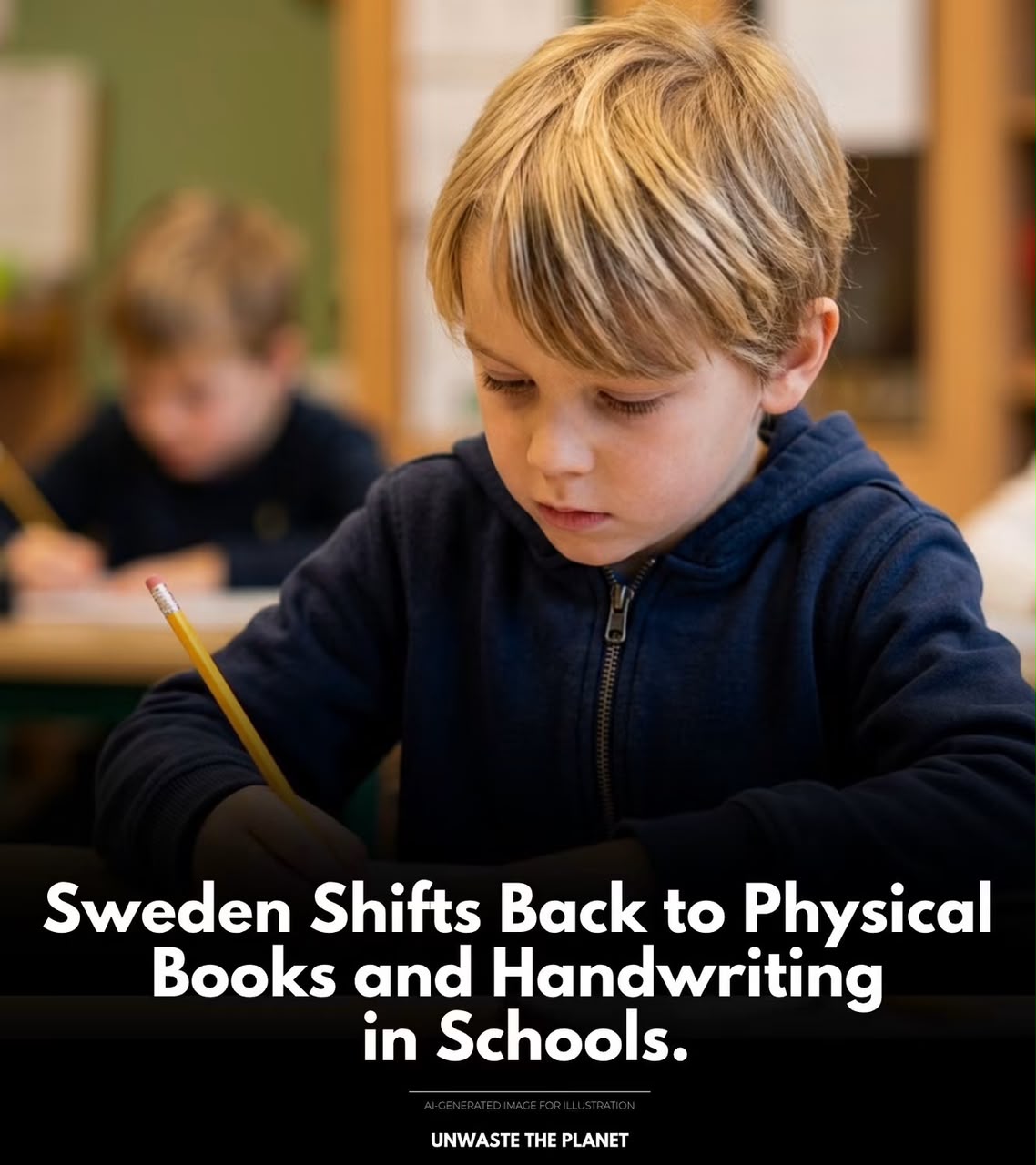
Sweden printed textbooks are making a remarkable comeback as the country reverses years of classroom digitalisation. Once regarded as a global leader in educational technology, Sweden is investing billions of kronor in printed books while reducing screen use after evidence linked excessive dependence on digital devices to declining reading comprehension, handwriting skills and literacy among schoolchildren.
In what many education experts describe as one of the most significant reversals of digital education policy in recent years, Sweden, a nation once hailed as a pioneer of classroom digitalization, is deliberately stepping back from heavy reliance on tablets and digital devices in schools.
The Scandinavian country, long admired for embracing technology in education, has concluded that the rapid replacement of traditional learning materials with screens may have gone too far. Instead of expanding digital classrooms, the Swedish government is investing billions of kronor in printed textbooks, encouraging handwriting, and restoring silent reading sessions.
The decision represents not a rejection of technology itself but a recalibration based on growing scientific evidence and measurable declines in student literacy.
The move has sparked worldwide discussions among educators, policymakers, parents, and researchers about whether education systems have become too dependent on digital devices at the expense of foundational learning.
Sweden's Digital Education Journey: Why Sweden Printed Textbooks Are Returning
For more than a decade, Sweden stood among the countries leading educational digital transformation.
Schools increasingly adopted:
- Tablets for classroom instruction
- Digital textbooks
- Online assignments
- Educational applications
- Cloud-based learning platforms
- Paperless classrooms
The objective was straightforward: prepare students for an increasingly digital world while modernizing teaching methods. The approach attracted international attention, with many countries viewing Sweden as a model for future-ready education. However, experience eventually revealed unintended consequences.
Sweden Printed Textbooks: The Warning Signs
Between 2016 and 2021, Sweden observed worrying trends in student literacy.
According to international reading assessments such as the Progress in International Reading Literacy Study (PIRLS), Swedish fourth-grade students experienced a noticeable decline in reading performance.
Average reading scores dropped from approximately 555 points in 2016 to 544 points in 2021.
Although Sweden continued to perform above many countries, education authorities became increasingly concerned that the downward trend reflected deeper structural issues rather than temporary fluctuations.
The decline prompted education researchers and government officials to reassess whether the country's extensive reliance on digital learning tools was producing the intended educational outcomes.
Sweden Printed Textbooks: Scientific Research Behind the Policy Shift
A growing body of international research has questioned the assumption that more technology automatically leads to better learning.
Numerous studies have found that students often comprehend complex texts more effectively when reading from paper than from digital screens.
Researchers suggest several reasons:
Better Reading Comprehension
Printed pages help readers develop a stronger mental map of text structure, making it easier to remember information and understand relationships between ideas.
Digital scrolling, by contrast, may reduce deep engagement with lengthy material. Improved Concentration Screens often encourage multitasking. Even when educational software is used, notifications, hyperlinks, animations, and other digital distractions can reduce sustained attention. Printed books eliminate many of these interruptions.
Stronger Memory Retention
Educational psychologists have found that physical interaction with books, turning pages, highlighting text, and making handwritten notes, can strengthen memory formation.
Better Writing Skills
Handwriting activates complex neural pathways associated with language development.
Research increasingly suggests that writing by hand improves spelling, vocabulary retention, and idea organization more effectively than typing alone, especially among younger children.
Sweden's New National Strategy
Beginning in 2023, Sweden introduced a major policy adjustment designed to strengthen foundational literacy. The strategy includes:
Massive Investment in Printed Materials
The government committed more than 2 billion Swedish kronor (approximately US$200 million) to purchase printed textbooks and other traditional learning resources for schools. The investment ensures that every child has greater access to high-quality physical books rather than depending primarily on digital resources.
Reducing Screen Time
Perhaps the most widely discussed aspect of the reform is the decision to phase out digital devices for children below the age of six.
Early childhood education will instead prioritize:
- Storybooks
- Teacher-led instruction
- Handwriting
- Drawing
- Play-based learning
- Face-to-face interaction
Officials argue that these activities better support cognitive and language development during children's earliest years.
Bringing Back Silent Reading
Schools are also reintroducing dedicated periods for uninterrupted silent reading.
Educators believe sustained reading helps children:
- Build vocabulary
- Improve concentration
- Develop imagination
- Strengthen comprehension
- Increase reading stamina
Renewed Focus on Handwriting
Rather than abandoning digital skills, Sweden aims to restore balance by ensuring students first master handwriting before relying heavily on keyboards and tablets.
Technology Is Not the Enemy
Importantly, Swedish officials have repeatedly clarified that the country is not abandoning educational technology altogether.
Digital tools remain valuable for:
- Research
- Programming
- Digital literacy
- Collaborative learning
- Accessibility for students with disabilities
- Multimedia instruction
The new philosophy emphasizes that technology should complement, not replace, the core practices of reading printed books, writing by hand, and engaging directly with teachers.
Global Lessons and Reactions from Sweden Printed Textbooks
Sweden's decision has resonated globally. Several countries are now reviewing their own digital education policies as concerns grow over excessive screen exposure among children.
Parents, educators, and health professionals increasingly question whether younger learners benefit from prolonged use of tablets during critical developmental years.
International organizations, including the OECD, have also highlighted that technology alone does not guarantee improved academic performance. The effectiveness of digital tools depends largely on how they are integrated into quality teaching practices.
Lessons for Africa
Sweden's experience offers important lessons for African education systems, many of which are currently investing in digital classrooms.
Technology undoubtedly provides significant opportunities, particularly where access to educational resources is limited. Digital platforms can:
- Expand access to learning
- Connect rural schools
- Reduce costs of educational materials
- Improve teacher training
- Support distance education
However, Sweden's experience suggests that digital transformation should not come at the expense of foundational literacy.
For many African countries, the priority should remain ensuring that every child first develops strong reading, writing, numeracy, and comprehension skills before introducing extensive screen-based learning.
Balanced integration may prove more effective than complete digital replacement.
A Global Conversation About Learning
Sweden Printed Textbooks issue reflects a broader global shift in educational thinking. Rather than asking whether technology should replace traditional learning, policymakers are increasingly asking a different question:
How can technology best support, not substitute, the proven methods that help children learn?
The answer increasingly appears to lie in balance.
Printed books remain unmatched for deep reading.
Handwriting continues to strengthen learning.
Teachers remain central to effective education.
Conclusion
Sweden's return to printed textbooks is more than a policy adjustment; it is a reminder that educational innovation should always be guided by evidence rather than enthusiasm alone. The country's willingness to rethink earlier assumptions demonstrates that successful education systems must continually adapt to new research and changing student needs.
As nations around the world seek to prepare children for a digital future, Sweden is sending a clear message: foundational literacy, critical thinking, and deep reading remain indispensable.
Technology can enhance education, but it cannot replace the enduring value of a good book, a pen, and an engaged teacher. For governments, educators, and parents worldwide, Sweden's experience offers an important lesson: the future of education may not lie in choosing between books and screens, but in finding the right balance between them.