The Peter Obi big bag controversy has sparked fresh debate about modesty, political leadership and Nigeria's culture of public service. Following comments attributed to FCT Minister Nyesom Wike, questions have emerged over why a former presidential candidate choosing to carry his own belongings should become a subject of political criticism. Wike’s criticism of Peter Obi raises a bigger question about Nigeria’s political culture, the cost of governance and the meaning of modest leadership.
Peter Obi Big Bag Controversy: What Exactly Is Wrong With Carrying Your Own Bag?
There are many issues Nigerians should be discussing about leadership, governance and the state of the nation. But somehow, a politician carrying his own bag has become a subject of political debate. The controversy surrounding Peter Obi's bag, following comments attributed to the Minister of the Federal Capital Territory, Nyesom Wike, may appear trivial. However, it raises a question worth examining: when did carrying one's personal belongings become a measure of political status or leadership capacity? What exactly is wrong with a public figure carrying his own bag?
Peter Gregory Obi: The Man Behind the Bag Carrying Controversy
There is nothing unusual about a public official having aides, personal assistants or other support staff. Such people have legitimate responsibilities, particularly when dealing with demanding official schedules. But there is equally nothing wrong with a public official choosing to handle some ordinary personal responsibilities without assistance. The ability to carry one's own bag should not be confused with poverty, stinginess or an inability to afford personal assistance. Sometimes, it is simply a matter of personal preference and lifestyle. Interestingly, this is not an unusual practice among people who have occupied some of the world's most powerful political offices.
Peter Obi and the Global Examples of Modest Leadership
Lessons from world leaders have shown that modesty is not a weakness. Former United States President Jimmy Carter offers one of the clearest examples. He was known for carrying his own luggage, including during presidential travels. He also sold the presidential yacht, USS Sequoia, viewing it as an unnecessary luxury. These decisions reflected his preference for a less extravagant style of public life.
Former US President Jimmy Carter during his presidency.
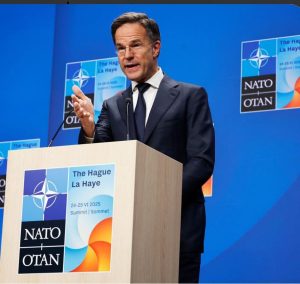
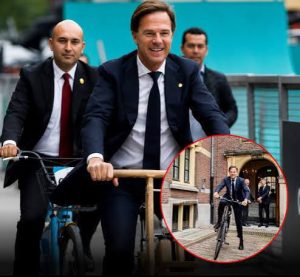
Former Dutch Prime Minister Mark Rutte became widely admired for his simple and unassuming lifestyle, particularly his habit of cycling to work instead of relying on an elaborate motorcade. In a 2019 interview with the World Economic Forum, he explained that riding his bicycle to the office was something he genuinely enjoyed whenever the weather permitted. Perhaps even more remarkable was his departure from office in July 2024. After 14 years as Prime Minister, Rutte handed over power and left the political stage in the same understated manner that had become part of his public image, riding away on his bicycle. It was a simple but memorable moment that captured an important message: leadership does not have to be measured by the size of an entourage, the luxury of official transportation or the number of people attending to a leader's personal needs.
Mark Rutte cycling to work as Dutch Prime Minister.
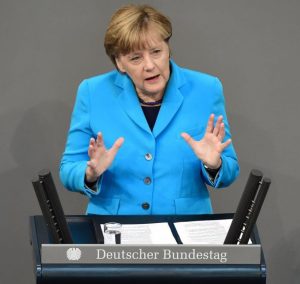
Former German Chancellor Angela Merkel was similarly associated with a relatively ordinary lifestyle. She was frequently photographed shopping at supermarkets and attending to everyday personal activities, despite holding one of the most influential political positions in Europe.
Former German Chancellor Angela Merkel
These examples are worth mentioning, not because every political leader must live in exactly the same way, but because they challenge the assumption that importance must always be demonstrated through luxury, elaborate entourages and visible displays of privilege. There is a difference between providing public officials with the support they need to perform their duties and creating an environment where even the simplest personal responsibilities are considered beneath their status.
The Peter Obi big bag controversy also provides an opportunity to reconsider how Nigerians define political importance. Around the world, some leaders have demonstrated that holding public office does not mean abandoning ordinary personal habits. Modesty and effective leadership are not mutually exclusive.
The Obi Big Bag Controversy and Nigeria's Cost of Governance
Nigeria has more important issues to worry about than whether a former governor carries his own luggage. Public officials are entitled to the necessary administrative and security support required by their offices. However, citizens also have a legitimate right to question the cost of maintaining large entourages, excessive convoys and unnecessary official privileges. Every expenditure from public funds should be justified by necessity, efficiency and public interest. A personal assistant may be useful. A security detail may be essential. An official vehicle may be necessary. But none of these should become symbols of political superiority or excuses for wasteful spending. The public should be interested in whether government resources are being used responsibly, whether public institutions are functioning effectively and whether elected leaders are delivering on their promises. Ultimately, the number of people carrying a politician's bags tells us very little about the quality of governance.
Beyond the Peter Obi big bag controversy, Nigerians should be asking more fundamental questions about public expenditure. How much does government spend maintaining official convoys, entourages and administrative privileges, and what measurable value do citizens receive in return?
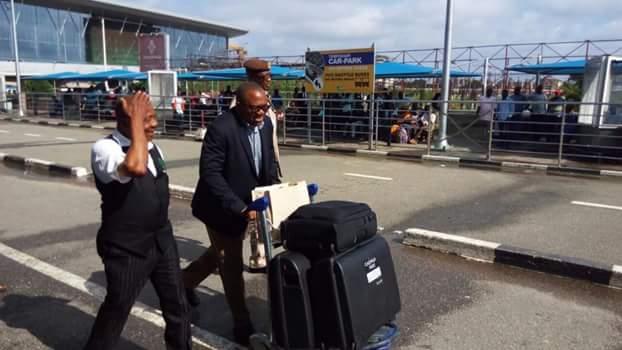
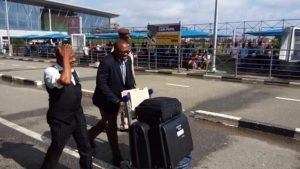
Peter Obi carrying his personal bag, sparking debate about modesty and political leadership in Nigeria.
Wike's Criticism of Peter Obi and the Politics of 2027
Wike's comments are particularly significant because they come at a time when political conversations ahead of the 2027 general elections are becoming increasingly intense. At a town hall meeting in Bonny, Rivers State, on October 24, 2026, the FCT Minister reportedly criticised Obi for carrying his own bags, describing the former Anambra governor as stingy and questioning his suitability to govern Nigeria. Wike is entitled to disagree with Obi's political philosophy, question his governance record or challenge his presidential ambition. Such disagreements are part of democratic politics. However, political criticism should ideally focus on issues that matter to citizens: economic management, public accountability, infrastructure, employment, education, healthcare and the responsible use of public resources. Wike's political role during the 2023 general elections also remains part of the wider conversation about his influence in Nigerian politics. He openly supported Bola Tinubu despite being a prominent member of the Peoples Democratic Party. As Nigerians look towards 2027, the more important issue is whether political leaders across party lines will respect the democratic process and allow citizens to freely determine who governs them. The country needs an election in which votes count, political competition is peaceful and the people's mandate is respected. That responsibility belongs to every political actor, regardless of party affiliation.
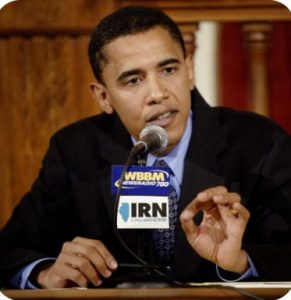
Barak Obama
Peter Obi's Bag: Who Carries the Burden of Nigeria's Hardship?
The bag is not the burden. Perhaps the most important question arising from this controversy is one that should make every Nigerian pause for a moment. While politicians argue about who carries Peter Obi's bag, who is paying attention to the burden ordinary Nigerians carry every day? Millions of families are struggling with the cost of food, transportation, housing, education and healthcare. Young graduates are searching for jobs, small businesses are battling rising costs, and many parents are finding it increasingly difficult to provide basic necessities for their children. These are the realities that deserve the attention of those entrusted with public office. Nigeria needs leaders who understand that public office is a responsibility, not an opportunity to enjoy privileges at the expense of taxpayers.
Ultimately, the Peter Obi big bag controversy should not distract from the bigger issues confronting Nigeria. Whether a politician carries his own luggage or employs someone to do it is a personal decision. What matters more is how public officials manage public resources and respond to the needs of citizens. A leader's worth should be reflected in the quality of life of the people, the integrity of public institutions and the judicious management of national resources, not the size of an entourage. There is nothing wrong with having people assist public officials. Equally, there is nothing embarrassing about a leader carrying his own bag. The real issue is not who carries Peter Obi's bag.It is who is willing to carry the weight of Nigeria's problems and work towards solving them.That is the conversation Nigerians should be having.
We use cookies to ensure that we give you the best experience on our website. If you continue to use this site we will assume that you are happy with it.