Ali Ndume Regrets Politics | SkyDNews Political Desk
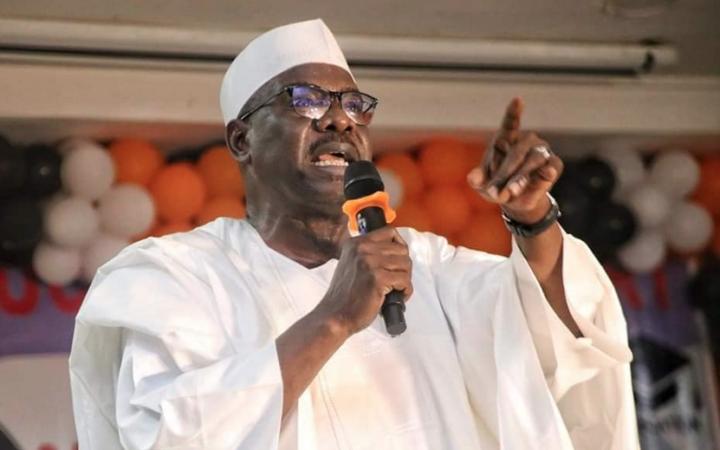
Ali Ndume regrets politics, but his admission comes after more than two decades of ambition, political struggles, party defections, leadership positions, controversial allegations and personal disappointments. From his early days in the House of Representatives to becoming Senate Majority Leader and later Senate Chief Whip, the Borno South senator has experienced both the opportunities and difficult realities of Nigerian politics.
There was a time when Senator Mohammed Ali Ndume was not talking about regretting politics. He was fighting to rise in it. He wanted to represent his people. He wanted a stronger political voice for Southern Borno. He wanted to occupy influential positions in the National Assembly. At different points, his political ambitions brought him close to the highest positions in the Senate. He fought his way from the House of Representatives to the Senate, changed political parties, became Senate Majority Leader, sought the Senate presidency and survived controversies that could have ended the political careers of many public figures. But along the way, he also encountered something that many Nigerians who enter politics with great expectations eventually discover: political loyalty does not always guarantee protection, political friendships can turn into bitter rivalries, and the people who help you climb the ladder may not necessarily be there when the same ladder begins to shake.
Today, Ndume is still a serving senator representing Borno South. Yet, at 66, after more than two decades in elective politics, he has made an admission that deserves more than a passing mention.
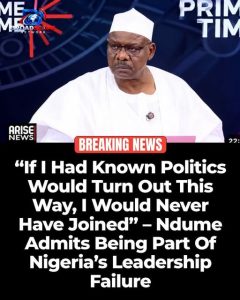
"If I had known that this is how this politics is going to turn out to be, I wouldn't have joined it."
Then came an even more remarkable acknowledgement:
"I'm part of the failure. I cannot deny that."
These were not the words of a political newcomer who had just discovered the difficulties of public service. They came from a man who has experienced the opportunities, privileges, accusations, internal battles, suspensions and disappointments of Nigerian politics. To understand the weight of that statement, it is important to revisit the journey that brought him here.
He started as a teacher, not a career politician
Ndume's political story did not begin in the National Assembly. Born in Gwoza, Borno State, on November 20, 1959, Mohammed Ali Ndume studied Marketing at Kaduna Polytechnic before proceeding to the University of Toledo in the United States, where he obtained degrees in Business and Computer Education. He returned to Nigeria and worked as a lecturer at Ramat Polytechnic, Maiduguri. For someone who eventually became one of the most recognisable political figures from Borno State, his transition from the classroom to the political arena was a significant change of direction. In 2003, he contested and won election to represent the Chibok, Damboa and Gwoza Federal Constituency in the House of Representatives under the All Nigeria Peoples Party (ANPP). He was re-elected in 2007 and became Minority Leader of the House. He was no longer simply a lecturer with an interest in public affairs. He had entered the political arena and was steadily building influence. His popularity in Southern Borno also generated speculation that he could eventually aspire to become governor of the state, particularly because of his grassroots following. That was the kind of political future that seemed possible at the time.
His first major political break: Leaving ANPP for PDP
Politics soon exposed him to the difficult business of party loyalty. In December 2010, Ndume left the ANPP for the Peoples Democratic Party (PDP). The defection followed disagreements within the ANPP in Borno State, particularly allegations of high-handedness and political control by then Governor Ali Modu Sheriff. Ndume had reportedly been unhappy with the political environment and the lack of what he considered a fair opportunity to pursue his senatorial ambition. There was an irony in the development. In 2010, he had criticised the PDP, accusing the party of contributing to Nigeria's deterioration. Yet, barely months later, he joined that same party. He subsequently contested and won the Borno South senatorial seat in 2011 under the PDP. This was an early indication of the complicated relationship between political convictions, personal ambitions and party structures in Nigeria. People change parties for different reasons. Sometimes they cite ideology, sometimes injustice, sometimes disagreements over leadership, and sometimes the pursuit of political opportunities. Ndume's own explanation at the time centred on disagreements within his former party. But this would not be his last political migration.
The Boko Haram controversy that nearly defined his political identity
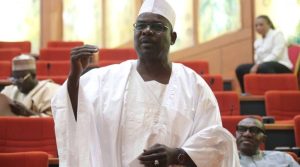
On July 4, 2017, Justice Gabriel Kolawole of the Federal High Court in Abuja dismissed the four charges against Ndume after upholding his no-case submission. The court found that the prosecution had failed to establish a prima facie case linking him to the alleged offences. Ndume was cleared of the charges. The allegation of Boko Haram sponsorship was not established in court. That distinction matters, especially in a country where accusations can remain attached to a person's name long after the courts have dealt with them. For Ndume, however, the political and public consequences of the controversy had already become part of his history.
The irony: His own homes were destroyed by Boko Haram
There is another painful dimension to this chapter. While Ndume was facing allegations of links to Boko Haram, his home state and senatorial district were being devastated by the insurgency. In March 2016, during an interview with Channels Television, he spoke about the destruction suffered by his constituents and his personal experience. He disclosed:
"Bama which is near Gwoza was completely razed. My two houses were completely razed."
He was referring to the devastation caused by Boko Haram's occupation and attacks in the area. This is an important part of the story because it illustrates the complicated and sometimes tragic circumstances surrounding the insurgency in Borno. In 2014, he had also reported an incident in which a Nigerian Air Force aircraft allegedly mistook his convoy for vehicles belonging to insurgents and opened fire while pursuing suspected Boko Haram fighters. The Air Force offered a different account of the incident, saying its aircraft had fired during an operation against suspected terrorists and that the situation was unfortunate. In 2020, Ndume further disclosed that he could not safely visit his hometown because of the security situation. He recounted the killing of elders and other residents in Gwoza. These were not abstract political discussions for a man whose constituents were being killed, displaced and deprived of their homes. He was dealing with a security crisis that had also affected his own family property and freedom of movement.
From PDP to APC: Another political journey
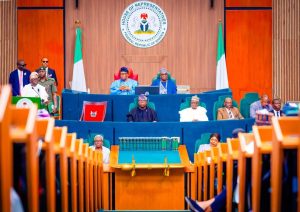
In the build-up to the 2015 general elections, Ndume moved from the Peoples Democratic Party (PDP) to the All Progressives Congress (APC). He was subsequently re-elected senator under the APC platform. By this time, the APC was positioning itself as an alternative to the PDP-led federal government. The party's emergence brought together several politicians who had previously belonged to different political camps. Ndume became an important figure in the new political arrangement. Following the 2015 Senate leadership contest, he aligned with the camp that produced Bukola Saraki as Senate President, despite the opposition of the ruling party's preferred political arrangement. He subsequently became Senate Majority Leader. This was a major achievement for a politician who had entered the National Assembly only twelve years earlier. But his relationship with the political establishment would soon become complicated again.
When political disagreement brought suspension
In 2017, Ndume found himself in another major confrontation within the Senate. He called for investigations into allegations surrounding Senate President Bukola Saraki's alleged ownership of a luxury Range Rover vehicle seized by the Nigeria Customs Service. He also raised questions concerning allegations about Senator Dino Melaye's academic credentials. The two matters generated controversy within the Senate. The Senate Committee on Ethics, Privileges and Public Petitions recommended action against Ndume, accusing him of failing to conduct due diligence before raising the issues. On March 29, 2017, the Senate suspended him for six months. Ndume challenged the decision in court. On November 10, 2017, the Federal High Court in Abuja nullified the suspension, describing it as illegal, unlawful and unconstitutional. The court also ordered the Senate leadership to pay his outstanding salaries and allowances. Imagine the experience: a man who had occupied the position of Senate Majority Leader was suddenly excluded from legislative activities by his colleagues, only for a court to subsequently invalidate the action. It was another reminder that political influence and institutional protection are not necessarily the same thing.
Ali Ndume wanted to become Senate President, but the ambition remained unfulfilled
Ndume did not abandon his ambition to rise within the legislature. In 2019, he contested for the position of Senate President in the Ninth National Assembly. He was not the preferred candidate of his party's leadership, which backed Ahmad Lawan. Ndume went ahead with his ambition but lost the election. Lawan secured 78 votes, while Ndume received 28. For someone who had already served as Senate Majority Leader, the Senate presidency represented another major opportunity to shape the direction of the legislature and influence national politics. He did not get it. This was not the end of his political career, but it was another encounter with the reality that individual ambition does not always prevail within party arrangements.
The Tinubu administration and another public confrontation
Perhaps the most revealing recent chapter in Ndume's relationship with the political establishment emerged during President Bola Tinubu's administration. Ndume was elected Chief Whip of the Senate in 2023. However, in July 2024, he publicly criticised the administration, raising concerns about hardship, the concentration of power and the apparent disconnect between government and ordinary Nigerians. His comments attracted strong reactions from the APC leadership. The party's National Working Committee criticised his statements and requested his removal as Senate Chief Whip. On July 17, 2024, the Senate removed him from the position. The party also advised him to resign from the APC, describing his public criticism of the administration as unacceptable.
Ndume rejected the suggestion that he should simply leave the party and maintained that he was a founding member who had joined the APC after consulting his constituents. He also insisted that his criticism was intended to draw attention to the suffering of Nigerians. This episode was particularly significant because Ndume was not attacking the APC from the opposition benches. He was a serving senator of the ruling party, and his comments were directed at the government his party controlled. He had become a member of an establishment that he increasingly appeared uncomfortable defending without qualification.
So, what has actually changed?
This is where Ndume's latest statement becomes particularly interesting. He has not suddenly discovered that Nigerian politics involves rivalry, ambition, disagreements and the struggle for power. He has experienced these things since his days in the House of Representatives. He has changed political parties. He has occupied influential legislative positions. He has faced serious allegations, defended himself in court, experienced suspension and later obtained a judicial victory. He has pursued the Senate presidency, lost, and subsequently been removed from another leadership position. He has also lived through the devastating consequences of insurgency in his own constituency. What appears to have changed is the depth of his expressed disappointment with the political system and, perhaps more importantly, his willingness to acknowledge that he is not standing outside the problem.
On Wednesday, November 18, 2026, speaking on Arise Television's Prime Time, Ndume described Nigerian politics as a dangerous game. He compared it to AIDS, saying that once someone gets involved, escaping its effects is difficult. He also criticised what he described as a system in which government increasingly serves a privileged few rather than the wider population. His words were: "Government of some people, by some people, and for some people." He argued that the problem did not begin with the Tinubu administration but had continued across successive governments. He also expressed embarrassment over the accumulation of unexplained wealth by some public officials. But the most important part of the interview was his response when asked whether he was also indicting himself. He did not say that the failure belonged exclusively to the President, governors, ministers, political opponents or other senators. He said: "I'm part of the failure. I cannot deny that."
The question Nigerians should ask him
Ndume's statement deserves attention, but it should not end with applause. He has been in the National Assembly since 2003. He has been a member of different political parties and has occupied influential positions within the legislature. That means Nigerians are entitled to ask what he believes he could have done differently. When did he first realise that the political system was departing from the ideals that attracted him? Which decisions does he now regret? What reforms did he support, oppose or fail to pursue? And what practical steps is he prepared to take now that he has publicly acknowledged being part of the failure? These are fair questions. They are not an attempt to dismiss his confession. Indeed, if his admission is genuine, it should create room for an honest discussion about his own legislative record, his political decisions and the responsibilities he has carried over the years. After all, one cannot spend more than two decades participating in a political system and then expect the public to consider one's criticism without examining one's own contribution.
A final thought: Perhaps this is the conversation Nigeria needs
There is something deeply human about looking back at a journey and admitting that the destination is not what one expected. A man may enter politics believing he can change his community, improve governance, influence public policy and contribute to national development. But years later, he may find himself struggling with a system in which loyalty, political calculations, power struggles and personal interests often compete with public responsibility. Ndume's experience is not necessarily the experience of every Nigerian politician. Neither does his statement establish that he has completely changed his political outlook. But his admission raises an important question for the country's political class. How many politicians are prepared to acknowledge that they are part of the problem? How many can look Nigerians in the face and admit that, despite the positions they have occupied, they have not contributed enough to the Nigeria they once promised to build? And how many are prepared to move beyond words and accept responsibility for changing the system?