By SkyDNews Editorial Desk | November 16, 2026
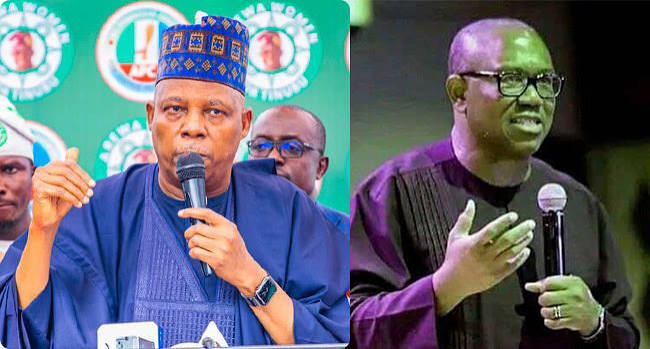
Nigerian politicians appear to be losing sight of what election campaigns should be about. Instead of presenting practical solutions to the country's problems, many have turned political rallies into opportunities to ridicule opponents, question their achievements and make statements designed to win applause from party supporters. This growing culture of personal attacks is doing little to help Nigerians understand what different political parties intend to do differently if given the opportunity to govern. The latest example is Vice-President Kashim Shettima's criticism of former Anambra State Governor, Peter Obi, over his business background and alleged importation of inexpensive South African wines.
Speaking at an All Progressives Congress (APC) political gathering in Akure, Ondo State, on November 11, 2026, Shettima reportedly argued that importing cheap South African wines does not make Obi an economics expert. He also criticised Obi's record as governor of Anambra State. While Shettima has every right to question Obi's economic credentials and record in public office, the question is whether making fun of legitimate business activities is the best way to do so.
Nigerians are not looking for politicians who can entertain crowds with insults. They want leaders who can explain how they intend to improve the economy, create jobs, reduce poverty, provide reliable electricity and make life more affordable. There is a difference between criticising someone's economic policies and ridiculing the legitimate business through which that person earns a living.
Shettima's Wine Jibe and Peter Obi's Business Record
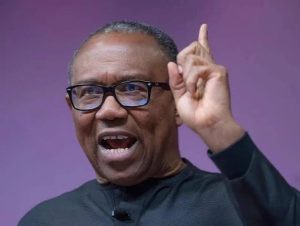
The question Nigerians should be asking is simple: When did running a legitimate business become a weakness or something to ridicule in Nigerian politics? Unfortunately, some of the comments coming from APC leaders appear to reflect a growing preference for personal attacks over meaningful political debate. This is not the first time Peter Obi has been subjected to such remarks. On another occasion, the Edo State Governor, Monday Okpebholo, reportedly described Obi as a political newcomer after the former Anambra governor responded "Amen" to a prayer he offered at a public function. One cannot help but wonder when political disagreements became an excuse for such unnecessary personal remarks.
Peter Obi was an established businessman long before entering public office as governor of Anambra State. Through Next International (Nigeria) Limited and other business interests, he gained experience in commerce, investment and the distribution of consumer products. He also held leadership positions in corporate organisations, including Fidelity Bank Plc and Chams Nigeria Plc. Of course, having a successful business career does not automatically make anyone the right person to manage Nigeria's economy. Running a private business and governing a country are two different responsibilities. However, Obi's business experience is part of his professional record and should be assessed on its merits, not turned into an object of political ridicule.
If Shettima believes Obi lacks the economic knowledge required to govern Nigeria, he should explain why. He should point out the weaknesses in Obi's economic proposals, challenge his policy positions and demonstrate how the Tinubu administration's approach offers better solutions. That is the kind of debate Nigerians deserve. More importantly, what exactly is wrong with importing products through legitimate international trade? Importation is a recognised part of global commerce. It supports businesses, creates employment and provides opportunities across transportation, warehousing, distribution and retail. The real challenge for Nigeria is to strengthen local manufacturing, encourage agricultural processing, support exporters and create an environment where locally produced goods can compete favourably with imported products. That is how serious governments promote economic growth.
You do not discourage legitimate businesses or make entrepreneurs the subject of political jokes simply because they belong to an opposing political camp. At a time when Nigerian businesses are battling high operating costs, unreliable electricity, multiple taxes and limited access to finance, political leaders should be encouraging enterprise, investment and wealth creation. Nigerians need a political culture that celebrates productivity and challenges policies with facts, not one that turns legitimate business activities into weapons of political ridicule.
Tinubu's financial history also deserves public scrutiny
Interestingly, Shettima's remarks raise another question: should the professional and financial backgrounds of political leaders be examined using the same standard? President Bola Ahmed Tinubu's professional background includes his work as an accountant and his employment with Mobil Oil Nigeria, where he served in a senior financial position before entering politics. However, his financial history also includes a controversial matter that has remained in public discussion for decades.
The Alpha Beta controversy and Lagos revenue collection
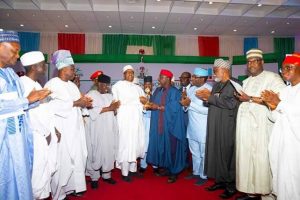
Tinubu's eight years as governor of Lagos State, from 1999 to 2007, also deserve examination, particularly the state's relationship with private revenue collection consultants. One company that has repeatedly featured in this discussion is Alpha Beta Consulting. The company became involved in Lagos State's revenue collection and monitoring arrangements during Tinubu's administration. Supporters of the arrangement have pointed to the improvement in the state's internally generated revenue as evidence of successful reforms. However, questions have also been raised about the transparency of the arrangement, the commissions paid to private consultants and the extent of political influence over the system.
In 2020, Oladapo Apara, a former managing director of Alpha Beta, filed a lawsuit alleging financial irregularities and secret beneficial interests involving the company and Tinubu. These allegations attracted considerable public attention. The case was subsequently settled out of court in 2022. It is important to emphasise that the settlement did not establish the allegations as proven facts. Nevertheless, the controversy highlights the need for transparency in government contracts, especially where private companies are involved in collecting or managing public revenue. Lagos State's experience should provide an opportunity for a serious discussion about how governments can work with private businesses without compromising public accountability.
Nigerians are asking what happened to the benefits of subsidy removal
Beyond the exchange between Shettima and Obi, the more pressing issue is the condition of the Nigerian economy under the Tinubu administration. On May 29, 2023, President Tinubu announced the removal of the petrol subsidy. The government defended the decision as necessary to reduce pressure on public finances and free resources for development. Although the policy had been debated for years, its implementation placed considerable pressure on households and businesses. Transport fares increased, food distribution became more expensive and many small businesses found it increasingly difficult to survive. The government has repeatedly argued that subsidy removal has created additional financial resources for the federation.

Nigeria's growing debt requires answers
Another issue that cannot be ignored is the country's rising public debt. According to the Debt Management Office, Nigeria's total public debt stood at approximately ₦166.79 trillion, equivalent to $120.93 billion, as of June 30, 2026. This figure covers the Federal Government, state governments and the Federal Capital Territory. It should therefore not be presented as debt accumulated exclusively under Tinubu's administration. However, the current government must explain its borrowing decisions and demonstrate what Nigerians are getting in return. Borrowing is not necessarily bad. Governments borrow to finance infrastructure, support economic development and expand productive capacity. The problem arises when debt continues to increase without corresponding improvements in the economy.
Nigerians want to see the benefits of public borrowing in their communities. They want functioning hospitals, properly equipped schools, reliable electricity, good roads and opportunities for young people to earn a decent living. They also want to know how much of the country's revenue is going towards debt servicing and how much remains available for development. These are legitimate questions that should form part of every serious political campaign. What happened to the 24-hour electricity promise? Electricity remains one of the biggest challenges facing Nigerian businesses and households.
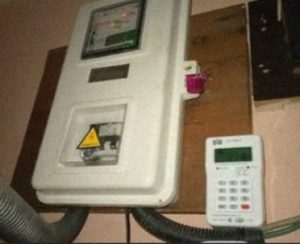
During his administration, President Tinubu reiterated the ambition of achieving 24-hour electricity supply. That is an important objective, but Nigerians should be allowed to measure the government against its promises. Many manufacturers still depend on expensive alternative power sources. Small businesses spend a substantial part of their earnings on fuel and generators, while households continue to struggle with unreliable electricity. The Electricity Act 2023 and subsequent government reforms have opened new opportunities for electricity generation and distribution. However, the real test is whether these changes will translate into dependable and affordable power for ordinary Nigerians. A country cannot build a strong manufacturing sector when businesses are forced to spend so much money providing their own electricity. The government should therefore provide clear information about improvements in generation, transmission and distribution, as well as realistic timelines for delivering more reliable electricity.
Nigerians deserve a better political conversation
The 2027 general elections are approaching, and political parties are already positioning themselves for the contest. This is the time Nigerians should be hearing serious discussions about economic recovery, job creation, education, healthcare, security, agriculture, industrial development and the cost of living. Peter Obi should be questioned about his economic proposals and his record as governor. President Tinubu should equally be questioned about his policies and performance. Other political leaders should face the same scrutiny. No politician should be above criticism, but criticism should be based on facts, evidence and policy differences. Shettima's remarks may have entertained some supporters, but they have also provided an opportunity to revisit more important questions about business, leadership and accountability.