
skydnews70@gmail.com
C35 Kobi Street, P. O. Box 1867, Bauchi 740001, Bauchi State - NIGERIA.
SkyDNews Logo

SkyDNews Network

Marriage Without Intimacy: When Sexual Rejection, Infidelity and Emotional Double Standards Threaten the Union

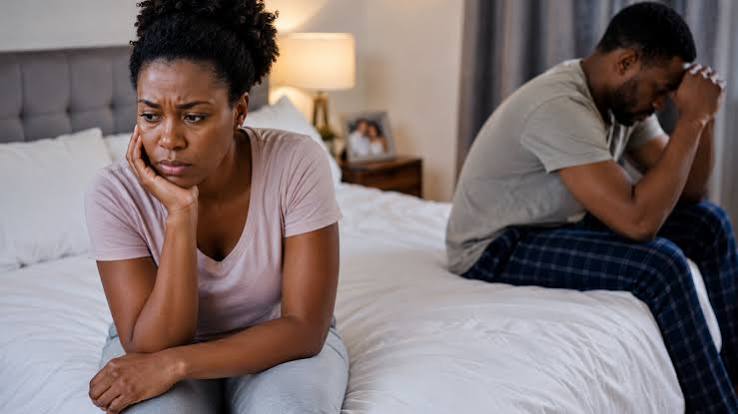
Sexual rejection in marriage illustrated by an African couple experiencing emotional distance and marital challenges.

SEXUAL REJECTION IN MARRIAGE | SKYDNEWS REPORT | RELATIONSHIPS | MARRIAGE | HUMAN BEHAVIOUR | OPINION

Sexual rejection in marriage is an increasingly difficult subject that many couples struggle to discuss openly. While marriage involves companionship, trust, shared responsibilities and emotional support, sexual intimacy remains an important aspect of marital relationships. What happens when one partner repeatedly rejects the other's attempts at intimacy but continues to demand absolute fidelity? Can a marriage remain healthy when sexual incompatibility, emotional neglect and unresolved frustrations become permanent features of the relationship? Does prolonged sexual frustration justify seeking satisfaction outside marriage?

There are certain contradictions in human relationships that deserve more attention than they receive. One of them is the tendency of some people to demand from others what they are unwilling to reciprocate. They want loyalty but struggle to demonstrate consideration. They demand attention but are often unavailable when their partners need it. They expect understanding, patience, sacrifice and commitment, yet may show little willingness to extend the same courtesies to the people from whom they demand these things. This contradiction becomes particularly troubling in marriage, where love, companionship, sexual intimacy, emotional security, personal freedom and fidelity are expected to coexist.

Consider a married man whose job requires him to live approximately 200 kilometres away from his family. Despite the demands of his work, he makes deliberate efforts to visit his wife and children, sometimes sacrificing valuable weekends to maintain family relationships and fulfil his responsibilities as a husband and father. For him, these visits are not merely opportunities to see his children or spend time at home. They are also opportunities to reconnect with his wife, enjoy companionship, demonstrate affection and experience the sexual intimacy that forms part of their marital relationship. Unfortunately, each visit seems to follow a familiar pattern. His wife is either sick, tired, uninterested, not in the mood or simply unwilling to engage in sexual intimacy. Sometimes she says she does not enjoy sex. On other occasions, she offers explanations that leave him feeling unwanted and rejected. The husband returns to his place of work disappointed and emotionally dissatisfied. His attempts to discuss the matter, explain his feelings and appeal for a better understanding of his needs produce little or no meaningful change. The situation continues, sometimes for months or years. What should such a man do? Should he continue travelling back and forth, suppressing his feelings and pretending that everything is fine? Should he accept that sexual intimacy is no longer an important part of his marriage? Should he seek counselling, reconsider the arrangement or, in desperation, seek sexual satisfaction elsewhere? These are uncomfortable questions, but they are real questions that deserve honest examination.


And importantly, this is not exclusively a woman's problem. Men can equally deprive their wives of sexual intimacy, affection and companionship while expecting them to remain faithful and emotionally available. The real issue is not gender. It is the growing problem of emotional and sexual double standards in marriage.


Sexual Rejection in Marriage: Why Intimacy Matters

One argument frequently advanced whenever marital sexual dissatisfaction is discussed is that marriage is not all about sex. That is absolutely true. Marriage is more than sex, but sex is not an irrelevant part of marriage. Marriage involves companionship, friendship, shared responsibilities, parenting, financial cooperation, emotional support, trust, mutual respect and the building of a common future. However, saying that marriage is not all about sex should not be interpreted to mean that sex is unimportant. For many couples, sexual intimacy is a significant expression of love, affection, attraction and emotional connection. It can strengthen the feeling of belonging, reinforce marital attachment and provide a form of closeness that other dimensions of companionship may not entirely replace. Sexual intimacy is therefore not simply a biological activity. For many married people, it carries emotional and psychological significance. A husband who wants sexual intimacy with his wife may not necessarily be pursuing physical gratification alone. He may also want to feel desired, accepted, appreciated and connected to the woman with whom he has chosen to share his life. The same applies to a wife who desires intimacy with her husband. This is why persistent sexual rejection can become more painful than the absence of intercourse itself. It can gradually communicate, whether intentionally or otherwise, that one partner's affection, desire and emotional needs are no longer welcome. There is, however, an important qualification: people have different sexual constitutions. Some have high sexual desire, others have low desire, and some experience little or no sexual attraction. These differences do not automatically make anyone unsuitable for marriage. The problem is failing to acknowledge such differences, concealing them before marriage or refusing to address their consequences after marriage. If sexual intimacy is an important expectation for one prospective spouse, while the other knows that they have little interest in sex, the issue deserves an honest conversation before marriage. It is unfair to create expectations that one has no intention of making an effort to accommodate, just as it is unfair to assume that marriage gives one an unconditional entitlement to another person's body.

Sexual rejection in marriage illustrated by an African couple experiencing emotional distance and marital challenges.

Sexual Rejection in Marriage and the Challenges of Long-Distance Couples

Geographical separation introduces another layer of difficulty. A man who works 200 kilometres away from his family may already be making considerable sacrifices to sustain the household. He may contend with transportation costs, demanding working hours, professional pressures and the emotional burden of living apart from his wife and children. His weekends at home may be among the few opportunities he has to experience normal family life. Unlike couples who see each other every day, such a husband may have limited opportunities for physical affection, private conversations, romantic companionship and sexual intimacy. When his wife repeatedly rejects his attempts at intimacy, the disappointment may become particularly acute. He may begin to wonder whether his absence has affected his wife's attraction to him, whether she has become emotionally disconnected or whether there are unresolved issues she is unwilling to discuss. He may also begin to question the purpose of his sacrifices. After all, if he makes the effort to travel home, only to experience repeated rejection and emotional distance, what is happening to the marital relationship he is trying to preserve? It is important not to assume that the wife is deliberately frustrating him. She may genuinely be unwell, exhausted, overwhelmed by childcare, emotionally disconnected or experiencing a medical condition that affects her sexual desire. But if the situation is persistent, the couple needs to confront it. The husband should be able to explain that he feels rejected without being accused of being insensitive or obsessed with sex. The wife should equally be able to explain her lack of desire without being pressured or treated as though she has committed an offence. The objective should be to understand the problem and find a mutually acceptable way forward. A marriage cannot thrive when one partner continually raises a legitimate concern and the other refuses even to discuss it.

When Sexual Rejection Becomes a Persistent Marital Problem

There is always a problem in marriage when "I Am Not in the Mood" becomes a permanent explanation. Nobody should be expected to be sexually available every time a spouse requests intimacy. There are days when people are tired, stressed, sick, emotionally unsettled or simply uninterested. These are normal human experiences. The difficulty arises when temporary explanations become a permanent feature of the relationship and no effort is made to understand why. If a wife repeatedly says she is tired, the couple should examine whether household responsibilities are overwhelming her. If she says she is sick, appropriate medical attention may be necessary. If she says she does not enjoy sex, there may be physical discomfort, psychological barriers, past experiences, hormonal factors, relationship dissatisfaction or a naturally low level of sexual desire. If she says she is no longer interested in her husband, that is a more serious relationship issue requiring honest discussion. What is unacceptable is using these explanations to shut down every conversation while expecting the other spouse to behave as though the problem does not exist. There is a difference between refusing sex and refusing to address a marital problem. The first is an exercise of bodily autonomy. The second can amount to emotional neglect, particularly when it forms part of a persistent pattern of indifference to the other partner's feelings. Sex should never be demanded as payment for financial provision, transportation, household responsibilities or marital status. Equally, a spouse should not be expected to remain permanently silent about the emotional consequences of an unresolved sexual incompatibility.


Sexual rejection in marriage illustrated by an African couple experiencing emotional distance and marital challenges.  

The Other Side of the Story: When Someone Claims Not to Like Sex but Has Affairs Elsewhere

An even more troubling situation arises when a married person consistently tells their spouse that they have little or no interest in sex but is reportedly sexually active with other people. Imagine a woman who tells her husband that she does not enjoy sexual intercourse. She makes intimacy with him difficult, sometimes allowing it only after considerable persuasion or repeated appeals. Yet, according to the circumstances being described, she is sexually involved with some of her colleagues at work. She has had children with her husband, but maintaining a sexual relationship with him remains a constant struggle. This situation raises a different set of questions. If she genuinely has no interest in sex, why does that lack of interest appear not to extend to other sexual partners? If she is capable of sexual intimacy with colleagues, why is intimacy with her husband consistently resisted? Is the issue really an absence of sexual desire, or is it a lack of sexual attraction to the husband? Could there be resentment, dissatisfaction, emotional disconnection or another underlying problem within the marriage? Or is the individual simply maintaining a double life while expecting the spouse to remain faithful? These questions must be approached carefully because allegations of infidelity should not be treated as established facts without evidence. Nevertheless, where such conduct is established, it reveals a fundamental problem that goes beyond sexual incompatibility. It becomes an issue of honesty, betrayal and the unequal application of marital expectations. A person cannot reasonably claim that sexual intimacy is undesirable while simultaneously pursuing it outside the marriage, and then expect the spouse to accept the explanation without question. The issue is not that the person owes their spouse sex. The issue is that deception and extramarital affairs violate the trust on which the marriage is built. There is also a significant difference between not desiring sex generally and not desiring sex with a particular partner. The latter may indicate that something in the relationship has broken down, although it does not, by itself, establish infidelity. Either way, honesty is indispensable.

Sexual rejection in marriage illustrated by an African couple experiencing emotional distance and marital challenges.  

Is Sexual Intimacy One of the Reasons People Get Married?

This is a question that deserves a straightforward answer: yes, for many people, sexual intimacy is one of the reasons they choose marriage. People marry for different reasons. Some place greater emphasis on companionship, others on building a family, religious convictions, emotional security, shared aspirations or social and cultural expectations. For many, however, sexual compatibility and the prospect of an exclusive sexual relationship are significant considerations. It would therefore be unrealistic to pretend that sex has no place in the decision to marry. A prospective husband may expect to enjoy a mutually satisfying sexual relationship with his wife. A prospective wife may have similar expectations of her husband. These expectations are not inherently unreasonable. However, sexual expectations should be discussed honestly before marriage. People should not enter marital relationships with fundamentally different expectations about intimacy and then assume that love alone will automatically resolve every incompatibility. The more difficult question is what happens when sexual desire changes after marriage. Pregnancy, childbirth, ageing, illness, medication, depression, stress, trauma and marital conflicts can all affect sexual desire. Sometimes, a person who previously enjoyed sex may gradually lose interest. Marriage must have room for these realities. The obligation is not to guarantee a particular frequency of sexual intercourse. It is to approach the issue with honesty, compassion and a willingness to work together. A person who knows that they have no interest in sexual intimacy should be honest about that before entering a marriage with someone who considers it essential. And where circumstances change after marriage, both partners should be willing to discuss the implications.


Sexual Rejection in Marriage: What Should the Rejected Partner Do?


Let us return to the man who lives 200 kilometres away from his family. He has made sacrifices to visit his wife and children. He has repeatedly tried to address the absence of sexual intimacy. His wife consistently declines, and his efforts to discuss the situation have produced little progress. Eventually, he considers seeking sexual satisfaction from another woman. What should he be told? First, his frustration should not be dismissed. It is unreasonable to tell a husband that sexual intimacy should not matter to him simply because he is married. His desire for closeness, affection and sexual fulfilment deserves to be heard. He should not be made to feel ashamed for wanting intimacy with his wife. However, he must also recognise that frustration does not give him permission to violate the marriage agreement. Seeking another sexual partner may provide temporary physical satisfaction, but it can introduce further problems: deception, sexually transmitted infections, emotional complications, financial consequences, family breakdown and the possible exposure of children to marital conflict. It may also transform a problem that could have been addressed through honest communication into a much more damaging breach of trust. What, then, are his alternatives?


First, he should insist on an honest conversation, not sexual access. He needs to explain that the persistent absence of intimacy is affecting his emotional connection to the marriage. He should ask whether there is a physical, psychological or relational reason behind his wife's lack of interest. Second, he should encourage appropriate professional support. If there are medical or psychological concerns, they should be addressed with qualified professionals. If the problem is relational, couples counselling may help. Third, the couple should examine their living arrangement. Long-distance marriages require deliberate effort. They need to agree on how to maintain affection, communication, companionship and intimacy despite geographical separation. Fourth, he should establish boundaries and communicate the seriousness of the situation. He should explain that he cannot indefinitely remain in a marriage where a significant concern is consistently dismissed. This does not mean threatening his wife with another woman. It means making clear that the marriage requires attention and that he may eventually have to reconsider its future. Finally, if reconciliation proves impossible, he should consider separation or divorce rather than maintaining a secret extramarital relationship. The same advice applies to a sexually neglected wife. A person's marital dissatisfaction deserves attention, but infidelity is not the only available response.

Sexual rejection in marriage illustrated by an African couple experiencing emotional distance and marital challenges.  

When Sexual Deprivation Becomes a Weapon of Control

There is another dimension of this subject that should not be ignored: the deliberate use of sexual intimacy as an instrument of control. In some marriages, affection and intimacy become bargaining tools. A disagreement occurs, and one partner withdraws affection. An argument develops, and sexual intimacy becomes unavailable. A spouse refuses to comply with a particular demand, and the other partner responds by withholding companionship or physical affection. Over time, this can create an unhealthy power structure in which one person determines when the relationship will experience warmth and when the other must endure emotional distance. This should not be confused with a person exercising the right to refuse sex. A spouse may genuinely be uninterested in sexual intimacy, and that decision must be respected. But deliberately using intimacy to punish, humiliate or manipulate a partner is a different matter. It is equally important to recognise that not every instance of sexual rejection is punishment. A person may withdraw because of unresolved conflict, emotional hurt, exhaustion or a loss of attraction. The distinction lies in the underlying circumstances, the pattern of behaviour and the willingness to communicate. Healthy marriage requires that both partners be free to express their boundaries without turning those boundaries into instruments of domination.


Emotional Double Standards: Wanting What You Are Unwilling to Give

The problem becomes particularly disturbing when a spouse demands absolute loyalty while showing little concern for the other person's emotional well-being. Some people want to be loved more than they want to love. They want attention but are emotionally unavailable. They demand patience but have little patience to offer. They expect forgiveness but struggle to forgive. They insist on fidelity but may be unwilling to confront the problems affecting their partners. In the sexual dimension of marriage, this can manifest as one partner insisting that the other remain exclusively committed while refusing to acknowledge that the absence of intimacy is creating serious dissatisfaction. This is an emotional double standard. However, the same double standard can operate in reverse. A husband who expects his wife to be sexually available whenever he wants, regardless of her physical or emotional condition, is equally demonstrating entitlement. A man who neglects his wife's sexual needs, dismisses her requests for affection and companionship, yet becomes angry when she expresses dissatisfaction is also guilty of inconsistency. The issue is not whether men or women are more responsible for sexual problems in marriage. The issue is whether both partners recognise that the other person has legitimate feelings and expectations.

Sexual rejection in marriage illustrated by an African couple experiencing emotional distance and marital challenges.  

Sexual Rejection in Marriage Is Not Exclusively a Women's Issue


For fairness, this discussion must examine the other side. There are marriages in which wives complain that their husbands rarely initiate intimacy. Some men become emotionally distant, prioritise work or other activities, struggle with sexual dysfunction, experience depression or simply lose interest in sex. Others may be sexually active outside their marriages while showing little interest in their wives. Imagine a woman who spends months trying to reconnect with her husband, only to be repeatedly rejected. She wants affection, intimacy and reassurance, but he continually finds reasons to avoid her. If she complains, he dismisses her concerns. If she becomes frustrated, he accuses her of being demanding. Yet he expects her to remain faithful and unquestioningly committed. Would this be acceptable? Certainly not. The same principles must apply regardless of gender. A husband cannot reasonably demand sexual loyalty while treating his wife's desire for intimacy as irrelevant. Neither can a wife demand fidelity while consistently dismissing her husband's concerns. Sexual neglect, emotional unavailability and refusal to communicate are not exclusively male or female behaviours. They are relationship problems.

Why Some People Want to Be Loved More Than They Want to Love


Perhaps the most revealing question in this entire discussion is why some individuals appear to be more interested in receiving love than in demonstrating it. They want to be celebrated, appreciated, desired, protected and prioritised. They want their partners to make sacrifices, tolerate their shortcomings and remain committed through difficult circumstances. Yet when the opportunity arises to reciprocate, they may become uncomfortable. They want their partners to understand their moods but refuse to understand their partners' frustrations. They expect patience but have little patience to offer. They want loyalty but may not appreciate the emotional responsibilities that accompany it. This behaviour can arise from emotional immaturity, insecurity, unresolved resentment, poor communication, upbringing or an inability to empathise with another person's experience. Sometimes, it is also a manifestation of entitlement. The individual assumes that their own feelings deserve priority while the partner's feelings are secondary. But love cannot be sustained through a permanent arrangement in which one person is the receiver and the other is expected to be the giver. A healthy relationship requires reciprocity, although reciprocity does not mean that both people must contribute exactly the same things in exactly the same proportions. There will be periods when one partner needs more support than the other. Illness, pregnancy, unemployment, bereavement and other life circumstances can temporarily alter the balance. The important thing is that both partners remain committed to the relationship and recognise each other's humanity.

Marriage Is Partnership, Not Ownership


Marriage does not give either spouse ownership of the other's body, emotions, ambitions or personal identity. A husband does not own his wife because he married her. A wife does not own her husband because she bears his name or shares his home. Sexual consent remains necessary throughout marriage. At the same time, marriage is not simply a legal or cultural arrangement in which two people live together while ignoring each other's expectations. It is a partnership involving negotiated responsibilities, mutual commitments and respect for individual boundaries. Sexual intimacy is one component of that partnership, but it is not the only one. Emotional companionship, financial responsibility, friendship, parenting, trust, shared aspirations and mutual support are equally important dimensions. A healthy marriage should provide room for difficult conversations about sexual incompatibility, changing desires, health challenges, emotional distance and unmet expectations. It should also provide an environment in which neither partner is afraid to express dissatisfaction. Where communication repeatedly fails, professional counselling may be necessary. Where there is coercion, intimidation or abuse, the priority must be safety and appropriate support.

The Need for Honesty Before and During Marriage


One important lesson from these situations is that people need to be more honest about their expectations before marriage. If sexual intimacy is a major consideration for someone, that expectation should not be treated as embarrassing or unimportant. Prospective couples should be able to discuss their attitudes towards sex, frequency of intimacy, sexual compatibility, fidelity, children, health and other issues that may affect their future relationship. Someone who has little or no interest in sex should be able to communicate that honestly. Someone who considers an active sexual relationship essential to marriage should equally be able to express that expectation. Neither person should be deceived into a marriage based on assumptions that are fundamentally different from reality. However, honesty before marriage does not eliminate the possibility of change. Sexual desire can change throughout life, and couples must be prepared to navigate those changes together. The real test is not whether a spouse can maintain the same level of sexual interest throughout the marriage. It is whether both partners can approach changes with honesty, understanding and a willingness to seek solutions.


Sexual rejection in marriage illustrated by an African couple experiencing emotional distance and marital challenges.


You Cannot Demand What You Consistently Refuse to Practise


Marriage should not become an institution where one partner enjoys the privileges of companionship, loyalty, emotional support and exclusivity while treating the other partner's needs as optional. Neither should it become an arrangement where sexual needs are used to justify coercion, manipulation or infidelity. Both partners have the right to say no to sex. Both also have the right to express dissatisfaction with a relationship that no longer meets their emotional and intimate expectations. A husband should not be expected to pretend that prolonged sexual rejection does not affect him. A wife should not be pressured into intimacy to satisfy a husband's expectations. Both should be able to discuss their concerns without humiliation or intimidation. Where the problem persists, both must be willing to confront it. If they cannot resolve it, they must be honest about the future of their marriage. The greatest danger is not necessarily that two people have different levels of sexual desire. It is that they become unwilling to acknowledge, understand or address those differences.

A marriage can survive periods of reduced intimacy. It can survive illness, distance, financial difficulties and other challenges. But it becomes increasingly difficult to sustain when one partner's concerns are repeatedly dismissed and meaningful communication disappears. You cannot consistently disregard another person's legitimate emotional needs while demanding that they remain perpetually sensitive to yours. That is not reciprocity. It is a double standard. And perhaps every married person, man or woman, should ask themselves three questions: Do I recognise my spouse's needs as being as important as mine? Am I willing to work towards a solution when my partner tells me that something in our marriage is hurting them? Do I want a faithful spouse, or am I also willing to be a considerate and emotionally available partner? Because marriage is not simply about having someone who belongs to you. It is about building a relationship in which two people continually choose to respect, understand and care for each other.

The real measure of marital commitment is not merely how much loyalty we demand, but how much honesty, consideration and responsibility we bring into the relationship.


Leave a Reply

Your email address will not be published. Required fields are marked *

Verified by ExactMetrics