As petrol prices squeeze households and transport costs rise, Nigerians must demand lasting economic relief, transparent policies and accountability for campaign promises, not temporary measures without clear guarantees beyond the election season.
Nigeria’s recurring political problem is not a shortage of promises. It is the widening gap between what politicians say to win public confidence and what citizens can verify after they have secured political power.
Every election season brings fresh assurances, attractive announcements and carefully timed gestures intended to persuade voters that relief is finally within reach. Yet, when citizens have spent years struggling with high living costs, unreliable electricity, expensive transportation and declining purchasing power, they have every reason to ask whether another announcement represents meaningful reform or merely temporary relief.
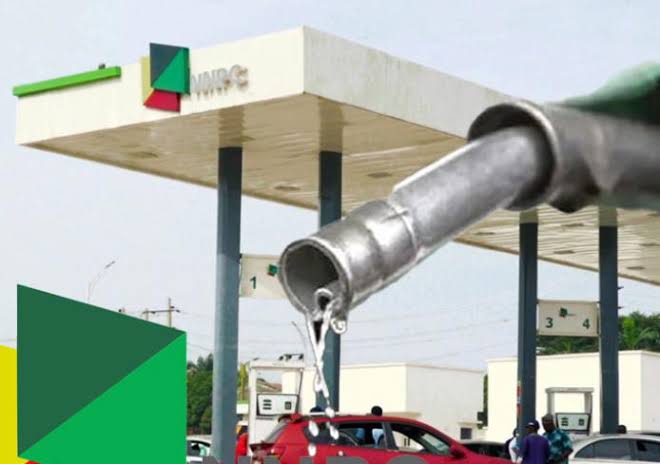
The Federal Government’s announcement on October 8, 2026, of a 30-day petrol discount at Nigerian National Petroleum Company Limited (NNPC) filling stations has therefore raised a question that deserves more than celebration: Why only 30 days?
Finance Minister and Coordinating Minister of the Economy Taiwo Oyedele announced that the government would offer petrol at cost through the arrangement for an initial 30-day period, with priority given to public transporters nationwide. He said the measure was not a return to fuel subsidy. The government also outlined a proposed ₦1,350-per-litre ceiling on petrol’s ex-gantry or landing cost as part of a broader price-stabilisation approach. The exact consumer benefit and the practical details of implementation remain important questions.
The announcement was reported by Channels Television, TheCable and The Guardian on October 8, 2026.
Thirty Days of Relief, Then What?
For millions of Nigerians, petrol prices are not an abstract economic statistic. They affect the cost of getting to work, transporting food to markets, taking children to school, accessing medical care and keeping small businesses operational.
When transport operators pay more for fuel, passengers frequently feel the consequences through higher fares. Traders face increased distribution costs, while households already struggling with food prices must stretch their incomes further.
A reduction in petrol costs, even for a limited period, could provide some relief. Public accountability does not require dismissing every government intervention simply because it is temporary. However, it requires asking whether the intervention is adequate, transparent and sustainable.
Why is the discount limited to 30 days in the first instance? What specific reduction will consumers receive? How will the government ensure that transport operators pass the savings on to passengers rather than retaining the entire benefit? Which NNPC stations will participate, and how will the public know whether the arrangement is working?
Most importantly, what happens when the initial period expires?
Will the government publish an assessment of the intervention and explain whether it will continue, change or end? Will commuters face another round of rising transport fares after adjusting their household budgets to the temporary relief?
These are not unreasonable questions. They are the minimum questions citizens should ask whenever public policy directly affects their livelihoods.
The minister's use of the phrase “in the first instance” leaves open the possibility of an extension, but that is not the same as a guarantee of continued relief. Nigerians deserve clarity on the policy's duration, eligibility, implementation and measurable results.
When Temporary Relief Becomes a Political Opportunity
The timing of economic announcements can influence how the public interprets them, particularly when political competition is intensifying.
However, timing alone does not prove that a policy was introduced to win votes. The proper test is whether the intervention addresses an identified economic problem through a credible plan, whether its benefits can be measured and whether the government is prepared to account for the results.
A temporary discount becomes a legitimate subject of political scrutiny when citizens are encouraged to celebrate the immediate gesture without being given sufficient information about its long-term implications.
The danger is that a population under severe economic pressure may understandably welcome any reduction in the cost of living while overlooking the larger questions of policy design and accountability.
When people are struggling to feed their families, even a small saving matters. That is precisely why economic relief should not be treated as a favour bestowed on grateful citizens. It should be assessed as public policy, with its benefits, costs, limitations and alternatives open to scrutiny.
Nigerians do not need to reject temporary relief. They need to insist that temporary relief must not become a substitute for durable economic solutions.
The Electricity Promise and the Solar Question
The fuel announcement also brings renewed attention to an earlier and much more consequential promise concerning electricity.
During his 2023 presidential campaign, Bola Ahmed Tinubu made a public commitment to improve electricity supply. He declared that Nigerians should have electricity and linked his promise to whether voters should return him for a second term if he failed to deliver, unless he could provide adequate reasons for the shortfall.
That statement has since become a point of political scrutiny as the country continues to grapple with unreliable electricity.
In February 2026, former presidential candidate Peter Obi criticised the administration over the gap between the electricity pledge and the country's continuing power challenges. In April, Punch reported on the Presidency's plan for a ₦10 billion solar power project at the Presidential Villa, while other reports raised questions about the Villa's relationship with the national grid.
Solar power is not itself evidence of wrongdoing. Indeed, renewable energy can improve reliability, reduce dependence on diesel generators and provide a useful model for other public institutions.
The accountability question is different: If the seat of national power requires a substantial alternative electricity arrangement to secure reliable supply, what does that tell Nigerians about the progress of the broader electricity promise?
What measurable improvements have ordinary households, hospitals, schools, small businesses and industries experienced? What has been achieved against the original targets? What explains any shortfall, and what remains to be done before the end of the administration's first term?
The government's position and its explanations deserve examination alongside the evidence of actual delivery. The public should not have to rely exclusively on campaign speeches or opposition criticism to understand whether progress has been made.
A solar installation at the Presidency may solve an immediate operational problem. It does not, by itself, establish that the wider national electricity challenge has been resolved.
Nor should an earlier campaign promise disappear from public discussion simply because a new policy announcement has taken centre stage.
Have Nigerians Become Too Easily Satisfied?
It is tempting to blame voters whenever politicians make promises that later attract scrutiny. But describing Nigerians as gullible without examining the conditions in which they make political choices offers an incomplete explanation.
Poverty, insecurity, limited access to reliable information, political patronage, misinformation and the immediate pressure to survive can all influence how citizens evaluate political offers. Political communication can also encourage people to focus on visible short-term gestures rather than complicated questions about policy outcomes.
These factors do not remove voters' responsibility to scrutinise public officials. They make access to reliable information and sustained civic education even more important.
The real concern is a political culture in which an announcement can generate excitement before the public knows the actual value of the benefit, who qualifies, how long it will last or what evidence will establish its success.
Citizens should be able to distinguish between a promise, an announcement, a budgetary allocation, a completed project and a measurable improvement in their lives. These are not interchangeable achievements.
A government announcing a programme has not necessarily implemented it. A programme being implemented has not automatically demonstrated success. And a temporary reduction in costs does not, on its own, establish that the underlying economic problem has been solved.
The media, civil society organisations, professional associations and citizens must help maintain these distinctions.
What Should Nigerians Do?
The answer is not to respond to every political announcement with automatic rejection. It is to demand evidence, compare promises with results and make informed decisions at the ballot box.
First, citizens should ask for the details of the 30-day petrol arrangement. What is the actual discount? How will public transporters be identified and prioritised? What safeguards will ensure that the intended beneficiaries receive the benefit? How will the government measure the effect on transport fares and household expenses?
Second, Nigerians should insist on regular public reporting. If the arrangement is intended to cushion the effects of rising petrol prices, the government should explain the outcome at the end of the initial period and account for any decision to extend or discontinue it.
Third, voters should maintain a record of campaign commitments. The electricity pledge should be assessed against documented progress, just as promises concerning jobs, security, infrastructure, education and the cost of living should be examined against verifiable outcomes.
Fourth, political parties and candidates should be challenged to explain how their proposed policies will work beyond the immediate campaign period. Voters deserve details about funding, implementation, timelines, responsible institutions and measurable targets.
Finally, citizens should resist the temptation to exchange long-term accountability for short-term political gratification. A policy should be judged by what it delivers, not merely by the excitement surrounding its announcement.
Are We Beggars in Our Own Country?
This is the question that should trouble every Nigerian who has watched the cost of living rise while political promises continue to multiply.
Are citizens expected to celebrate temporary relief without asking what happens next? Must every modest intervention be treated as a personal gift from political leaders rather than a policy that should be scrutinised in the public interest?
Nigerians are not beggars waiting for political crumbs. They are citizens entitled to demand competent administration, transparent spending, reliable public services and economic policies that respond to their needs.
That does not mean every government intervention must be permanent or that every campaign promise can be fulfilled immediately. Economic conditions change, implementation can encounter genuine obstacles, and governments must sometimes revise their plans. But these realities make transparency and accountability more necessary, not less.
If the government believes a 30-day petrol discount is the right response to the current pressure on households and transport operators, it should explain the rationale, publish the implementation details and report the results. If an earlier electricity promise has not been fully achieved, the administration should provide a clear account of progress, obstacles and remaining commitments.
The public should not be required to choose between accepting every official announcement and dismissing every government action. Citizens can acknowledge immediate relief while demanding more durable solutions.
The Ballot Must Be More Than a Reward for Promises
The approaching election cycle offers Nigerians an opportunity to reconsider how political performance is evaluated.
A politician should not receive public confidence simply because a new promise sounds attractive. Nor should a government escape scrutiny because it announces a temporary measure during a period of economic hardship.
The relevant questions are straightforward: What was promised? What has been delivered? Who has benefited? What remains unfinished? What evidence supports the government's claims? And what credible plan exists for the future?
These questions should apply regardless of party, personality or political affiliation.
The public must also recognise that democratic accountability does not end on election day. It continues through journalism, legislative scrutiny, civic participation, access to public information and citizens' willingness to demand explanations between elections.
A 30-day petrol discount may offer a measure of relief. But it cannot, by itself, answer the larger questions surrounding fuel affordability, transport costs, electricity supply and the credibility of political promises.
Nigerians deserve relief that can be measured, promises that can be tracked and leadership that can be held accountable.
The time has come to look beyond the announcement and examine the evidence. The question is not whether citizens should welcome a reduction in their expenses. Of course they should. The question is whether temporary relief will be accompanied by a credible plan for what comes next.
Until politicians are routinely required to account for both their promises and their results, the cycle of announcements, excitement and renewed disappointment will remain difficult to break.
Let us stop treating promises as achievements. Nigerians deserve the whole loaf, not because they should expect miracles, but because public office carries obligations that extend far beyond the next election.
We use cookies to ensure that we give you the best experience on our website. If you continue to use this site we will assume that you are happy with it.