SkyDNews Editorial Desk | Monday, October 5, 2026
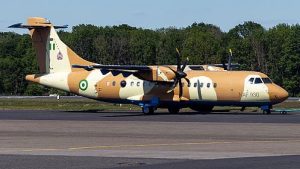
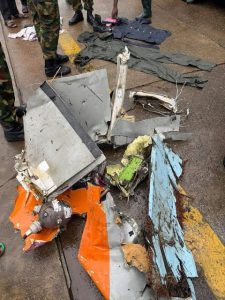
Nigeria woke on Monday, October 5, 2026, to another deeply disturbing aviation tragedy, after a Nigerian Air Force aircraft crashed around Igbokoda, headquarters of Ilaje Local Government Area of Ondo State.
For families who may have had loved ones on that aircraft, however, this is not merely another breaking-news headline. It is a question of life and death.
And Nigeria must ask the difficult questions.
Why did the aircraft disappear from communication? What happened between Benin and Lagos? Was the aircraft fully airworthy? What was its maintenance history? When was it last subjected to comprehensive inspection? Were there any outstanding technical defects? Were weather and operational conditions properly assessed? And, most importantly, could this tragedy have been prevented?
These questions cannot be buried beneath official statements, political distractions or the familiar promise that an investigation will be conducted.
What happened?
According to the Minister of Aviation and Aerospace Development, Festus Keyamo, Air Traffic Controllers informed him that a military aircraft with tail number NGR 931 had disappeared while travelling from Benin to Lagos.
The aircraft reportedly disappeared from contact at about 9:13 a.m.
Attempts to raise the aircraft by radio were unsuccessful.
Keyamo said preliminary information indicated that 25 passengers and seven crew members were on board.
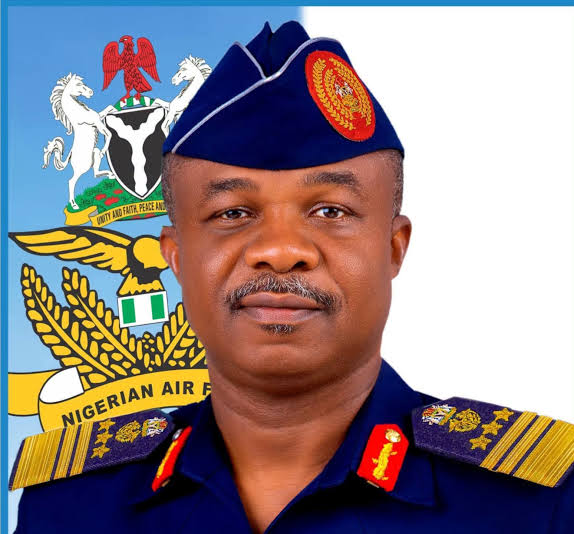
The minister also disclosed that he had spoken with the Chief of Air Staff, Air Marshal Sunday Kelvin Aneke, and pledged the cooperation and assistance of his ministry in the ongoing search-and-rescue operation.
The Ondo State Police Command also confirmed the crash.
Police spokesperson DSP Abayomi Jimoh said details surrounding the incident were still emerging and urged members of the public to avoid circulating unverified information.
That caution is appropriate.
At this stage, responsible journalism must not turn fears into confirmed casualty figures.
But responsible government must equally not turn an investigation into a bureaucratic ritual.
The tragedy raises questions beyond the crash site
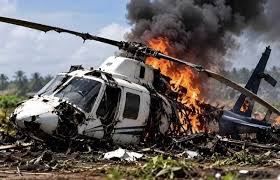
The immediate priority must, without question, be saving lives.
Every possible search-and-rescue resource should be deployed. Every available emergency response agency should be mobilised. Medical facilities must be placed on standby. Families of those on board deserve timely, accurate and humane information.
But once the immediate emergency response is secured, Nigerians deserve something more than condolences.
They deserve answers.
An aircraft carrying 32 people does not simply disappear from communication and crash without a chain of circumstances leading to the incident.
There will be technical questions.
There will be operational questions.
There will be maintenance questions.
There will be questions concerning weather, flight planning, crew readiness, aircraft history and airworthiness.
And there will ultimately be a question of accountability.
Nigerian lives must matter
This is where the Ministry of Aviation and Aerospace Development, and indeed the entire aviation regulatory architecture, must be challenged to demonstrate that Nigerian lives are worth more than political calculations.
That clarification is important.
The crashed aircraft is a military aircraft, and the Nigerian Air Force has the primary responsibility for its operation and military-aircraft safety regime.
But jurisdiction must never become an excuse for institutional indifference.
And where civilian aviation is concerned, the regulatory system must be uncompromising about the fundamental principle that no aircraft should be permitted to operate unless it satisfies the applicable safety and airworthiness requirements.
The same philosophy should inform every aviation operation in Nigeria.
Human life cannot be subordinated to schedules, contracts, political influence, institutional convenience or the desire to avoid embarrassment.
Politics must not consume government

There is another uncomfortable issue Nigerians must confront.
Nigeria is already moving towards the 2027 general elections.
Across the country, political activity is intensifying. Politicians are building alliances, government officials are attending political events, parties are repositioning themselves and public institutions are increasingly operating within an atmosphere saturated by partisan calculations.
There is nothing inherently wrong with political participation.
But there is everything wrong with allowing politics to distract public institutions from their constitutional, statutory and professional responsibilities.
A ministry is not a campaign office.
A regulatory agency is not a political mobilisation centre.
A government department exists first and foremost to protect the public interest.
The aviation sector is one area where political distraction can be particularly dangerous.
An aircraft does not care which political party a passenger supports.
A runway does not recognise party affiliation.
Mechanical failure does not distinguish between APC, PDP, Labour or any other political persuasion.
And death does not ask whether the victim voted for the government in power.
When an aircraft takes off, every passenger is simply a human being whose life has been entrusted to the aviation system.
That trust must never be compromised.
Was the aircraft airworthy?
This is perhaps one of the most important questions that must be answered.
Not because there is currently evidence that the aircraft was unairworthy, there is not enough verified information at the time of publication to make such a claim.
Rather, because every serious aircraft accident investigation must establish the aircraft's technical condition before the flight.
-
When was NGR 931 manufactured?
-
What is the aircraft's operational history?
-
When was its last major inspection?
-
When was its most recent scheduled maintenance conducted?
-
Were there outstanding defects or deferred maintenance items?
-
What was the aircraft's airworthiness status before departure?
-
What were the maintenance records showing?
-
Had the aircraft experienced previous technical problems?
-
What was the condition of its engines and critical flight systems?
-
Were the crew properly qualified and medically fit for the mission?
-
What were the weather conditions along the route?
-
Were there any warnings or anomalies before communication was lost?
-
What did air traffic-control records show?
-
What does the flight data reveal?
-
Was there any distress signal before the aircraft disappeared?
-
Did the crew report any technical difficulty?