
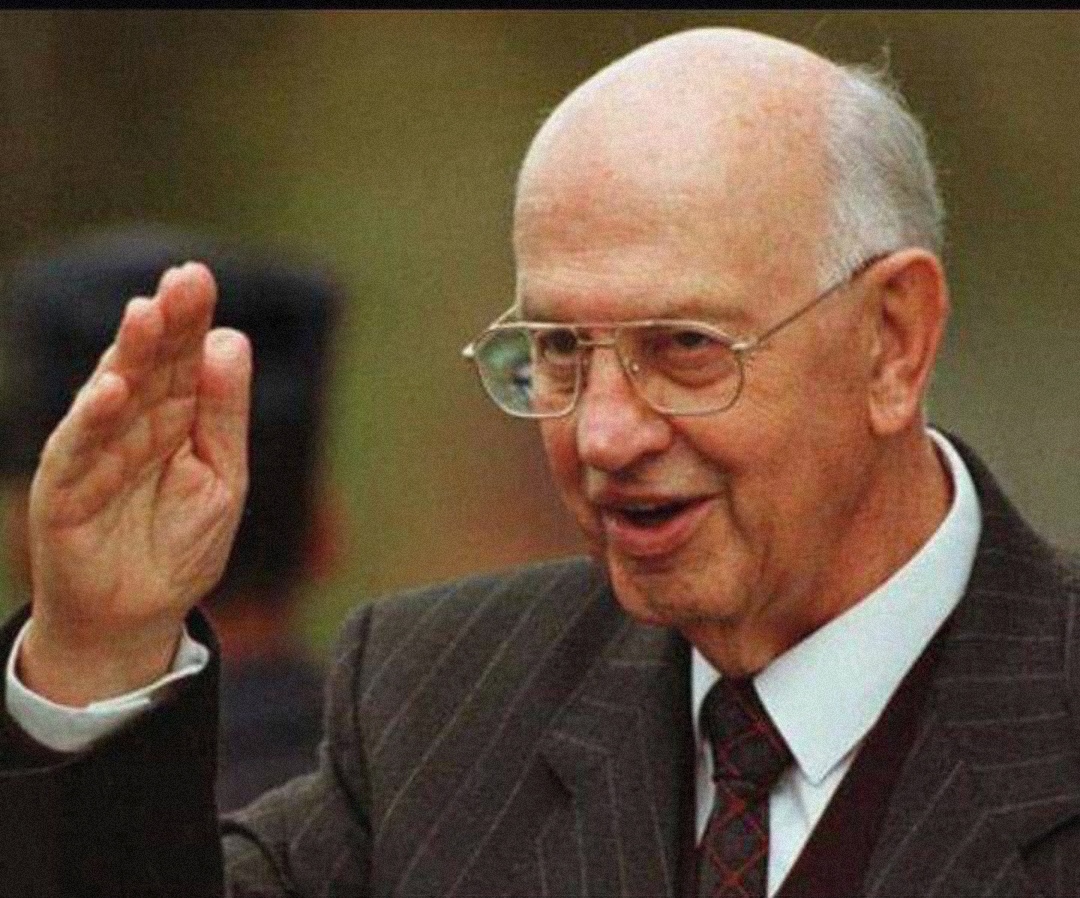
Africa democracy leadership has remained one of the most controversial political discussions on the continent since former South African leader P. W. Botha made his widely circulated 1988 statement questioning the ability of Black Africans to govern effectively.
Decades later, recurring issues such as corruption, tribalism, political instability, weak institutions, and economic hardship have caused many people to revisit his words. Yet Africa’s democratic story is far more complex than a single controversial prediction.
The controversial statement on Africa democracy leadership reportedly made in 1988 by former South African President P. W. Botha during the final years of apartheid in South Africa, claiming that Black Africans lacked the intellectual and institutional capacity for self-governance and predicting that independence and democracy across Africa would lead to corruption, tribalism, violence, and instability, continues to cast a long shadow over African political discourse decades later. The statement continues to circulate across social media, often accompanied by the claim that “37 years after, we have not been able to prove him wrong.”
The emotional weight of that conclusion is understandable, especially when one considers the many political crises, ethnic conflicts, corruption scandals, economic failures, military coups, and governance challenges that have affected several African countries since independence. However, reducing the story of an entire continent to a racist prediction from an apartheid leader is both historically dangerous and intellectually incomplete.
Africa democracy leadership journey is far more complex than a simplistic prophecy of failure. While there are undeniable governance failures across parts of the continent, there are also undeniable success stories that directly contradict the assumption that Africans are incapable of governing themselves. The truth lies somewhere between painful realities and overlooked progress.
Understanding the Context of Botha’s Statement
To understand the significance of the statement, one must first understand who P. W. Botha was and the system he represented. Botha was one of the major defenders of apartheid in South Africa, a brutal racial segregation system that denied Black South Africans political rights, land ownership, quality education, and economic participation. Apartheid itself was built upon the belief that Black people were inferior and incapable of self-rule.
The apartheid government justified racial oppression by portraying white minority rule as necessary for stability and development. Therefore, statements questioning Black leadership capacity were not neutral observations; they were ideological tools designed to defend an unjust political system. Yet, despite the racist origins of the statement, some Africans today believe subsequent events appear to validate parts of the prediction. Why? Because many African nations have indeed struggled with governance after independence.
The Difficult Reality Africa Cannot Ignore
Ignoring Africa’s governance problems would be dishonest. Since independence swept across Africa from the late 1950s through the 1970s, several countries have faced recurring cycles of:
- Corruption
- Tribal politics
- Electoral violence
- Weak institutions
- Military coups
- Economic mismanagement
- Nepotism
- Authoritarianism
- Civil wars
Examples are numerous.
In Nigeria, ethnic and regional tensions contributed to the devastating Biafran Civil War between 1967 and 1970. The war claimed millions of lives and exposed deep fractures within the post-colonial state.
In Rwanda, ethnic hatred between Hutus and Tutsis culminated in the 1994 genocide, where approximately 800,000 people were killed within 100 days, one of the darkest moments in modern African history.
In Somalia, state collapse led to decades of instability, warlordism, piracy, and humanitarian crises.
In Zimbabwe, economic collapse under long-term political mismanagement caused hyperinflation and mass unemployment.
In recent years, countries such as Mali, Burkina Faso, Niger, and Sudan have experienced military takeovers or violent political instability. Corruption has also deeply damaged public trust across the continent.
In several countries, public funds intended for healthcare, education, infrastructure, and poverty reduction have been diverted into private pockets while citizens suffer. For many frustrated Africans, these realities make Botha’s statement appear prophetic. But stopping the analysis there would ignore critical historical truths.
Colonialism Left Africa Structurally Weak
One major flaw in the “Botha was right” argument is that it often ignores the devastating institutional damage caused by colonialism itself. When European colonial powers partitioned Africa during the Berlin Conference of 1884 - 1885, borders were drawn arbitrarily, forcing rival ethnic groups into artificial states while dividing culturally connected communities across different countries. Colonial administrations were not designed to build democratic African societies. They were designed primarily for resource extraction.
Most colonial governments:
- Suppressed local political development
- Restricted education for the majority
- Centralized power
- Encouraged divide-and-rule tactics
- Prioritized extraction over nation building
At independence, many African countries inherited:
- Weak institutions
- Poor infrastructure
- Ethnic distrust
- Economies dependent on raw material exports
- Limited industrial capacity
Several new leaders also inherited states with little democratic culture or administrative experience because colonial systems deliberately excluded Africans from meaningful governance. Therefore, many post-independence crises were not simply evidence of African incapacity. They were also consequences of structurally fragile states created by colonial rule.
Leadership Failures Cannot Be Excused
Still, colonialism alone cannot explain everything. Many African leaders failed their people. Some transformed liberation movements into authoritarian regimes. Others weakened democratic institutions, manipulated constitutions, silenced opposition, and promoted ethnic favouritism. Corruption became normalized in several states. Instead of building strong institutions, some leaders built personality cults. Instead of investing in education, industrialization, and innovation, public wealth was wasted on political patronage and elite lifestyles. This is where Africa must honestly confront itself. It is not racist to acknowledge leadership failures.
Accountability is necessary for progress. African citizens increasingly demand better governance because they recognize that poor leadership has delayed development across the continent. But Africa Has Also Produced Remarkable Success Stories The narrative that Africans cannot govern themselves collapses when confronted with evidence from successful African states.
Consider Botswana.
Since independence in 1966, Botswana transformed itself from one of the world’s poorest countries into one of Africa’s most stable democracies through prudent management of diamond wealth, relatively low corruption, and institutional stability.
Consider Ghana.
Despite periods of instability in earlier decades, Ghana has become one of West Africa’s strongest democracies, achieving multiple peaceful transfers of power through elections.
Consider Rwanda after the genocide.
Although debates remain regarding political freedoms, Rwanda has achieved impressive gains in healthcare, infrastructure, security, women’s political participation, and economic growth since the 1994 tragedy.
Consider Mauritius.
The island nation consistently ranks among Africa’s best-governed countries, with strong institutions, tourism development, economic diversification, and democratic stability.
Consider Namibia and Senegal, which have maintained relatively stable democratic traditions compared to many peers.
These examples directly disprove the idea that Africans are inherently incapable of governance. The issue is not race. The issue is leadership quality, institutional strength, civic culture, education, accountability, and economic structure.

Corruption Is Not Uniquely African
Another important misconception is the assumption that corruption and political violence are uniquely African problems. History proves otherwise. Europe itself endured centuries of:
- Religious wars
- Colonial brutality
- dictatorships
- ethnic conflicts
- genocides
- corruption
- fascism
- world wars
- he Holocaust occurred in Europe.
The Balkan wars happened in Europe.
Military dictatorships existed in parts of Latin America for decades.
Corruption scandals regularly emerge in advanced democracies as well.
The difference is that many developed countries gradually built strong institutions capable of limiting abuses of power.
Africa’s challenge is therefore not biological inferiority but incomplete institutional development.
Africa’s Young Population Could Change Everything
Africa is currently the world’s youngest continent. Millions of educated young Africans are increasingly:
- demanding transparency,
- building technology startups,
- participating in civic activism,
- challenging old political systems,
- promoting entrepreneurship,
- using digital platforms for accountability.
Countries like Kenya, Nigeria, South Africa, and Egypt have growing innovation ecosystems attracting global attention. African creatives, scholars, entrepreneurs, and professionals continue to excel globally. This emerging generation represents a major counterargument to pessimistic narratives about Africa’s future.
The Danger of Internalizing Racist Narratives
One of the greatest dangers of constantly repeating Botha’s statement is psychological. When Africans internalize narratives of inferiority, hopelessness deepens. Constructive criticism is necessary. Self-hatred is destructive. Africa cannot progress by denying its failures, but neither can it progress by embracing racist conclusions about African incapacity. The continent’s future depends on learning from mistakes while refusing narratives designed historically to justify oppression.
So, Was Botha Right?
The honest answer is both yes and no.
Yes, in the sense that many African countries have indeed struggled with corruption, ethnic politics, insecurity, weak governance, and institutional failures after independence.
No, because these failures do not prove racial incapacity. History shows that governance problems emerge wherever institutions are weak, leadership is poor, inequality is high, and political accountability is absent.
Africa’s struggles are real, but so are its achievements. The continent has produced:
- resilient democracies,
- world-class intellectuals,
- transformative entrepreneurs,
- peace-building initiatives,
- economic growth stories,
- and globally respected leaders.
The real lesson is not that Africans cannot govern themselves. The real lesson is that independence alone does not automatically produce prosperity or good governance. Strong institutions, ethical leadership, civic responsibility, education, and accountability remain essential ingredients for national development anywhere in the world.
The Road Ahead
Africa’s future will not be determined by the words of an apartheid leader spoken decades ago. It will be determined by:
- how seriously leaders address corruption,
- how strongly institutions are protected,
- how effectively citizens hold governments accountable,
- how deeply nations invest in education and innovation,
- and how committed Africans remain to unity over division.
The continent’s story is still being written. And perhaps the greatest response to pessimistic predictions on Africa democracy leadership, is not emotional outrage, but sustained progress that future generations cannot ignore.